Tuesday, July 2, 2013

Keith Harrell, CSP, CPAE


Known across corporate America for his energetic, innovative presentations, Keith's unique style of delivery, solid content, and practical application, spiced with the right amount of humor, leaves his audiences ready to take action!

Keith speaks from his own leadership experience and what he has gleaned through his interaction with some of the world's most respected business leaders. He spent fourteen years as a corporate marketing executive and top training instructor at IBM. Today he addresses audiences at more than 120 events annually for corporate clients such as McDonald's, Microsoft, and American Express.

It doesn't take long to understand why The Wall Street Journal calls Keith Harrell "a star with attitude." Speaker, consultant, and author, Keith continues to mesmerize and motivate audiences with his charismatic style, humorous insights, and contagious high energy.

As a Professional Speaker, Keith has:

Written several best-selling books, including Attitude Is Everything, showing people how to achieve their personal best in business and in life.

Earned the highest designation presented by the National Speakers Association, "CSP" or "Certified Speaking Professional."

Spoken to hundreds of organizations such as Coca-Cola, Boeing, Bellsouth, Merrill Lynch, and the CIA.
Been named by one of the country's leading lecture agencies to its list of the "22 Guaranteed Standing Ovations!"

Won the prestigious Council of Peers Award for Excellence conferred by the National Speakers Association. Only five speakers of 5,000 annually are bestowed with the honor.

Source: http://keithharrell.com/

Monday, July 1, 2013

19 Year-Old Britney Exline Is Youngest African American Engineer in the U.S.

At 19 years-old, Britney Exline has already graduated from the University of Pennsylvania.

She is the youngest engineer to ever graduate from Penn, and our nation’s youngest African American engineer!

Exline was working on Wall Street at 16, speaks 5 languages, and “has a passion for volunteering to help others, having traveled to Cameroon with the One Laptop program.”

Impressive!

From NewsOne:

In an interview with Ebony magazine, Chyrese said of her parenting,”I made sure they remained committed even when they wanted to quit. They learned you can’t quit an activity just because it’s hard. Sometimes you need to stick with something. That’s the only way to learn how to persevere and overcome true obstacles. Eventually, it becomes a part of you. I believe this.”

Just imagine the potential this young lady has. With her youth and advanced study, she has the chance to do something great.

But the best part about Exline might be her humility.

“I don’t think of myself as extraordinary,” she said.

Source: http://www.blackyouthproject.com/2012/12/britney-exline-youngest-african-american-engineer/

Monday, June 24, 2013

Dr. Dre, Jimmy Iovine to give $70 million to USC for new academy


Hip-hop star Dr. Dre and music mogul Jimmy Iovine are donating $70 million to USC for a new academy that they say will give students the tools they need to break into the rapidly changing music industry.

Scheduled to be announced by Dre (whose given name is Andre Young) and Iovine on Wednesday in Santa Monica, the gift will establish the USC Jimmy Iovine and Andre Young Academy for Arts, Technology and the Business of Innovation. The academy will open with an inaugural class of 25 students in fall 2014.

"The vision and generosity of Jimmy Iovine and Andre Young will profoundly influence the way all of us perceive and experience artistic media," USC President C.L. Max Nikias said in a statement. "Our goal is to ensure that the academy is the most collaborative educational program in the world."


USC receives $5-million gift to endow community service program

Gift to USC continues a legacy of mentoring

Beats by Dr. Dre will move headquarters to Culver City

Dr. Dre tops Forbes' highest-paid musicians list

Dr. Dre, Jimmy Iovine give $70 million to create new USC academy
Ads by Google

Dre, Iovine and Nikias declined to be interviewed before the announcement, a USC spokesman said.

An unspecified portion of the $70-million donation will go toward construction of facilities that will house the academy. Students, who can earn an undergraduate degree from the academy, will use existing facilities while new ones are being built.

The four-year program will feature four core curriculum areas: arts and entrepreneurship; technology, design and marketability; concept and business platform; and creating a prototype. It aims to foster entrepreneurship that brings students' entertainment, technology and business skills into play. Instruction will involve engineering, computer science, fine arts, graphic design, business and leadership training.

That training will come from faculty at USC's Thornton School of Music, Roski School of Fine Arts, Marshall School of Business and Viterbi School of Engineering, as well as "industry icons and innovators as visiting faculty and guest speakers," according to USC's statement.

"Academy students will have the freedom to move easily from classroom to lab, from studio to workshop individually or in groups, and blow past any academic or structural barriers to spontaneous creativity," Erica Muhl, dean of the fine arts school, said in a statement. Muhl will serve as the first director of the new academy.

The outline of the program appears to create an academic counterpart to the street-smart path Iovine and Young have traveled in building their careers.

As Dr. Dre, Young first came to fame as a member of the Compton hard-core rap group N.W.A and went on to become one of hip-hop's most respected performers and producers, mentoring Eminem as well as 50 Cent, the Game and other rappers.

Before Iovine founded Interscope Records in 1990, he also was an in-demand producer and engineer for hit recordings by John Lennon, Bruce Springsteen and other rock and pop acts. At Interscope, which became Interscope Geffen A&M Records, of which he is now chairman, Iovine has been at the helm of the label behind such music-world successes as U2, the Black Eyed Peas and Lady Gaga. Iovine remains a co-owner of Interscope with its parent company, Universal Music Group.

When Dre asked Iovine several years ago whether he should endorse a line of high-end athletic shoes, Iovine famously replied, "Speakers — not sneakers."

That led them to create the Beats by Dr. Dre line of headphones that now accounts for more than half the consumer market for high-end headphones. Their Santa Monica-based Beats Electronics company has since expanded with the Dre Beats laptop, high-quality ear buds, speakers for car stereo systems and other products. The company's annual sales in 2011 were $500 million.

Forbes put Dre's current net worth at $350 million, ranking him third — behind Sean "Diddy" Combs and Jay-Z — on the magazine's 2013 list of the wealthiest hip-hop stars.

Celebrity NetWorth puts Iovine, a regular guest judge in recent seasons of "American Idol," at $700 million. Forbes in 2011 estimated Iovine's net worth at $400 million.

USC has a history of cultivating strategic relationships with the entertainment industry and a number of its leading practitioners. In 2009, for example, George Lucas' Lucasfilm Foundation gave $75 million toward construction of new facilities for the USC School of Cinematic Arts, plus $100 million for the school's endowment. Warner Bros., 20th Century Fox and Disney have also donated to the school.

Wednesday, June 5, 2013

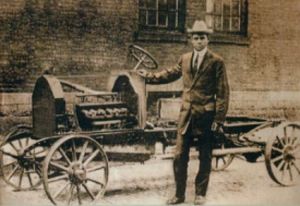
C.R. Patterson & Sons Company


The C.R. Patterson & Sons Company was a carriage building firm, and the first African American-owned automobile manufacturer. The company was founded by Charles Richard Patterson, who was born into slavery in April 1833 on a plantation in Virginia. His parents were Nancy and Charles Patterson. Patterson escaped from slavery in 1861, heading west and settling in Greenfield, Ohio around 1862.

At some point after his arrival in Ohio, Patterson went to work as a blacksmith for the carriage building business, Dines and Simpson. In 1865 he married Josephine Utz, and had five children from 1866 to 1879. In 1873, Patterson went into partnership with J.P. Lowe, another Greenfield-based carriage manufacturer. Over the next twenty years, Patterson and Lowe developed a highly successful carriage-building business.

In 1893 Patterson bought out J.P. Lowe’s share of the business and reorganized it as C.R. Patterson & Sons Company. The company built 28 types of horse-drawn vehicles and employed approximately 10-15 individuals. While the company managed to successfully market its equine-powered carriages and buggies, the dawn of the automobile was rapidly approaching.

Charles Patterson died in 1910, leaving the successful carriage business to his son Frederick who in turn initiated the conversion of the company from a carriage business into an automobile manufacturer. The first Patterson-Greenfield car debuted in 1915 and was sold for $850. With a four-cylinder Continental engine, the car was comparable to the contemporary Ford Model T. The Patterson-Greenfield car may, in fact, have been more sophisticated than Ford’s car, but C.R. Patterson & Sons never matched Ford’s manufacturing capability.

Estimates of Patterson-Greenfield car production vary, but it is almost certain that no more than 150 vehicles were built. The company soon switched to production of truck, bus, and other utility vehicle bodies which were installed atop chassis made by major auto manufacturers such as Ford and General Motors. Its school bus bodies in particular became popular as Midwestern school districts began to convert from horse-drawn to internal-combustion-fired transportation by 1920.

Around 1920, the company reorganized as the Greenfield Bus Body Company but after ten years of steady, if unspectacular growth, the Great Depression sent the company into a downward spiral. Frederick Patterson died in 1932, and the company began to disintegrate in the late 1930s. Around 1938, the company moved to Gallipolis, Ohio, changing its name again to the Gallia Body Company in an attempt to restart its prior success.  The attempt failed and the company permanently closed its doors in 1939.  Like many other small auto manufacturers, the company was unable to compete with Ford, General Motors, Chrysler, and other large automobile manufacturers.

No Patterson-Greenfield automobiles are known to have survived to the present, but some C.R. Patterson & Sons carriages and buggies are extant.

Wednesday, May 22, 2013

BLACK PAST.ORG: Remembered & Reclaimed


BlackPast.org, an online reference center makes available a wealth of materials on African American history in one central location on the Internet. These materials include an online encyclopedia of nearly 3,000 entries, the complete transcript of nearly 300 speeches by African Americans, other people of African ancestry, and those concerned about race, given between 1789 and 2012, over 140 full text primary documents, bibliographies, timelines and six gateway pages with links to digital archive collections, African and African American museums and research centers, genealogical research websites, and more than 200 other website resources on African American and global African history. Additionally, 100 major African American museums and research centers and over 400 other website resources on black history are also linked to the website, as are nine bibliographies listing more than 5,000 major books categorized by author, title, subject, and date of publication. It also features a Perspectives Online Magazine which features commentary of important but little known events in black history often written by the individuals who participated in or witnessed them.  To date more than 100 articles have appeared.  The compilation and concentration of these diverse resources allows BlackPast.org to serve as the "Google" of African American history.

BlackPast.org brings the resources of African American history into every classroom in the world. It also makes every computer, regardless of its location, a classroom in African American history.

BlackPast.org is dedicated to providing the inquisitive public with comprehensive, reliable, and accurate information concerning the history of African Americans in the United States and people of African ancestry in other regions of the world. It is the aim of the founders and sponsors to foster understanding through knowledge in order to generate constructive change in our society.

BlackPast.org brings the resources of African American history into every classroom in the world. It also makes every computer, regardless of its location, a classroom in African American history.

Source: http://www.blackpast.org/

Tuesday, May 14, 2013

Twins to Graduate With Identical Honors – Valedictorian


Identical twins Kirstie and Kristie Bronner share practically everything: hobbies, favorite colors, favorite foods, and clothes.  But now they can share the title of valedictorian.

Kirstie and Kristie, both 22, from Atlanta, Ga., will graduate May 19 as the first co-valedictorians who are also identical twins at Spelman College, in Atlanta.

“I don’t think we even thought about the possibility of it,” Kristie told ABCNews.com.

“We actually have prayed about it,” Kirstie said.  “Lord help us to make 4.0s all the way through college.”

The two have the same major—music—and both have perfect 4.0 GPAs.  The sisters managed to keep up their grades while juggling Spelman College’s glee club and volunteering at their father’s church, Word of Faith Family Worship Cathedral.

“I am extremely proud of them.  They have gotten that particular status the old fashion way,” their father, Bishop Dale Bronner, told ABCNews.com. “Their greatest asset is their discipline. They got their brilliance from the mother, but they got their discipline from their father.”
“We prayed harder than everybody else and worked harder,” Kirstie said.

For the twins, their achievement meant having to sacrifice going out on the weekends occasionally. “Our friends kind of just stopped asking,” Kristie said.

The sisters attribute most of their achievements to their relationship and their similarities. “Our values are the same,” Kristie said. “Our drive is the same. We spend a lot of time together so we always studied together.”

In fact, their personalities are so similar that the two said that they’ve had many occurrences where they’ve written papers or taken tests and had the same thesis points or wrong answers.

Identical twins Kirstie and Kristie Bronner are graduating as co-valedictorians with identical 4.0 GPAs from Spelman College in Atlanta, GA. (Courtesy Kirstie Bronner)

Kirstie and Kristie have one distinction that helps tell them apart. Kirstie said, “I’m a little more direct. She’s a little more sugarcoating.”

While Kristie admits that sharing so much may get on their nerves at times, it’s their teamwork that makes their dynamic successful.  ”In college, we discovered how different we are,” Kristie said.  ” Our differences actually compliment each other.  It helps us to get things done faster.”

Kirstie added, ” I think of of the biggest things that comes between twins is competition.  Although we have our arguments, I think that one way that we help to eliminate competition is to be mindful of it and be secure in our individual identities.”

One way the twins eliminate getting compared is by dressing alike. “You can’t say one twin is the more stylish twin if we have on the same thing,” Kirstie said.

After graduating, Kirstie and Kristie plan on continuing on the same path as youth counselors, youth event coordinators, and directors of music at the Word of Faith Family Worship Cathedral.  Achieving the title of valedictorian wasn’t enough for the girls.  They also plan on writing a book with scheduling tips and releasing a gospel album.

“We don’t think we achieved it based upon genius, but based upon strategy,” Kirstie said.

http://abcnews.go.com/blogs/headlines/2013/05/twins-to-graduate-with-identical-honors-valedictorian/

Tuesday, May 7, 2013

Black Startup


Our platform is a new tool to generate financial resources to fund ideas and to address systemic social problems facing African-Americans on the local, national, and international level. Clearly, a platform that is operated by an honest broker will facilitate trust. But our platform will also lower transaction costs associated with raising capital. We will be the meeting place where those with good ideas can expose themselves to thousands/millions of potential investors at almost no monetary cost. Also, investors will have the opportunity to contribute to projects that they would have never known about without visiting our website. Finally, the affinity and commonality amongst the online community on our platform will lead to substantial activity and transactions on our platform as opposed to platforms that are not targeted towards a specific community.

Our crowdfunding platform specifically dedicated to the African-American community addresses the lack of African-Americans that are participating in the crowdfunding market because we can  market directly to the community. Furthermore, we can take advantage of established networks/groups  to build our online minority investing community. The idea is for our online community to be as reflective of the “on-ground” African-American community as possible.

Crowdfunding is beginning to move from a marketplace dominated by “one size fits all” style  platforms (indiegogo.com/wefunder.com) to more dedicated, topic-orieted/industry focused platforms. The idea is that by targeting the audience, the marketplace becomes more efficient because of group affinity. Essentially, crowdfunding works partially because it allows one to leverage social networking to get ideas funded through one’s existing relationships, one’s extended network, and the extended network of those one is connected to. Therefore, the more closely one is tied to the network of someone that is seeking funding, the more likely one is to give.

Our platform will be aligned with a network of people that already have a shared group identity, but it will additionally be able to tie into existing groups, organizations, and networks that already exist in the African-American community (both on the ground and online). This is what we mean when we assert that targeting can lead to increased activity and efficiency on a crowdfunding platform. Currently, there is a crowdfunding platform that is targeted to focus on ideas started by Jewish people or designed to advance Jewish interests. However, there is no platform for African-Americans. By focusing on a particular demographic group we will  benefit from the efficiency that targeting allows for.

Our platform/project can be used as a tool to increase education in the community on the benefits of investing, which addresses the over consumption of consumer goods and underuse of investing vehicles within the African-American community. To reach many of these goals, our group will benefit from partnerships with key organizations in the minority business landscape such as Black Enterprise magazine and the National Black MBA Association.

Finally, we address the unmet needs related to the changing dynamics of the regulation of the crowdfunding industry by designing an internet funding portal that can take advantage of the JOBS Act reforms.