At APF in the 1970s, as the second-known African-American video game engineer, he helped create an industry.
Ed Smith at the Winter CES show in 1981 with the Imagination Machine II personal computer
Thirty-seven years ago, New York-based APF Electronics, Inc. released The Imagination Machine, a hybrid video game console and personal computer designed to make a consumer's first experience with computing as painless and inexpensive as possible.
APF's playful computer (and its game console, the MP1000) never rivaled the impact of products from Apple or Atari, but they remain historically important because of the man who cocreated them: Ed Smith, one of the first African-American electronics engineers in the video game industry. During a time when black Americans struggled for social justice, Manhattan-based APF hired Smith to design the core element of its future electronics business.
What it took to get there, for both APF and Smith, is a story worth recounting—and one that, until now, has never been told in full.
Edward Lee Smith was born in Brooklyn, New York, in 1954. He grew up in Brownsville, an impoverished neighborhood within the borough. His parents moved there from Mississippi a few years prior, and they weren't alone. Between about 1910 and 1970, millions of black families like the Smiths fled north in a Great Migration, as historians now call it, to escape the terrors of the American South during the Jim Crow era.
What his parents found when they got to New York wasn't much more promising than the South: Government policies and widespread racism kept black residents concentrated in small areas of low opportunity and high poverty. Places like Brownsville were the result. The neighborhood had once been primarily occupied by Jews, but later became known as a black ghetto, replete with scenes of crime and misfortune that unfolded every day. It was in this environment that Ed Smith came of age, the third eldest of six brothers and sisters, in a public housing development called Nobel Drew Ali Plaza. His mother was a domestic, and his father, an Army veteran, drove trucks for a living.
Early on, Smith's father told the younger Smith not to expect any greater aspirations for himself. "Get your chauffeur’s license so you can learn how to drive a truck," Smith recalls him saying, "because that’s all you’re ever going to do." And yet such expectations could not suppress Ed Smith's intense curiosity about how things worked. He began taking apart everything he could, and he soon taught himself to repair basic electrical gadgets like toasters and irons. Later, he moved on to radio receivers and TV sets. Smith's electronics skills came in handy as he began doing odd jobs around the neighborhood to help make ends meet for his family. At times, he largely provided for himself.
Through exposure to books and TV, Smith learned about the larger world outside of Brownsville. He devoured epic science fiction works and titles by black intellectuals such as Ralph Ellison's Invisible Man and the works of W.E.B. Du Bois. As his knowledge of the world grew, Smith began to feel like Brownsville was his personal cage, holding him back from greater opportunities. He recalls the many times he sat at his window, watching the traffic on the busy four-lane street outside. "My only wish was to be sitting in one of those cars, driving down Eastern Parkway," he says. "Anywhere, any direction, I didn't care. I just didn't want to be there."
It was a tough life, but he tried his best to steer his own fate. At age 13, Smith recalls waking up to a commotion, his sisters and brothers crying. In another room, he found his mother on the floor, his father pummeling her with fierce blows. Smith tried to pull his dad off, but the elder Smith knocked him unconscious. When the teen came to, he grabbed a frying pan from the kitchen and knocked his father out. "I dragged him out of the house and locked the door," recalls Smith. "That was the last time my father ever came into our home."
In January 1968, two brothers named Albert and Philip Friedman, both veterans of the consumer electronics industry and Asian import specialists, founded a technology company named after their initials: APF Electronics, Inc. The new firm opened an office on Madison Avenue in Manhattan and got to work quickly, making deals to bring in the latest transistorized calculators and stereos from Japan.
Albert Friedman, the company's first president, then in his 60s, had previously worked for Olympic Radio, then later served as president of Delmonico International—the first company to import Sony products to the United States. His brother Philip grew up in prewar Japan, steeped in Asian culture, and had for decades been an essential liaison to U.S. firms that sought to do business with the Far East.
The pair hired other Delmonico veterans to fill out APF's initial team, including Seymour "Sy" Lipper, who took on a marketing role, and Irving Boilen, an electronics engineer that would serve as the head of their new engineering department.
On the broader American stage, 1968 marked a tumultuous low point in a decade that saw rapid social and technological change. While the Vietnam War weighed heavily on the nation's collective conscience, it was a domestic event that set the chaotic tone for the rest of the year: On April 4, an assassin shot and killed Martin Luther King, Jr., as he stood on his motel balcony in Memphis.
The murder of America's most famous proponent of black rights triggered riots in many communities around the country, including Brownsville. The day after King was killed, 14-year-old Ed Smith sat on a street corner, watching in disgust. "I remember all of the looting going on around me," he recalls. "People were taking bricks and throwing them into white people's cars. It was mass rioting." The experience solidified his resolve: He was going to find a path out of the projects.
Smith's friends were skeptical of his passionate interest in electronics. "When they heard what I was doing, they would say, 'You would never understand that, a black guy can't do this kind of thing. It's not your world. They will laugh you out of the room,'" he says. The negative remarks only served as a challenge to Smith, who sought to prove them wrong.
During his last year of high school, Smith met his future wife, Sheila, and unexpectedly found himself becoming a father at age 18. The desire to provide for his family intensified Smith's drive, and after graduation, he started working full time doing electrical odd jobs like wiring security systems.
In 1972, Smith moved to Coney Island and landed a position at Brooklyn-based Marbelite, one of the nation's largest manufacturers of traffic signals. The job gave Smith his first taste of digital electronics technology, which would drive consumer electronics of the 1970s, '80s, and beyond.
Behind every traffic signal is a device called a traffic controller—a timer that keeps track of when to turn on and off certain lights. Prior to the 1970s, most controllers relied on electromechanical parts, but the boom in solid-state electronics saw the controllers become transistorized in the early 1970s. In 1971, Intel had introduced the first commercial single-chip microprocessor, launching a new era in electronics. Just as other industries scrambled to incorporate the new technology into their products, it wasn't long before Marbelite wanted to use the power of a microprocessor to control traffic signals.
To that end, Marbelite paid for Smith, who was then working as a technician, to attend local vocational classes on microprocessor-based circuit design. He learned to program the brand-new Fairchild F8 microprocessor (coincidentally the same chip used in the Fairchild Channel F, the first cartridge-based video game system in 1976). The classes brought big dividends to Smith, who soon leveraged the knowledge to get a taste of life in other parts of the Big Apple.
By 1972, APF Electronics had established itself as a leading manufacturer of desktop electronic calculators. In fact, the firm was doing so well that it contracted Sy Lipper's brother, Martin "Marty" Lipper, as a specialist to take the company public that November. Looking back, Marty (who joined APF full time as its CFO in 1973) emphasizes the role of calculators in the company's early success. "We built 70% of all the calculators ever sold at Sears in those days," he recalls. "The same goes for Montgomery Ward."
Calculators would carry APF's business forward until the next great revolution in consumer electronics came along: video games. Just as APF was going public in 1972, a young California company called Atari made waves nationwide with Pong, an arcade video game sensation that soon spawned dozens of shameless rip-off games and launched a wider arcade video game industry. Ironically, Pong itself was a shameless (but improved) rip-off of the first home video game system, the Magnavox Odyssey, which launched just a few months earlier.
In December 1975, Atari released the home console version of Pong through Sears under its Tele-Games label, and it proved wildly successful. Like it had done in the arcades, Pong as a home product inspired dozens of knock-offs, most of which were built using a custom "Pong-on-a-chip" integrated circuit created by General Instruments called the AY-3-8500. The mass production and general availability of this chip, and several follow-ups, made the engineering of dedicated "ball-and-paddle" consoles almost trivial affairs, with more work going into their plastic cases than into the electronics within.
In 1976, APF became one of dozens of firms that jumped headfirst into the home video game market, releasing its first Pong-like decidated console, the TV Fun. It was a sleek, compact, plastic cabinet with faux woodgrain and silver trim and two built-in rotary knobs that contained four built-in variations of the simple ball-and-paddle game. While the TV Fun utilized the same Pong-on-a-chip circuit that many other manufacturers used in their own clone consoles, APF's model quickly became one of the best selling on the market, moving 400,000 units within its first year—a stunning figure at the time.
Over the next two years, APF followed the first TV Fun with several improved models that added more games and a light gun, although sales dropped with each successive unit as the market became increasingly saturated with Pong-like consoles.
APF also found, as other companies did, that it became prohibitively risky to keep releasing new dedicated consoles—which often needed their own distinctive cases, circuitry, and marketing campaigns—to accommodate new types of video games. The solution to this problem first entered the market in 1976 with the Channel F, which was codesigned by an African-American engineer, Jerry Lawson. The Channel F approach allowed the sale of one universal console player device and many smaller, less expensive game cartridges that would add lasting appeal to the system.
An interchangeable, programmable approach to video games required the games to be written as software and run through a microprocessor—in other words, it meant designing a computerized video game system. From APF's point of view, creating such a console would require specialized expertise that few engineers at the company had developed. That led to the search for a new hire who could help design a new console that would lead APF into the next generation. Thanks to Marbelite, they would soon find their man.
Ed Smith loved his job at Marbelite; it introduced him not only to new concepts in electronics, but also to a wider world. While attending his microprocessor classes, he visited Manhattan and took special notice of Wall Street brokers that projected a fancy, clean-cut look. "I definitely wanted to be that kind of person," he recalls. "Somebody who would be able to dress for success."
With that aim in mind, Smith signed up with an employment agency, and soon he landed a job interview with APF Electronics in midtown Manhattan. There he met Kenneth Boilen, the son of Irving Boilen and one of APF's chief engineers. After a brief greeting, Boilen introduced him to another engineer named Craig who sat Smith down at a table with a schematic and said, simply, "Build that," then left the room.
"The man was an engineer, and he knew his business."
Smith found the task fairly simple; he completed the construction just after lunch. An hour later, Craig returned, surprised to see the task complete. "You're done?" he asked Smith in amazement, to which Smith replied that he had been finished for some time. Soon after, Craig reported to his superiors: "This guy knows what he's doing."
Just like that, Smith landed his dream job in buttoned-down Manhattan.
According to Marty Lipper, Smith's race never played a part during the hiring process at APF. "The man was an engineer, and he knew his business," he recalls. "When we interviewed him, he was a decent guy, and that's all I cared about." Still, it's a reflection of APF's culture that it chose, in the mid-1970s, to hire a black man who grew up in one of the most impoverished neighborhoods of New York City to design the linchpin of its future electronics business.
When pressed, Lipper emphasizes the diversity of the company's workforce. He recounts an episode when he got a call from the Department of Labor, informing APF that it was being sued for being anti-Semitic. "I started laughing on the phone," he recalls. "And the one from the labor department says, 'Mr. Lipper, this is not a funny situation.'" Lipper went on to explain that APF's entire upper management team was Jewish. "I told them, 'We have 150 employees. Twenty-five percent or 30% have to be black. We have about 50 Chinese. We've got Middle Easterners, you name it. We're the League of Nations.’"
Both Marty Lipper, a Korean War vet, and his older brother Sy—the firm's president when Smith was hired—describe living lives steeped in diversity. Sy Lipper, who is now 90, grew up during the Great Depression in a poor Jewish ghetto in the Bronx. Later, he served in the European theater during World War II alongside a diverse cast of characters from all over the U.S., some of whose deep poverty meant that their government-issued combat boots were the first pair of shoes they ever wore. He also witnessed liberated Nazi concentration camps firsthand, and he says these experiences gave him a deep appreciation for the opportunities available to him in his home country—and of those denied to others. "I got to see what was going on elsewhere in the world, how people were living," recalls Sy. "I saw that what [my family] had was so much better, even though we had nothing."
Nine years his brother's junior, Marty Lipper recalls attending the first integrated high school in New York City, Morris High School, where he took classes with future Secretary of State Colin Powell, whom he knew well.
In the minds of APF's management, there was never a question of whether or not to hire a black man. Smith was fully qualified for the job. That's how he became not only APF's first microprocessor specialist, but also (after Fairchild’s Jerry Lawson) the second known black engineer in the history of video games.
At APF, Ed Smith "learned to translate binary code pretty fast," he remembers. "I learned the motto of any good engineer, which is "plug it in and let's see if it blows up." After getting established, he took the opportunity to go back to school part-time, studying computer science and marketing at Pace University. Three days out of the week, he would leave Brooklyn, go to work in midtown, leave for Pace in lower Manhattan, then come back home at night.
Around 1977, an engineering crew at APF, led by Kenneth Boilen, began work on the firm's first cartridge-based video game system. Ed Smith took the lead on designing the prototype for the console, drawing from a wide range of inspirations like the Apple I and TRS-80, but ultimately coming up with a unique design based on the Motorola 6800 microprocessor—an unusual CPU choice in the industry at the time, which was handed to him by his boss.
With contributions from APF's design team and engineers in Hong Kong, Smith developed the console's electronic design through numerous iterations over the course of six months. Meanwhile, the company's marketing department christened the new product the MP1000 (MP for "microprocessor").
What APF came up with was a small, black plastic video game unit with silver buttons and woodgrain trim. The MP1000's base doubled as a stand for two hard-wired hand controllers, each with a joystick, a large fire button, and a 12-button numeric keypad. The system generated blocky color graphics and contained one built-in game, Rocket Patrol.
Most importantly, the MP1000 also played games sold separately on removable cartridges, with each cartridge including multiple game variations that were selectable from an on-screen menu. After design was complete, Smith recalls his job as switching to play-tester for a time. He learned to complete every game on every difficultly level, and it became a mind-numbing chore before long.
The MP1000 launched commercially in mid-1978. It sold well initially, but received mixed reviews from the press. On the positive side, with the home video game industry being as new as it was at the time, there was still a general sense of wonder among the public that games could be played on a TV set at all, and thus the bar for game quality was relatively low. As such, not much public criticism was levied on the quality of the MP1000's individual games.
Meanwhile, Atari retained the industry's sales lead with its cartridge-based console, the VCS (later known as the Atari 2600) thanks to home ports of its hit arcade games. Through its coin-op division, Atari mastered the design of visceral, action-based gameplay that attracted players and kept them coming back for more, raising the bar on perceptions of home video game quality dramatically during the last few years of the 1970s. Notably, in the press, Atari's games stood out as individual cultural works worthy of review and attention separate from the VCS console itself.
In contrast, APF fared poorly in regard to game quality and innovation. At a time when Atari's games often featured tanks, jets, race cars, dragons, and haunted houses, APF's MP1000 offered low-energy games like Bowling, Backgammon, Hangman, and Tic-Tac-Toe. The few action games the MP1000 had often involved no more coordination than timing when to push the fire button to shoot a single spaceship flying slowly across the top of the screen.
Most of APF's games had been programmed by one man, a British expat named Harry Cox. According to the Lippers, APF could hardly spare the capital required to hire additional programmers. (The question of third-party game software, a business pioneered later by Activision, did not enter their minds.)
Sy Lipper describes a huge culture clash between WW II-era upper management, who expected rigid nine-to-five schedules and clockwork production, and the new generation of laid-back baby boomers who they hired to write the software. Game development is an inherently artistic and creative process, and that proved difficult for many 1970s consumer electronics companies to grasp. Among the first batch of game console companies, Atari alone embraced the creative artistry of game design, and that fact above all others allowed the firm to dominate the industry.
Upon the launch of the MP1000, Ed Smith felt deep personal satisfaction from the completion of the project—the first commercial consumer product he had ever worked on. Thanks to nimble work by APF's sales team, the console was available through large merchandisers like Sears and Montgomery Ward.
One day, Smith visited a local Sears department store like a proud father, excited to see his progeny on the shelves. The trip quickly turned bittersweet as he beamed his pride to a salesman. "I said to the sales guy, 'I'm one of the guys that designed this,'" and he goes, 'Yeah, right.'"
Back in the lab, Smith was always conscious of how skin color limited opportunities for African-American kids in the projects, most of whom would never get a chance to play home video games because their parents couldn't (or wouldn't) buy a game console themselves. He saw an opportunity to help.
"Every other day I would take a console and give it to someone in the projects."
After the launch, APF began to stockpile spare and returned MP1000 consoles for demonstration and testing purposes. Roughly 300 consoles sat unused in the back of a closet at APF headquarters, ultimately destined for scrap. "Every other day I would take a console back home to the neighborhood and give it to someone in the projects that I lived in," recalls Smith, who lived in Flatbush. "So, when I was done, there were probably a good 50 people that I knew in the projects playing the MP1000." Smith, who considered his unsanctioned experiment not only a charitable exercise but part of play-testing, became impressed with the reaction he witnessed.
"They didn't know what to expect," says Smith, "But once they got it in front of them, it was all intuitive. They loved it. It was a chance to interact with someone else in the apartment versus going outside and doing something crazy. So a lot of times, people would play the video games for hours in the day, like they do today, and not be on the street."
Around the time the MP1000 was in its planning stages, APF's head of engineering, Irving Boilen, spearheaded the firm's first personal computer project, the PeCos One (short for "Personal Computer One"). According to Sy Lipper, it was Boilen who chose to base the machine around an obscure defense contractor programming language called JOSS rather than BASIC, the industry standard. That one decision ensured the quick market death of the awkward computer upon its launch in 1978.
The failure of the PeCos One would not keep APF from trying again, however. The Apple II, launched in 1977, had proven there was a strong market for easy-to-use personal computers for consumers, and APF wanted in on it. Others did too. During the development of the MP1000, APF's management heard news of Mattel's upcoming Intellivision console, which the toy giant planned to later transform into a full-fledged personal computer using a separate keyboard. Hoping to get a jump on the competition, APF decided to pursue that path as well, using Smith's microprocessor-powered MP1000 as the core of a larger computer system.
The Imagination Machine debuted to the press at the 1979 Summer Consumer Electronics Show in Chicago with the clever name thought up by Howard Boilen (brother of Kenneth) and another APF employee named Gary Sharp. APF's marketing materials emphasized the Imagination Machine's potential as a creative tool for music, art, language, education, and programming.
What the firm showed off at CES was a large off-white computer base unit with an integrated full-sized, full-stroke keyboard and a built-in cassette tape drive for data storage. The base unit and console would be mated via a J-shaped connector that plugged into the MP1000's cartridge port. With the two units combined, the Imagination Machine relied on the Motorola 6800 CPU in the MP1000 and added an additional 8K of RAM, making for 9K of memory in total.
The Imagination Machine, as a $599 personal computer, received very wide press coverage in magazines and newspapers across the U.S. at a time when a 16K Apple II Plus retailed for $1,195. Its playful logo, combined with its emphasis on ease-of-use and creativity, were attractive targets for journalists writing roundups of the first-ever wave of lower-cost, family-oriented "home computers" that arrived from manufacturers like Atari, Texas Instruments, and Commodore during the last few years of the 1970s.
To target the Imagination Machine at a home audience, APF decided to rely on traditional retail channels as it had with its calculators and video game products. But unlike the MP1000 alone, the Imagination Machine was a fully programmable microcomputer, which was inherently trickier to operate—and much harder to sell to a suite of retail executives who often possessed no technical background whatsoever.
As shown in Popular Science, the MP1000 console plugged into the Imagination Machine base unit
To bridge this gap, Ed Smith's boss, Kenneth Boilen, approached Smith one day with an offer that would completely change his career trajectory. "We’re going to change your role to a technical specialist," Smith recalls them saying. "And we want you to go to Sears and talk about the Imagination Machine."
Smith embraced the opportunity now laid out before him: "I threw on my suit and [grabbed] my briefcase, and I’m off to Chicago." During a large lunchtime sales call, Smith found himself in Sears Tower, then the tallest building in the world, pitching APF's new computer to Sears executives. "The sales person is there and he’s hearing my pitch, and I’m talking about RAM and ROM and all of the inputs and outputs."
Smith breezed through the presentation, and at the end, the former resident of Brooklyn's poorest neighborhood, whose father had told him that he could expect no greater career than truck driver, stopped at a window and paused in a moment of triumph mixed with astonishment. Looking past his own reflection, he says, he saw the Chicago skyline and thought, "How far I have come."
The Sears meeting was one of the highlights of his career, Smith says, but it was only the beginning of a new era for him. Back at the office a couple weeks later, an APF sales rep approached Smith at his engineering drafting table and slapped him on the back. "Ed, you did so great," he said. "You just made me ten grand this month." Smith's jaw dropped. At the time, he earned about $20,000 a year.
"I got up from my drafting table, and I walked over to Howard Boilen, who was the VP of sales, and I said, 'Howard, if I’m going to pitch this, don’t you think I should sell it?'" Boilen, pleased with Smith's performance at the Sears meeting, agreed, and Smith soon switched from engineering to sales. "I started selling the machines that I helped to build," says Smith.
Throughout 1980, Smith traveled the country showing off the Imagination Machine to executives at department stores and computer retail chains, with a string of optimistic successes. However, big-name retail support for the Imagination Machine could not make up for shortcomings in the computer's design.
Today, Smith recalls that APF’s marketing department insisted on including a tape recorder with the system. The engineering team resisted, but marketing won out. APF's cassette-bound machine launched over a year after Apple had rocked the personal computer world with its low-cost Disk II drive, making slower, less reliable cassette drives commercially unattractive. And yet there it was, permanently built into each unit.
1980 passed with very modest sales of the MP1000 and the Imagination Machine, and in January 1981, Smith traveled to CES for the last time as an APF employee to demonstrate the Imagination Machine II, a remodeled unit with more memory and integrated MP1000 circuitry that looked nearly identical to the original except for a smooth surface on its top where the core console used to sit. Strangely, it retained the built-in cassette drive, but alongside the $399 base unit, APF pitched a complex "System III" constellation of peripherals and disk drive add-ons that upped the price of the machine to a far less appealing $1,195.
"This personal computer nonsense, there's no future for them."
Such incremental, expensive improvements did not improve sales, and in the face of heavy competition from Apple, Atari, Commodore, and Texas Instruments, APF's PC failed to gain significant market share. Still, the company’s management sought to keep going and try again. In fact, the Lipper brothers insist that sales of all its products were good enough to sustain the company into the future. "Nothing we did was a disappointment," says Marty Lipper with perhaps a hint of rosy glasses. "Everything we did worked out either good or excellent. We were making money, there was no problem."
The core reason for APF's downfall, according to Sy and Marty Lipper, centered on the skepticism of the two New York banks that held APF's lines of credit—the loans that APF relied on to fund production runs. Marty Lipper recalls the scene: "The banks said to me, 'You have three businesses, and we don't think there's any future in TV games because that's a fad. And this personal computer nonsense, there's no future for them. The public doesn't want or need them. But if you stay in the calculator business, we're not going to call the loans. We're happy with that business.'"
Sy and Marty Lipper refused to cave in to the banks' demands, knowing that calculators, which had become a low-priced commodity at that point, did not represent the future of the consumer electronics industry. "The banks could not understand the personal computer," says Sy Lipper. "Because as far as they were concerned, it was a toy, and the computer itself was in the hands of IBM."
Smith poses with The Imagination Machine (and some Atari gear) in 1982
In 1980, the market capitalization of Apple, one of the most successful personal computer companies up to that point, was still minuscule compared to IBM. It wasn't until August 1981 that IBM would release its Personal Computer and legitimize the market in the eyes of the banks. By then, it was too late for APF.
The Lippers warned their staff of an impending shutdown, giving them time to find new jobs, and making sure to pay the employees what they were due. "Ken Boilen, one of the best bosses and best friends I’ve ever had, was always honest and straightforward with me," says Smith. "He came to me and he said, 'You know, the company is not going to make it. We’re not doing well with this thing, and I don't want you to get stuck here and be on unemployment and not take care of your family. You should go look for something else.'"
During a final tense meeting that Sy and Marty Lipper had with its credit lenders, bank officials threatened one last time: Leave the video game business or immediately repay your $7 million debt in full. Marty stood up, pulled the company's office keys from his pocket and set them on the table. He urged his brother to do the same, then said, "Here it is. The company is now yours."
APF Electronics effectively ceased operations in 1981 and never declared bankruptcy, although it took some years for the banks to fully wind it down.
"BEING ONE OF THE FIRST TO DO ANYTHING IS AMAZING"
When Ed Smith moved on from APF, he also left the video game field. "Frankly, had I the forethought to know the industry would become what it is today, I would have stayed the path," he says.
Ed Smith today
Still, his experience at APF stuck with him. "I learned to develop myself from an introverted bench guy to an extroverted corporate speaker," he explains. "I learned to take alternate paths when one seems to be clogged. Mostly, I learned to trust my abilities and to never think I was any less capable than anyone else."
After APF, Smith spent four years managing an Apple dealership in upstate New York. Then he worked at a computer dealer in Albany and helped expand a computer chain called The Computer Factory to a new location in Philadelphia. Another fresh start came when he signed on with PC networking pioneer Novell during its formative period.
At that point, like Smith, all of his brothers and sisters had established careers for themselves and escaped life in the projects. But over a decade after Smith had moved out, his mother still lived in public housing, among high crime and badly maintained facilities.
One day in the mid-1980s, he drove from New Jersey to Brownsville in a U-Haul moving truck. Neighborhood regulars looked on with skepticism as he stepped out and entered his mother's apartment. A few minutes later, he returned with armfuls of his mother's possessions and began loading the truck.
"Where are you taking her?" the neighbors asked with incredulity. "I'm taking her out of here," he replied. As the rolling U-Haul door closed shut and he stepped into the cab, Smith heard someone say, "Whoa, he's actually doing it." He moved his mother to a apartment not far from where he lived in New Jersey, and two years later, he bought her a condo, freeing his family from the projects at last.
Today, Smith is still a successful tech salesman, although he is nearing retirement. He has been married to his high school sweetheart for 40 years and his kids are now grown with their own families.
A few decades removed from his work at APF, Smith has a new appreciation for what it meant. "Funny, when you are head-down doing the work, the last thing you think about is being an African-American," he says. "You're just another engineer doing his job. Once you have a chance to digest what you're able to accomplish, time passes by because you are head-down on the next thing."
In retrospect, he adds, "I can say with certainty that being one of the first to do anything is amazing. To be a man of color and a leader in the video game industry will be my legacy, and one that I am very proud of."
Source: https://www.fastcompany.com/3063298/breaking-the-status-quo/ed-smith-and-the-imagination-machine-the-untold-story-of-a-black-vid
Showing posts with label Did You Know?. Show all posts
Showing posts with label Did You Know?. Show all posts
Monday, February 6, 2017


Wednesday, February 1, 2017
Book: Hidden Figures: The American Dream and the Untold Story of the Black Women Mathematicians Who Helped Win the Space Race
The #1 New York Times bestseller
The phenomenal true story of the black female mathematicians at NASA whose calculations helped fuel some of America’s greatest achievements in space. Soon to be a major motion picture starring Taraji P. Henson, Octavia Spencer, Janelle Monae, Kirsten Dunst, and Kevin Costner.
Before John Glenn orbited the earth, or Neil Armstrong walked on the moon, a group of dedicated female mathematicians known as “human computers” used pencils, slide rules and adding machines to calculate the numbers that would launch rockets, and astronauts, into space.
Among these problem-solvers were a group of exceptionally talented African American women, some of the brightest minds of their generation. Originally relegated to teaching math in the South’s segregated public schools, they were called into service during the labor shortages of World War II, when America’s aeronautics industry was in dire need of anyone who had the right stuff. Suddenly, these overlooked math whizzes had a shot at jobs worthy of their skills, and they answered Uncle Sam’s call, moving to Hampton, Virginia and the fascinating, high-energy world of the Langley Memorial Aeronautical Laboratory.
Even as Virginia’s Jim Crow laws required them to be segregated from their white counterparts, the women of Langley’s all-black “West Computing” group helped America achieve one of the things it desired most: a decisive victory over the Soviet Union in the Cold War, and complete domination of the heavens.
Starting in World War II and moving through to the Cold War, the Civil Rights Movement and the Space Race, Hidden Figures follows the interwoven accounts of Dorothy Vaughan, Mary Jackson, Katherine Johnson and Christine Darden, four African American women who participated in some of NASA’s greatest successes. It chronicles their careers over nearly three decades they faced challenges, forged alliances and used their intellect to change their own lives, and their country’s future.
Wednesday, January 25, 2017
Watch The Trailer For Henry Louis Gates, Jr.’s ‘Africa’s Great Civilizations’

To add another bit of polish to the forthcoming doc, Gates + PBS have released a trailer that takes audiences into the different parts of the continent. Without spoiler much of what the series will be, for those who aren’t vested in African history, there will be much to uncover. “This series is a breathtaking and personal journey through history that includes evidence of the earliest human culture and art, arguably the world’s greatest ever civilizations and kingdoms, and some of the world’s earliest writing,” the official summary states.
Mark your calendar for this three-night event, as Africa’s Great Civilizations airs beginning Feb. 27 – Mar. 1 from 9:00 – 11:00 p.m. ET.
http://www.okayplayer.com/news/henry-louis-gates-jr-africas-great-civilizations-trailer.html
Saturday, January 7, 2017
Hidden Figures
Monday, January 2, 2017
Did You Know She Is the Inventor of Lasik Eye Surgery? Meet This Extraordinary Woman!

If you are considering Lasik Eye Surgery, you can thank this woman who invented the procedure in 2000. She holds four of the patents on the procedure so you will be assisting her in her philanthropic work and helping her Alma Mata, Howard University through her endowment if you do get the procedure.
Dr. Patricia Era Bath (born November 4, 1942, Harlem, New York) is an2 American ophthalmologist, inventor and academic. She has broken ground for women and African Americans in a number of areas. Prior to Bath, no woman had served on the staff of the Jules Stein Eye Institute, headed a post-graduate training program in ophthalmology or been elected to the honorary staff of the UCLA Medical Center (an honor bestowed on her after her retirement).
Patricicia BathBefore Bath, no black person had served as a resident in ophthalmology at New York University and no black woman had ever served on staff as a surgeon at the UCLA Medical Center. Bath is the first African American woman doctor to receive a patent for a medical purpose.1 Her Laserphaco Probe is used to treat cataracts. The holder of four patents, she is also the founder of the American Institute for the Prevention of Blindness in Washington D.C. Born in Harlem on November 4, 1942, Bath was the daughter of Rupert and Gladys Bath. Her father, an immigrant from Trinidad, was a newspaper columnist, a merchant seaman and the first black man to work for the New York City Subway as a motorman.
Raised in Harlem, Bath was encouraged academically by her parents.Inspired by Albert Schweizer or his work in medicine, Bath applied for and won a National Science Foundation Scholarship while attending Charles Evans Hughes High School; this led her to a research project at Yeshiva University and Harlem Hospital Center on cancer that piqued her interest in medicine.
In 1960, still a teenager, Bath won the “Merit Award” of Mademoiselle Magazine for her contribution to the project.]After graduating high school early, Bath received her Bachelor of Arts in chemistry from New York’s Hunter College in 1964. She relocated to Washington, D.C. to attend Howard University College of Medicine, from which she received her doctoral degree in 1968. During her time at Howard, she was president of the Student National Medical Association and received fellowships from the National Institutes of Health and the National Institute of Mental Health. Bath interned at Harlem Hospital Center, subsequently serving as a fellow at Columbia University.[4]
During this period, from 1968 to 1970, Bath became aware that the practice of eye care was uneven among racial minorities and poor populations, with much higher incidence of blindness amongst her black and poor patients. She determined that, as a physician, she would help address this issue. She persuaded her professors from Columbia to operate on blind patients at Harlem Hospital Center, which had not previously offered eye surgery, at no cost.[8] Bath pioneered the worldwide discipline of “community ophthalmology”, a volunteer-based outreach to bring necessary eye care to underserved populations. She served her residency in ophthalmology at New York University from 1970 to 1973, the first African American to do so in her field.
After completing her education, Bath served briefly as an assistant professor at Jules Stein Eye Institute at UCLA and Charles R. Drew University of Medicine and Science before becoming the first woman on faculty at the Eye Institute founded the American Institute for the Prevention of Blindness, for which she served as president. In 1983, she became the head of a residency in her field at Charles R. Drew, the first woman ever to head such a department.
Patricia BathIn 1993, she retired from UCLA, which subsequently elected her the first woman on its honorary staff. She served as a professor of Ophthalmology at Howard University’s School of Medicine and as a professor of Telemedicine and Ophthalmology at St. Georges University.1 She was among the co-founders of the King-Drew Medical Center ophthalmology training program.
Bath has lectured internationally and authored over 100 papers.
Bath holds four patents in the United States. In 1981, she conceived of the Laserphaco Probe, a medical device that improves on the use of lasers to remove cataracts, and “for ablating and removing cataract lenses”. The device was completed in 1986 after Bath conducted research on lasers in Berlin and patented in 1988 making her the first African American female doctor to receive a patent for a medical purpose.
The device — which quickly and nearly painlessly dissolves the cataract with a laser, irrigates and cleans the eye and permits the easy insertion of a new lens — is used internationally to treat the disease. Bath has continued to improve the device and has successfully restored vision to people who have been unable to see for decades.
Three of Bath’s four patents relate to the Laserphaco Probe.In 2000, she was granted a patent for a method she devised for using ultrasound technology to treat cataracts.
Bath has been honored by two of her universities. Hunter College placed her in its “hall of fame” in 1988 and Howard University declared her a “Howard University Pioneer in Academic Medicine” in 1993.]
Source: http://urbanintellectuals.com/2016/03/31/know-inventor-laser-eye-surgery-meet-extraordinary-woman/
Monday, October 31, 2016
11 Black-Owned Businesses That You Should Know and Support

Black-owned businesses have progressed rapidly over the years, and according to the most updated figures in 2007, provided by the U.S. Census Bureau, there were 1.9 million companies owned by black entrepreneurs, so imagine how many more there are to date. Supporting these businesses not only helps the entrepreneurs but also puts money back into the black community. BOBs are depending on the support of their community in order to survive and to thrive. With so many competitors in each industry, things can take a turn for the worst quickly if a business is not careful, therefore, we must be there for each other, diligently supporting. There is power in the black dollar, so why not put that power into assisting a community that understands your heritage and history, and values your life in general. While doing all of this, you should expect a quality product or service in return, and it becomes a win-win for both parties involved.
I’ve made it easy by compiling this list. Included are 11 black entrepreneurs that I highly recommend supporting, along with detailed information on each of their businesses. The majority are online businesses and the others that aren’t, be sure to recommend to both friends and family located in the respective areas.
LeShawnda Fitzgerald is director of Ready For Spanish of Nashville, Tennessee. Fitzgerald created Ready For Spanish to meet parent demands for quality language instruction in her city. She has since expanded her program online with a training program for Pre-K and Kindergarten teachers and schools that want to teach Spanish to their students as well as an online program for adult learners who want to speak Spanish quickly and easily. Her business prepares children and adults to live and work in a global society. www.readyforspanish.com
Marvette Cofield, Realtor of Berkshire Hathaway Home Service, Select Realty is located in Dumfries, Virginia. As a Realtor, Cofield’s desire is that each and every client has a hassle-free real estate experience, as she partners with and helps them to attain their goal. Through communication, education, and information, she assists in locating the perfect home for her client’s lifestyle. Cofield’s clients are in good hands when working with her! www.homeofyourdreamz.com
Latorie Walker, owner & CEO of Aspire Early Learning Academy I & II located in West Columbia and Lexington, South Carolina, offers a boutique-style learning environment where children are taught with individualized developmental plans and a curriculum that adequately prepares each child for kindergarten. AspireELA, strives for excellence while preparing their students for a bright future in a safe, loving, and fun environment that focuses on academics. The teaching team at AspireELA are patient with all of their students and are well experienced in the field of Early Childhood. They are committed to ensuring that every child receives the best opportunity to produce the foundation for a fruitful, educational, and life-long experience. www.aspireearlylearningacademy.com
Brittney S. Carter, CEO of B. Carter Solutions L.L.C. located in the Washington, DC metro area was launched in April 2015. Carter decided that she wanted to start a company that offers “solutions” to a consumer’s problem under one umbrella. As a one-stop shop for public relations, social media management, and professional development needs, she relishes the opportunity to provide consumers with operational convenience. B. Carter Solutions is committed to elevate imaginative solutions by focusing on the mission behind the vision. They desire to measure the success for their clients through awareness, innovation, and out-of-the-box strategies sticking to their mantra, “Where Vision Meets Strategy.” www.bcartersolutions.com
Shanta Johnson, the owner of Designed by Shanta L.L.C. is based in Charlotte, North Carolina. Johnson offers web design and development services to entrepreneurs and businesses of all sorts. She is passionate about her craft and enjoys making websites to fit her clients’ needs. When choosing to work with Johnson, you are guaranteed not only a website that serves a purpose but a positive experience that exceeds your expectations. She is professional, experienced, and committed to going above and beyond for her clients. www.designedbyshanta.com
Dyron J. Stephens, DrPH, CPH is president and senior partner, along with Richard Stephens II, MBA, who is the vice president and managing partner of Pierian Spring Innovations, L.L.C., located in Decatur, G.A. Pierian Spring Innovations, L.L.C. is the premier management consultancy and health innovations firm, which is founded in and on the belief that improving the well-being of others is the greatest enterprise any entity could embark upon. As a result of this, every action and initiative taken by the firm reflects this dedication to bettering the health-related quality of life of all individuals. The firm operates globally with a professional network of offices throughout the United States and Nigeria.
Keli N. Burke of East Lansdowne, P.A. is the independent business owner of Total Life Changes, which has been around for the past 16 years. The results-driven company has products that include all natural ingredients, which allows gradual weight loss, detoxification, and improved digestive system, and that is just a few of many benefits. Keli is committed to the health and wellness of her clients, and she goes above and beyond to ensure that her clients receive one-on-one care and attention based on their personal needs and goals.
Shade Adu of Savvy Solutions Consulting, L.L.C., located in Union, N.J., believes that entrepreneurs benefit from leveraging social media and live-streaming. Savvy Solutions aims to create digital branding and online marketing solutions for women entrepreneurs who need support. Savvy Solutions is here to provide strategic solutions for coaches and creatives online. Social media isn’t going anywhere, and small businesses that learn how to strategically leverage these platforms will have a competitive advantage. Entrepreneurs should support Savvy Solutions because our goal is to serve women entrepreneurs who want to turn their idea into a profitable online brand.
Ahesha Catalano and her team at Profitable Retreats in Burbank, C.A., assist individuals, couples, speakers, entrepreneurs, health and fitness professionals, organizations, and corporations plan and execute profitable retreats. They give clients a step-by-step guide to ensure the retreat is a wonderful experience for all, and of course, profitable. Anyone who has been thinking of planning a retreat or traveling with a group of friends or family owes it to themselves to see just how profitable their trip can be.
Chantilly Oliver-Cross is CEO of Elegant Cuisines, located in Fredericksburg, V.A. Elegant Cuisines, L.L.C. is a personal chef and catering company with over fourteen years of phenomenal service, and has been in business for two years. Their services are available for all business, private, and social events. When choosing Elegant Cuisines for a special event, it’s the marriage of southern hospitality with a touch of elegance. Elegant Cuisines has been voted a locally renowned, best personal chef and catering company in the D.C., Maryland, and Virginia area.
Melodie Narain, CEO and founder of Sole Savers, located in Maryland, launched her business in September 2015. Melodie realized that she could no longer wear heels for more than a few hours. After discussing this for a few months with her mother, Teresa Thomas, who could no longer wear heels due to numerous knee surgeries, she realized that there had to be others who faced these same challenges when it came to fashion and comfort. After months of studying trends, Melodie developed a product that she believed would be a perfect remedy which would be a stylish, affordable, and convenient alternative to their fabulous heels.
Given all of this “black magic,” which black-owned businesses will you commit to supporting today?
Source: http://www.blackenterprise.com/small-business/11-black-owned-businesses-know-support/
Friday, September 23, 2016
The Librarian Who Saved Timbuktu’s Cultural Treasures From al Qaeda

In this grim procession, there have been occasional victories for culture over extremism, like the recapture last month of the ancient Syrian city of Palmyra, which may now be restored to something of its previous glory. A less familiar case of cultural rescue features an unlikely hero: a 51-year-old book collector and librarian named Abdel Kader Haidara in the fabled city of Timbuktu, in the West African country of Mali.
The story begins in April 2012, when Mr. Haidara returned home from a business trip to learn that the weak Malian army had collapsed and that nearly 1,000 Islamist fighters from one of al Qaeda’s African affiliates, al Qaeda in the Islamic Maghreb, had occupied his city. He encountered looters, gunfire and black flags flying from government buildings, and he feared that the city’s dozens of libraries and repositories—home to hundreds of thousands of rare Arabic manuscripts—would be pillaged.
The prizes in Mr. Haidara’s own private collection, housed in his Mamma Haidara Commemorative Library, include a tiny, irregularly shaped Quran from the 12th century, written on parchment made from the dried skin of a fish and glittering with illuminated blue Arabic letters and droplets of gold. His collection also boasts many secular volumes: manuscripts about astronomy, poetry, mathematics, occult sciences and medicine, such as a 254-page volume on surgery and elixirs derived from birds, lizards and plants, written in Timbuktu in 1684. “Many of the manuscripts show that Islam is a religion of tolerance,” he told me.
Historic Timbuktu Texts Saved From Burning (Feb. 1, 2013)
Mr. Haidara knew that many of the works in the city’s repositories were ancient examples of the reasoned discourse and intellectual inquiry that the jihadists, with their intolerance and rigid views of Islam, wanted to destroy. The manuscripts, he thought, would inevitably become a target.
A few days after the jihadist occupation began, Mr. Haidara, who worked full time as a book restorer, archivist and fundraiser, met with his colleagues at the office of the Timbuktu library association, which he had formed 15 years earlier. “I think we need to take out the manuscripts from the big buildings and disperse them around the city to family houses,” he told them, as he recalled the conversation for me two years later. “We don’t want them finding the collections of manuscripts and stealing them or destroying them.”
Months earlier, the Ford Foundation office in Lagos, Nigeria, had given Mr. Haidara a $12,000 grant to study English at Oxford in the fall and winter of 2012. The money had been wired to a savings account. He emailed the foundation and asked for authorization to reallocate the funds to protect the manuscripts from the hands of Timbuktu’s occupiers. The money was released in three days. Mr. Haidara recruited his nephew, and they reached out to archivists, secretaries, Timbuktu tour guides and a half-dozen of Mr. Haidara’s relatives.
The result was a heist worthy of “Ocean’s Eleven.” They bought metal and wooden trunks at a rate of between 50 and 80 a day, made more containers out of oil barrels and located safe houses around the city and beyond. They organized a small army of packers who worked silently in the dark and arranged for the trunks to be carried by donkey to their hiding places.
Over the course of eight months, the operation came to involve hundreds of packers, drivers and couriers. They smuggled the manuscripts out of Timbuktu by road and by river, past jihadist checkpoints and, in government territory, suspicious Malian troops. By the time French troops invaded the north in January 2013, the radicals had managed to destroy only 4,000 of Timbuktu’s nearly 400,000 ancient manuscripts. “If we hadn’t acted,” Mr. Haidara told me later, “I’m almost 100% certain that many, many others would have been burned.”
Mr. Haidara was especially proud of rescuing one manuscript: a crumbling volume about conflict resolution between the kingdoms of Borno and Sokoto in what is now Nigeria, the work of a Sufi holy warrior and intellectual who had briefly ruled Timbuktu in the mid-19th century. This man, Mr. Haidara argued, was a jihadist in the original and best sense of the word: one who struggles against evil ideas, desires and anger in himself and subjugates them to reason and obedience to God’s commands. It was, he thought, a fitting rebuke to all that the militants stood for.
Source: http://www.wsj.com/articles/the-librarian-who-saved-timbuktus-cultural-treasures-from-al-qaeda-1460729998
Tuesday, September 20, 2016
Jo Ann Jenkins - AARP CEO
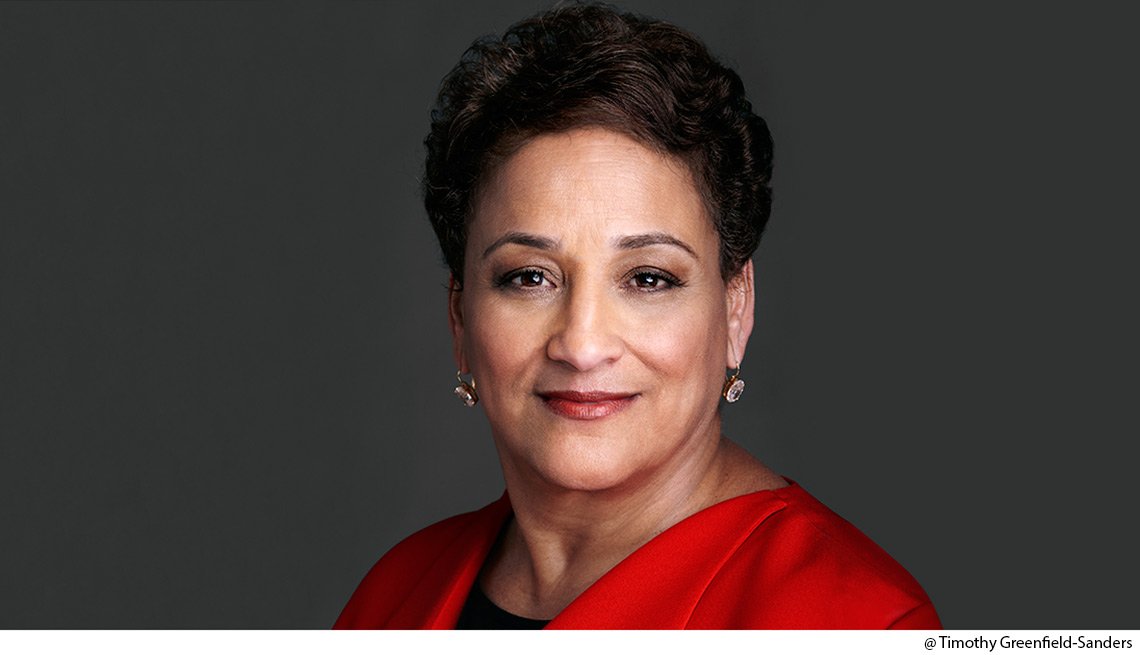
Jo Ann Jenkins is a nationally recognized leader and dynamic change agent with a 25-year track record of growth and innovation at some of the nation’s largest public and nonprofit organizations. As CEO of AARP, she is at the helm of the world’s largest nonprofit, nonpartisan membership organization, where she leads a nationwide network of staff, volunteers and partners helping the more than 100 million Americans 50 and older achieve health security, financial resilience and personal fulfillment. Her signature rallying cry to Disrupt Aging! is designed to revolutionize society’s views on aging by driving a new social consciousness and sparking innovative solutions for all generations.
Jenkins, a proven innovator, joined AARP in 2010 as president of AARP Foundation, AARP’s affiliated charity. She led that organization’s far-reaching development and social impact initiatives, including Drive to End Hunger, a national effort by AARP and AARP Foundation to help the millions of older Americans who struggle with hunger every day. Under her leadership, the foundation’s overall donor base increased by 90 percent over two years. Prior to joining AARP Foundation, she served on the board of directors of AARP Services Inc., beginning in 2004 and becoming its chair in 2008.
She came to AARP Foundation from the Library of Congress, where she served as chief operating officer, responsible for managing the library’s day-to-day operations, its 4,000-person staff and its budget in excess of $1 billion. During her 15-year tenure, she developed and directed the library’s most high-profile projects, including the renowned National Book Festival and the Library of Congress Experience.
Her federal career began at the Department of Housing and Urban Development, and she was rapidly promoted to progressively more responsible leadership positions in the U.S. Department of Transportation and the Department of Agriculture’s Office of Advocacy and Enterprise. Jenkins was a delegate and founding fellow to the U.S.-Japan Leadership Program, a 1999 graduate of Leadership America and a Malcolm Baldrige fellow (2013). She serves as a member of the National Advisory Board of Caring for Military Families. She received the Black Women’s Agenda Economic Development Award in 2013 for spearheading investments undergirding innovative social impact programs and is the recipient of the 2014 Peace Corps Director’s Award. Jo Ann is one of the NonProfit Times’ Power and Influence Top 50 for 2013, 2014 and 2015, as well as winner of SmartCEO’s 2015 BRAVA award honoring top female chief executives. Washington Life Magazine named her one of its Power 100 in 2015.
A native of Mobile, Ala., she earned her B.S. from Spring Hill College. She is a 1998 graduate of the Stanford Executive Program, offered by the university’s Graduate School of Business, and was awarded an Honorary Doctorate in Humane Letters by Washington College in May 2014.
Thursday, July 7, 2016
Meet Dr. Ayanna Howard: Roboticist, AI Scientist, and Old School #Blerd

Today, Dr. Ayanna Howard is a respected roboticist and a Motorola Foundation Professor in the School of Electrical and Computer Engineering at Georgia Tech’s Institute for Robotics and Intelligent Machines.
[Related: Diversifying Google: Meet Three Black Google Engineers]
She received her B.S. in Engineering from Brown University, her M.S.E.E. from the University of Southern California, and her Ph.D. in Electrical Engineering from the University of Southern California. Her area of research focuses on humanized intelligence (what we informally call “Artificial Intelligence”). She is renowned for creating robots for studying the impact of global warming on the Antarctic ice shelves.
At NASA’s Jet Propulsion Lab, she led research on various robotics projects and was a senior robotics researcher, eventually earning NASA’s Honor Award for Safe Robotic Navigation Task, among many other distinguished science awards and honors.
BlackEnterprise.com interviewed Dr. Howard about her early days, about Artificial Intelligence, and her thoughts on diversity and inclusion in STEM.
BlackEnterprise.com: How did you find your way into robotics and AI/humanized intelligence research?
Dr. Howard: Robotics has been something I wanted to do since middle school. I was a Sci-Fi nut. I loved the original Star Trek. The Next Generation was okay, but nothing like Kirk.
I remember watching. I wanted to do something in Sci-Fi. Wonder Woman, The Bionic Woman … I was totally fascinated. I wanted to be The Bionic Woman, which of course, is not a career.
I started working at JPL (NASA’s Jet Propulsion Lab) after my freshman year in college. That’s when I became involved in programming. I was never classically trained as a computer scientist. I had to learn db4 and Pascal. JPL — they do robotics. So, I paired up with a group focused on AI. When I started grad school I had to figure out if I could use what I was doing at JPL with what I was doing at grad school.
It’s one of those fields where you simply don’t see many, if any, women of color. Do you feel like an anomaly, and if so, how do you deal with that? Or is it something you don’t really think about?
It would affect me — when you go into a room and there is no one in there that remotely looks like you. It does affect you when you are younger; when you get questions from others, “Are you supposed to be here?”
You think, “Maybe there is a reason why I am the only one.” You need people to say, “Yeah, you can do it!”
My mom always called me stubborn. You told me I couldn’t do it is best way for me to try and figure out how. I wanted to do a Ph.D., I was challenged.
Can you talk about robotics without talking about AI? Are the two independent areas of research?
You can talk about AI outside the domain of robotics because intelligence and learning can be applied to computers; one that learns how you type, for example. It’s a learning system, not a robotics system.
At a CES 2016 panel on AI, there was a discussion that AI is moving away from “science project” territory and becoming something with more practical, real-world application? Do you agree?
I do. Although, I don’t think people realize it. For example, if you use your phone and you use Siri and you are always asking for a new Thai restaurant in Atlanta, eventually it learns, “This person is not interested in Chinese or Soul food.” We don’t even think about it — it learns as you use it. If you go to Google and you search on different machines you get different results.
There was also the discussion that the use of the term “artificial” is outdated and not quite accurate … that there needs to be a new way to think about AI. Your thoughts on that?
I never use the term “AI.” I use the term “humanized intelligence.” The whole aspect of intelligence is that learning is done in the context of people. It’s our environment. We are using these systems to enhance our quality of life. We would not be happy with an artificial system that does stuff that might be optimal but not in the way we do things.
What do you see as the difference between business uses of AI versus consumer uses?
I see at least in the startup space, a lot of the companies getting investments are in the data-mining space. Look at Netflix — that’s enterprise learning people’s preferences — [to] deliver ideal content. Machines really help out our own quality of life, on the consumer side. For me, it’s my own personal preference — individuals listen to one song [for example] and then with preferences, the next time [you sign-in] you get better [selections].
It’s almost kind of scary … once you use these learning apps they are pretty good at “getting it” in a short time. Algorithms are getting better, and of course there is more data.
Steven Hawking, Bill Gates, and other tech leaders wrote a letter about the danger of AI after the military announced it was funding research to develop these autonomous, self-aware robot soldiers. Hawking wrote,“humans, limited by slow biological evolution,” couldn’t compete and would be superseded by AI and that AI could be more dangerous than nuclear weapons. What are your thoughts on this?
I am on the other side of the camp. [AI] is no more dangerous than any other kind of tech. If I give you anything, there is a good and a bad; by nature we have good people and bad people. You can’t stop that.
The problem is if you say ‘no,’ the good people cannot work on it. All you have in society are those who are not following the rules — just creating the bad. So then, we are destined to go down the path we don’t want to go down. We can create tech that is good and has social impact.
What will AI be like in 20 years?
I do predict that it will just be “programs” not called “intelligence.” I see learning intelligence algorithms integrated in any tech you can think of; appliances, cars, phones, to our education system. And I also see it integrated into hardware; into robotics, trains — physical things … as well as [continued integration] into smart homes.
Finally, do you see, especially as a professor, progress in the numbers of minorities in STEM studies or careers?
I do, but [there’s] a caveat. It’s better — and although I see an increase in the number of females and minorities, it still doesn’t reflect the demographics, there is still that gap. Is it widening if you include the world’s demographics? Yes, that gap might be widening, but if I look at year-to-year increase, it’s better.
Source: http://www.blackenterprise.com/technology/meet-dr-ayanna-howard-roboticist-ai-scientist-and-old-school-blerd/2/
Monday, June 6, 2016
Being F1's first black driver is important

When I first started in Formula 1, I tried to ignore the fact I was the first black guy ever to race in the sport.
But, as I've got older, I've really started to appreciate the implications. It's a pretty cool feeling to be the person to knock down a barrier - just like the Williams sisters did in tennis or Tiger Woods in golf.
I get kids from all different cultures and nationalities coming up to me now, all wanting to be F1 drivers. They feel the sport is open to everyone. That's why it was so great to do the Top Gear festival in Barbados last weekend.
I had so much fun, although being there meant so much more to me than having a good time. My immediate family are from the West Indies - from Trinidad and Grenada - and I have relatives all over the Caribbean.
I am the only representative of that part of the world to drive in F1, so when Top Gear told me about the event I immediately said: "I'd love to do it." It was really cool to go there and it was so busy. Thousands turned up. I heard people flew in from Jamaica and Trinidad just to see me. It was weird. It was almost like it was my event.
In fact, Jeremy Clarkson said to the crowd at one point that "15% of the people are here to see Top Gear and 85% to see Lewis". It was unbelievable, really one of the best weekends I've ever had... the feeling, the energy I got. The fans were so excited - the most excited I have ever seen in my life. I don't think they have ever seen anything like that before, never heard an F1 car anyway, so it was surreal to be the person to bring that to them and represent F1.
Cricket and football are the biggest sports in the Caribbean, but I've noticed that F1 is increasing in popularity. The event was just a blast. I drove a Mercedes F1 car and 'raced' against rally stunt driver Ken Block. We did 'doughnuts' and everything. I've been wanting to do something like that with Ken for a while and hope we'll be able to do something similar in the future.
A reality check While Barbados and a lot of other places in the Caribbean are beautiful, they're not wealthy. My auntie, for example, lives in Grenada in a shack that is no more than 15ft square. That's how my dad's dad lived before he came to England. I went to Barbados after visiting Haiti as part of my work as a Unicef ambassador. Every year, I'm trying to do more with charities. I've been working with Unicef for a couple of years now and I signed up with Save the Children in 2013. Haiti is a beautiful place in many respects, but poverty is a real problem.
A lot of money was raised for Haiti after the terrible earthquake in 2010 and things got a bit better there for a while, but conditions have started to deteriorate again and the child mortality rate has begun to increase. No-one should have to live in the conditions that I saw some kids in there. They were malnourished, not eating. We've all seen pictures of children with flies on their faces, sad and hungry, but television simply does not do justice to the tragedy of it.
When you see a two-year-old kid who doesn't have the energy to move, it's devastating. It brings tears to my eyes thinking about it now. I want to bring as much attention to that sort of thing as I can and the film I made there will be shown as part of Sport Aid on 8 June. The next stage in a long battle It's Monaco this weekend, a race I always look forward to. I love street tracks and this is one of my favourites, although my feelings about it have changed over the years.
My win here in 2008 was one of the most significant events of my career, but this is my eighth year in F1 now and I've come to realise that there are so many other great races. Now Monaco is my home, the race is still special but it's different. The first few times I came here, I wanted to emulate Ayrton Senna and win, drive through the tunnel and around all those iconic corners. I lived the dream - and still am living the dream - but the rose-tinted spectacles I once had have gone.
Maybe it's like a relationship... there is the honeymoon period, then it settles down into normality. It's still great, but it moves to a different level. I will still get a buzz every time I climb into the car this weekend - and I still want to be on the top of that podium on Sunday - but, more than anything, I hope it's a good battle. Those first two years I was in F1, Monaco was great, fighting with McLaren team-mate Fernando Alonso in 2007 and then the Ferraris in 2008. Since then, very few races here have been a proper battle between teams vying for victory.
Whoever has the superior car has won. For me, that has taken the passion away a little bit. Competition is what I live for. That's why I never play mind games. Of course, sometimes you say things without realising the implications, but I want to win on the track through pure ability. It's the way I was raised. I certainly don't want to handicap a rival before a race. I want him to be at his best. Then, when I beat him, that's bigger than any psychological ploy.
I was talking to BBC Sport's Andrew Benson
Source: http://www.lewishamilton.com/post/first-black-driver/
Friday, February 19, 2016
5 POWERFUL AFRICAN QUEENS WHO SHOULD ALWAYS BE ACKNOWLEDGED IN HISTORY
There have been several women who have risen to power and greatness in Africa. These women led troops to victory and protected their land. Here is a list of 5 incredible African leaders who gained the respect of both women and men during their reign.

Amina-the-Queen-of-Zaria
1. Amina-The Queen of Zaria, Nigeria, in the 15th Century

Amina is credited as the architect who created the strong earthen walls around the city of Zaria, which was the prototype for the fortifications used in all Hausa states. Amina was 16 years old when her mother became queen, and she was given the traditional title of magajiya. Amina honed her military skills and became famous for her bravery and military exploits, as she is celebrated in song as “Amina daughter of Nikatau, a woman as capable as a man.”
ethio
2. Candace-The Empress of Ethiopia, 332

Candace is noted as being one of the strongest female military tacticians who had excellent skills at commanding a military. It has been told that King Alexander pulled back his army from attempting to invade Ethiopia during 332 BC because of the fear of the great African Empress.
Nef
3. Nefertiti-Queen of Ancient Kemet from 1292 BC to 1225 BC

Nefertiti along with her husband was responsible for the creation of a whole new religion which changed the ways of religion within Egypt. She reigned at what was arguably the wealthiest period of Ancient Egyptian history.
Makeda
4. Makeda-The Queen of Sheba, 960 B C

The story of Makeda is the most interesting because it entails the meeting between her and the biblical King Solomon. She has always been described as the epitome of beauty and power. She had a series of great achievements recorded in the Glory -of-Kings and the Kebar Nagast
Yaa
5. Yaa Asantewa-Ashanti Kingdom, Ghana

Yaa Asantewa exerted great power as Queen Mother and warrior queen of the Asante Empire. She was known as the woman who fearlessly fought against the British colonialist to her exile. Queen Mother Yaa Asantewa was the last woman ever to lead a major war against the colonist.
Source:
http://www.suppressedhistories.net/articles/africanqueens.html
Friday, February 12, 2016
Nas is like...half man, half venture capitalist
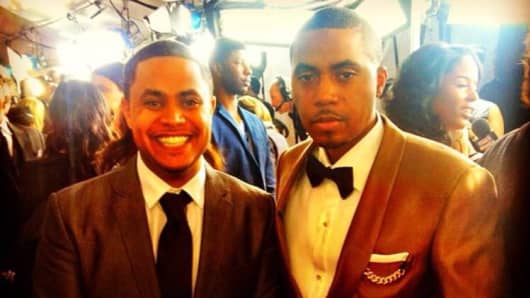
In the world of hip-hop, rappers turned businessmen — Shawn "Jay Z" Carter, Andre "Dr. Dre" Young and Curtis "50 Cent" Jackson being the most recognizable names — have become fairly commonplace. Nowadays, most artists have side ventures in music (of course), apparel, food and beverages. Yet however impressive their individual business prowess, few of them are able to call themselves full-fledged investors in Silicon Valley start-ups.
Count Nasir Jones, the multiplatinum-selling rapper better known by his stage moniker "Nas," among that elite group. The Queens, New York-bred artist who first hit the charts more than 20 years ago has quietly metamorphosed into a prolific angel investor — founding the venture capital firm QueensBridge Venture Partners. The firm (not to be confused with the hip-hop supergroup Jones fronted back in the '90s) funnels cash into start-ups as varied as health care, financial technology and Bitcoin.
QueensBridge, based in Los Angeles, invests in more than 40 start-ups across a range of sectors like financial technology, health care and music production. That has helped put Jones in the same strata as Ashton Kutcher and U2 frontman Bono as the tech world's most influential celebrity investors.
Read MoreChina's tech elite like a new asset class: Start-ups
So in a complex sector where billions are harvested — and cash hungry start-ups are born and buried in the blink of an eye — how does one of rap's living legends define his investment philosophy? Jones' answer is surprisingly simple.
"People. That is the absolute No. 1," Jones told CNBC via email. "I love to bet on great people that inspire me and make me think or see things differently."
A big part of that has to do with the management team, Jones added, which "makes a huge difference in the kinds of companies that will stick out to me."
Some of the companies that have grabbed the artist's attention include Silicon Valley darlings like Lyft, Dropbox, Coinbase and Tradesy, all of which are part of QueensBridge's investment bailiwick.
The ride-sharing service and online storage provider are among technology's biggest "unicorns" — private startups valued at least $1 billion — and are poised to become publicly-traded companies once the current downturn subsides. One of QueensBridge's latest investments is LANDR, a start-up that uses big data and artificial intelligence to produce music. LANDR has raised more than $8 million from various sources in the last few years, including Jones' firm.
Silicon Valley is a long way from the rough and tumble world of the New York City neighborhood that's interwoven in the lore of Jones' musical mythology. The 42-year-old artist, an autodidact who dropped out of school after the eighth grade, told CNBC his affinity for learning led him to technology investing.
"I've always wanted to be surrounded by the smartest people in the world, and didn't want to limit that to just music," he wrote to CNBC.
"I want to meet the people who are innovating in all different fields, and investing lets me do that," Jones said. "I meet the people that are changing the game across all different industries, and I get to be there first at the ground level. It's helped me to progress tremendously in my business."
"It's not easy to find the projects that are going to generate a return, and you have to invest your time and energy — not just your money — into researching the companies that are going to do big things."
-Nasir "Nas" Jones, Rapper and angel investor
Despite the recent downturn in the market, it's been a lucrative time to be a technology investor. Last year was a record for venture capital, with more than $128 billion finding their way to a range of companies worldwide, according to data from KPMG Enterprise and CB Insights. Funds for small start-ups, otherwise known as angel investments, have boomed into a $24 billion market by itself, the Center for Venture Research says.
QueensBridge is pitched by more than 100 companies per month, and invests in only a small fraction of them. Anthony Saleh, Jones' manager and partner at QueensBridge, told CNBC in a recent interview that the firm invests from $100,000 to $500,000 in a company, and has done more than 100 deals in the last six years.
Overall, QueensBridge invests in about 20 per year, Saleh said, adding that the firm is "much more top-down than bottom-up as investors. We concentrate on idea or the product, how big the market is and how the founding team is."
Read MoreTech firms face funding 'Hunger Games'
The due diligence process, Saleh told CNBC, can be at least as qualitative as quantitative. Investing in a potential company can include intangibles like "experience, grit, life motivation … those are keys to what we look at. Then we look at how those things kind of mesh."
Even in the freewheeling world of tech companies, corporate governance is a critical ingredient, he added.
"Nas' biggest fear is investing in a company" where the leadership may be unethical, Saleh told CNBC. "He tends to ask more questions about that."
Helping musicians make music
QueensBridge, along with a clutch of other firms such as Warner Music Group, Real Ventures and YUL Ventures, recently invested in LANDR, where CEO Pascal Pilon fused his training in software engineering with business.
LANDR is Pilon's second start-up, and the post music-production service helps master music for more than 300,000 musicians. Mastering is the final step in music production that happens after you record all of the parts and mix them together.
"We felt there was lots of room for musicians to embrace this thing," Pilon told CNBC in a recent interview.
Given the expense and cumbersome effort involved in creating music masters, "Some musicians have never felt the instant gratification of completing a song, and don't have the money to release more songs," and LANDR helps them get there.
That argument cuts to the heart of the notion embraced by Jones and his team at QueensBridge: that a start-up investment is more than just about financial gain.
"I think anyone can be involved with investing if they have the means, but I'd advise anyone who wants to invest to be careful. You have to study it," Jones said. "It's not easy to find the projects that are going to generate a return, and you have to invest your time and energy — not just your money — into researching the companies that are going to do big things."
Source: http://www.cnbc.com/2016/02/06/nas-is-likehalf-man-half-venture-capitalist.html
Wednesday, February 3, 2016
This Black Entrepreneur’s Tech Start-Up Could Disrupt the Entire Wireless Industry
 Tens of thousands of music fans flocked to Philadelphia this Labor Day weekend for Budweiser’s patriotic “Made In America” festival, where a star studded line-up of musicians, from Beyoncé to De La Soul, took center stage. The explosion of live music spilling on to the Benjamin Franklin parkway, a mixture of iconic voices, electric beats and a roaring crowd, made for an unforgettable outdoor concert experience– but it was the sounds the audience could not hear, a flurry of tones too low for the human ear to detect, that set this year’s festival apart.
“As you approached the festival you received a welcome message. If you were near certain stages, you received reminders for certain events. If you were waiting too long in a certain area you got a free coupon for Budweiser,” says Rodney Williams, co-founder and CEO of LISNR, a mobile communications app that uses inaudible sound waves to send notifications to mobile devices. All of Budweiser’s targeted notifications during the festival, from pop-up coupons to Uber rides, were powered by his communications service .
Imagine shopping and receiving a coupon via text while standing in front of a particular product, or while at a sporting event, receiving a play-by-play of the action you missed while away from your seat. When LISNR’s “smart tones” are emitted in retail spaces, during live events and television broadcasts, the ultrasonic signals trigger mobile devices, which then deliver relevant, hyper-targeted messages based on the users location and activity. Brands like Budweiser, Live Nation, AT&T and the Dallas Cowboys are using LISNR’s revolutionary “smart tone” technology to create one-of-a-kind, interactive fan experiences.
But the real revolution exists within communications technology, an industry that LISNR is poised to disrupt, potentially dethroning Bluetooth as the superior mechanism for wireless transmission.
“Everyone is familiar with Bluetooth, and Bluetooth is light that you can’t see. LISNR is audio that you can’t hear,” Williams explains.
Both Bluetooth, and LISNR, transmit data across devices, but LISNR does so faster, synchronized within 1/10 of a second, and without the need for any additional hardware. Recognizing this potential shift in wireless, from light to sound, CNBC recently ranked LISNR number twelve on its annual Disruptor 50 list.
“We were above Spotify,” Williams notes, citing CNBC’s recognition as his start-up’s greatest milestone to date. They were also listed above Snapchat.
Adding to his list of accomplishments, Williams also received an invitation to speak at the White House for the first annual Demo Day in August of 2015. President Obama hosted the event to showcase the role of entrepreneurship in the U.S. economy. Williams also won the “Gold Lion” at the International Festival of Creativity in Cannes.
Williams’ former role in brand management at Procter & Gamble provided him with unique insights about the challenges that brands face connecting with consumers.
“The holy grail of marketing is to create a technology that can touch consumers where they are,” he says.
Though Williams has always been “obsessed with technology”, his professional background is largely in branding. Williams earned an MBA and a masters in marketing, both by the age of 24. Still, his knack for ideas was evident even at P&G, where he says he was the first marketer to co-write a patent.
“I probably would have been on my thirtieth patent right now, if I was there,” he remarks.
But instead, Williams left P&G to create LISNR in 2012, with four other co-founders. In three years, the startup has raised over $4 million in venture capital funding, a tremendous feat. Less than 1 percent of venture capital backed start-ups are headed by African-American founders.
LISNR is headquartered in downtown Cincinnati, Ohio, an area undergoing an extensive economic revitalization, due in part to the presence of high-octane start-ups like LISNR. It’s not a traditional location for a tech company but it has its perks.
“We have some advantages for the type of talent we can attract out of the Midwest and the cost we’re paying for that talent,” he says.
While his start-up serves as local economic engine, Ohio is a world away from Silicon Valley. That means the company is a world away from top-tier investors with the power and purse strings to turn LISNR into a global brand.
“It’s difficult to get in front of those investors,”he admits. “I’ve had investors tell me if you were to talk to [top-tier investors] you would be in a different place. The reality is it’s difficult.”
Williams is frank about the hurdles in his path, but he remains steadfast in his determination to propel LISNR to the forefront of mobile innovation.
“Anytime I raised any amount of money, I had to talk to 40 investors before I reached the three or four that invested,” he reflects. “I think if you really believes in the idea you should be prepared to talk to 100.”
His advice for budding entrepreneurs is simple.
“Move fast,” he says, “learn and grow.”
To keep up with Rodney Williams and LISNR, follow the start-up on Twitter and Instagram @LISNR.
Source: http://atlantablackstar.com/2015/09/25/black-entrepreneurs-tech-start-disrupt-entire-wireless-industry/
Tuesday, December 8, 2015
7-Year-Old Natalie McGriff Wins $16,000 for Comic Book About Natural Hair
 Natalie McGriff is the 7 year old author of The Adventures of Moxie Girl. Her new comic book tells the tale of a little black girl who hates her natural hair texture. After cleansing her Afro puffs with some magical shampoo, however, her textured coils take on super powers that have the ability to save Jacksonville, Florida’s public libraries from being eaten by monsters.
McGriff presented The Adventures of Moxie Girl at One Spark, the world’s largest crowdfunding festival designed to connect creators with the resources they need to bring their ideas to life. Her comic book was a win, as the young author took home a check for $16,423.69.
Angie Nixon, McGriff’s mother, helped to author the book upon realizing that her daughter suffered with self-esteem issues and hated reading. “‘She now realizes how powerful and awesome her hair is and that in order for her to write a cool book, she needs to read more books and learn different word,’” Nixon says.
McGriff is the winner of One Spark’s Education category. Over 530 projects reportedly competed at One Spark and 300,000 people attended.
At the Black Enterprise Entrepreneurs Summit in Atlanta, May 13-16, we will host several sessions that further explore the topics of entrepreneurship. Sessions like Finding Support for Your Business and Suppliers & Millennials Building Brands in the Digital Space may prove to be of benefit if your children have an entrepreneurial spirit like 7-year-old McGriff. The panels will discuss financing arrangements to jumpstart your business and how successful millennials landed partnerships with the world’s largest retailers, respectively.
Source: http://www.blackenterprise.com/event/natalie-mcgriff-comic-book-natural-hair/
Tuesday, November 3, 2015
Maurice Ashley: INTERNATIONAL GRANDMASTER

Maurice has traveled the world as an ardent spokesperson of the character-building effects of chess. Coming from the rough and tough streets of Kingston, Jamaica and Brooklyn, New York, Maurice has tirelessly shared his compelling story with young people in places such as the crime-ridden neighborhoods of Detroit, the townships of Cape Town, South Africa and the poverty-stricken jungles of Belize. His book, Chess for Success (Broadway Books, 2005) crystallizes his vision of the many benefits of chess, particularly for at-risk youth, and he continuously spreads his message of living one’s dream to universities, businesses, chess clubs and non-profit organizations around the globe.
His app, Learn Chess! With Maurice Ashley, has been sold in over 30 countries, and he has received multiple community service awards from city governments, universities, and community groups for his work. His drive and enthusiasm always have him on the go. In the fall of 2011, Maurice toured six Caribbean nations to bringing chess, books, and technology to kids in the region.
WHAT MAURICE DOES
- Speaking Engagements
- Teaching Life Strategy
- Chess Strategy Teaching
- Tournament Host
Source: http://mauriceashley.com/
Subscribe to:
Posts (Atom)