Showing posts with label History. Show all posts

Friday, February 19, 2016

5 POWERFUL AFRICAN QUEENS WHO SHOULD ALWAYS BE ACKNOWLEDGED IN HISTORY


There have been several women who have risen to power and greatness in Africa. These women led troops to victory and protected their land. Here is a list of 5 incredible African leaders who gained the respect of both women and men during their reign.


Amina-the-Queen-of-Zaria

1.  Amina-The Queen of Zaria, Nigeria, in the 15th Century


Amina is credited as the architect who created the strong earthen walls around the city of Zaria, which was the prototype for the fortifications used in all Hausa states. Amina was 16 years old when her mother became queen, and she was given the traditional title of magajiya. Amina honed her military skills and became famous for her bravery and military exploits, as she is celebrated in song as “Amina daughter of Nikatau, a woman as capable as a man.”

ethio

2. Candace-The Empress of Ethiopia, 332


Candace is noted as being one of the strongest female military tacticians who had excellent skills at commanding a military. It has been told that King Alexander pulled back his army from attempting to invade Ethiopia during 332 BC because of the fear of the great African Empress.


Nef

3. Nefertiti-Queen of Ancient Kemet from 1292 BC to 1225 BC


Nefertiti along with her husband was responsible for the creation of a whole new religion which changed the ways of religion within Egypt. She reigned at what was arguably the wealthiest period of Ancient Egyptian history.


Makeda

4. Makeda-The Queen of Sheba, 960 B C


The story of Makeda is the most interesting because it entails the meeting between her and the biblical King Solomon. She has always been described as the epitome of beauty and power. She had a series of great achievements recorded in the Glory -of-Kings and the Kebar Nagast

Yaa

5. Yaa Asantewa-Ashanti Kingdom, Ghana


Yaa Asantewa exerted great power as Queen Mother and warrior queen of the Asante Empire. She was known as the woman who fearlessly fought against the British colonialist to her exile. Queen Mother Yaa Asantewa was the last woman ever to lead a major war against the colonist.

Source:

http://www.suppressedhistories.net/articles/africanqueens.html

Friday, August 7, 2015

African American Quiz Bowl: Honoring the Legacy: Honoring the Legacy - Press Release

Author Brenda Lang-Knapp sheds light on the African-American truths and contributions to American history. After an extensive research, she put her findings together in “African American Quiz Bowl.” This is not a typical book about African Americans. It is an account of the many trials, tribulations, and contributions of African Americans to the United States in particular and the world in general. 

“The African American Quiz Bowl” is a compilation of facts about African American pioneers and leaders who have made an impact on people’s lives through their innovativeness and talents.  Many African Americans never received the recognition that they deserved because school curriculum and media outlets have neglected to include an unbiased accounting of their achievements. It is a resource that reveals the many contributions of Black people that have been omitted from the history books. 

The concept of the quiz bowl format is to enable teachers and students to learn about African American achievements in a contest type setting. Additionally, for teachers who wish to use the book as a contest, there will be a teacher’s guide of educational activities to complement the text. This will also help students become more knowledgeable about the past and use this information in decision making and lifelong learning.

Written in an easy-to-understand question and answer format, this book could make a difference in how African Americans are viewed in the United States and around the world. Readers should be able to see that they have been shortchanged in their learning, and that they would want to acquire a more accurate understanding and knowledge of this hidden past.


Wednesday, September 11, 2013

At 89, First Nationally Syndicated Black Cartoonist Still Drawing And Giving Back

WEST SACRAMENTO (CBS13) – He sketched his way into the history books, now this famous cartoonist is sharing his gift of art with local kids.

Morrie Turner is the first nationally syndicated African-American cartoonist. He’s also still drawing and giving back to the local community.

Turner is 89 and is still sharing his talent and sense of humor with comic lovers.

“I’m doing my own life history in comic book form and I’m having a wonderful time remembering. And some things are difficult to deal with,” said Turner.

It’s been quite the journey, He’s been sketching since he was 8.

“I was a big fan of the Peanuts and I wanted to do a comic strip like he did. He does the comic strips the way I feel comics should be done,” said Turner.

But here’s how Turner made history: sketching the first black comic strip ever.

“I was surprised because I didn’t think the metropolitan daily newspapers would be interested in anything black,” said Turner.


But they were, and Wee Pals made its debut in 1965 in Chicago. But that contract came with strict rules.

“There were very heavy restrictions on me. In fact, I got behind because they rejected so many strips,” said Turner.

And much to the surprise of the higher-ups, those strips would later be published.

“So I just whited out the dates and changed them like it was new stuff, and they used them,” said Turner.

Today Turner is still sharing his work. Now a handful of other black cartoonists are following his lead.

“I felt I had a responsibility being the very first one,” said Turner.

Now he’s giving back at his church, delivering this artwork to the children’s center, and still sketching and loving it.

“That’s what I get out of bed for. I keep getting new ideas and I’m still drawing,” said Turner.

Turner was raised in Oakland, but he now lives in West Sacramento.

Source: http://sacramento.cbslocal.com/2012/12/30/at-89-first-nationally-syndicated-black-cartoonist-still-drawing-and-giving-back/

Thursday, July 25, 2013

Frederick Douglass Statue Unveiled at U.S. Capitol


A statue honoring activist, abolitionist, author, and former slave Frederick Douglass was unveiled at the U.S. Capitol on Wednesday. A crowd was on hand to watch the dedication of the statue inside Emancipation Hall.

Douglass becomes the fourth African-American with a statue in the U.S. Capitol, joining Rosa Parks, Sojourner Truth and Martin Luther King Jr.

The ceremony honoring Douglass was organized by House Speaker John Boehner and attended by Vice President Biden as well as some of Frederick Douglass’ ancestors, among others.

Sen. Harry Reid took the opportunity to bring attention to District of Columbia statehood since that was also an issue Douglass championed.

“It’s right and fitting that Frederick Douglass, this extraordinary man, this unflinching voice for freedom, this unyielding advocate for justice should be honored with an enduring monument. It is just and proper that more than 600,000 American citizens who reside in the District of Columbia should finally have a statue representing them here in the United States Capitol,” Senate Majority Leader Harry Reid said.

Reid continued, discussing how D.C. residents have all the burdens of citizenship but not all of the rights.

“Washington, D.C., residents have fought and died in every American war, just like residents of Ohio,
Kentucky, or any other state. Washington, D.C., residents deserve the same right to self-government and congressional representation as residents of any other state,” Reid said.

The statue of Douglass is 7 ft. and 1700 pounds.

Speakers at the ceremony also spoke of how Douglass, who taught himself to read and escaped slavery, never surrendered in the face of oppression.

 Source: http://www.yourblackworld.net/2013/06/black-news/frederick-douglass-statue-unveiled-at-u-s-capitol/

Wednesday, June 5, 2013

C.R. Patterson & Sons Company


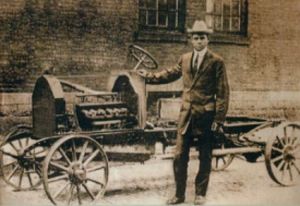
The C.R. Patterson & Sons Company was a carriage building firm, and the first African American-owned automobile manufacturer. The company was founded by Charles Richard Patterson, who was born into slavery in April 1833 on a plantation in Virginia. His parents were Nancy and Charles Patterson. Patterson escaped from slavery in 1861, heading west and settling in Greenfield, Ohio around 1862.

At some point after his arrival in Ohio, Patterson went to work as a blacksmith for the carriage building business, Dines and Simpson. In 1865 he married Josephine Utz, and had five children from 1866 to 1879. In 1873, Patterson went into partnership with J.P. Lowe, another Greenfield-based carriage manufacturer. Over the next twenty years, Patterson and Lowe developed a highly successful carriage-building business.

In 1893 Patterson bought out J.P. Lowe’s share of the business and reorganized it as C.R. Patterson & Sons Company. The company built 28 types of horse-drawn vehicles and employed approximately 10-15 individuals. While the company managed to successfully market its equine-powered carriages and buggies, the dawn of the automobile was rapidly approaching.

Charles Patterson died in 1910, leaving the successful carriage business to his son Frederick who in turn initiated the conversion of the company from a carriage business into an automobile manufacturer. The first Patterson-Greenfield car debuted in 1915 and was sold for $850. With a four-cylinder Continental engine, the car was comparable to the contemporary Ford Model T. The Patterson-Greenfield car may, in fact, have been more sophisticated than Ford’s car, but C.R. Patterson & Sons never matched Ford’s manufacturing capability.

Estimates of Patterson-Greenfield car production vary, but it is almost certain that no more than 150 vehicles were built. The company soon switched to production of truck, bus, and other utility vehicle bodies which were installed atop chassis made by major auto manufacturers such as Ford and General Motors. Its school bus bodies in particular became popular as Midwestern school districts began to convert from horse-drawn to internal-combustion-fired transportation by 1920.

Around 1920, the company reorganized as the Greenfield Bus Body Company but after ten years of steady, if unspectacular growth, the Great Depression sent the company into a downward spiral. Frederick Patterson died in 1932, and the company began to disintegrate in the late 1930s. Around 1938, the company moved to Gallipolis, Ohio, changing its name again to the Gallia Body Company in an attempt to restart its prior success.  The attempt failed and the company permanently closed its doors in 1939.  Like many other small auto manufacturers, the company was unable to compete with Ford, General Motors, Chrysler, and other large automobile manufacturers.

No Patterson-Greenfield automobiles are known to have survived to the present, but some C.R. Patterson & Sons carriages and buggies are extant.

Wednesday, May 22, 2013

BLACK PAST.ORG: Remembered & Reclaimed


BlackPast.org, an online reference center makes available a wealth of materials on African American history in one central location on the Internet. These materials include an online encyclopedia of nearly 3,000 entries, the complete transcript of nearly 300 speeches by African Americans, other people of African ancestry, and those concerned about race, given between 1789 and 2012, over 140 full text primary documents, bibliographies, timelines and six gateway pages with links to digital archive collections, African and African American museums and research centers, genealogical research websites, and more than 200 other website resources on African American and global African history. Additionally, 100 major African American museums and research centers and over 400 other website resources on black history are also linked to the website, as are nine bibliographies listing more than 5,000 major books categorized by author, title, subject, and date of publication. It also features a Perspectives Online Magazine which features commentary of important but little known events in black history often written by the individuals who participated in or witnessed them.  To date more than 100 articles have appeared.  The compilation and concentration of these diverse resources allows BlackPast.org to serve as the "Google" of African American history.

BlackPast.org brings the resources of African American history into every classroom in the world. It also makes every computer, regardless of its location, a classroom in African American history.

BlackPast.org is dedicated to providing the inquisitive public with comprehensive, reliable, and accurate information concerning the history of African Americans in the United States and people of African ancestry in other regions of the world. It is the aim of the founders and sponsors to foster understanding through knowledge in order to generate constructive change in our society.

BlackPast.org brings the resources of African American history into every classroom in the world. It also makes every computer, regardless of its location, a classroom in African American history.

Source: http://www.blackpast.org/

Saturday, March 2, 2013

Because Of Them We Can


As a motivational speaker and a photographer, I recently realized that my lens can also be my microphone.  For Black History Month, I wanted to create a campaign that would empower and excite young people about their history and their future in a creative and yet relatable way.  I thought about my two sons and how they were both born during President Barack Obama's election and re-election. How awesome is that?! From there, I began to think about all of the individuals, past and current, who have and/or continue to blaze new trails and pave the way for the future.  Because of Them, We Can.

With each new day that a photograph has been released, I realize more and more that 28 days just isn't enough time. There are so many people to pay homage to and so many young and impressionable minds to postively influence...now.

This site was created as a way to keep you updated about the campaign and as a way to win your support.  After the request of many, I have made posters and calendars available for sale. Your support will enable me to continue this endeavor beyond Black History Month. And, while it began right outside of Washington DC, I am planning to expand to other cities throughout the country in order to engage and empower youth from all over.


Please stay tuned in here and via my Facebook Fan Page.

Thanks so much for your support and encouragement!

Eunique Jones Gibson
info@euniquejonesphoto.com


Source: http://www.becauseofthemwecan.com

Friday, December 28, 2012

Hidden Colors 2: The Triumph Of Melanin


Hidden Colors 2 is the follow up to the critically acclaimed 2011 documentary about the untold history of people of African and aboriginal descent. This installment of Hidden Colors goes into topics such as: .The global African presence * The science of melanin * The truth about the prison industrial complex * How thriving black economic communities were undermined in America * The hidden truth about Native Americans * And much more

Saturday, October 27, 2012

Mansa Musa Of Mali Named World's Richest Man Of All Time; Gates And Buffet Also Make List


You've probably never heard of him, but Mansa Musa is the richest person ever.

The 14th century emperor from West Africa was worth a staggering $400 billion, after adjusting for inflation, as calculated by Celebrity Net Worth. To put that number into perspective -- if that's even possible -- Net Worth's calculations mean Musa's fortune far outstrips that of the current world's richest man Carlos Slim Helu and family.

According to Forbes, the Mexican telecom giant's net worth is $69 billion. Slim edges out the world's second wealthiest man, Bill Gates, who is worth $61 billion, according to Forbes.

Some of the oldest fortunes in question date back 1,000 years. No. 7 on the list, for example, is William the Conqueror. The illegitimate son of the Duke of Normandy, William lived between 1028-1087 and gained infamy for invading and seizing England in 1066.

According to the Encyclopedia Brittanica, when Musa died sometime in the 1330s, he left behind an empire filled with palaces and mosques, some of which still stand today. But the emperor really turned historic heads for the over-the-top extravagances of his 1324 pilgrimage to Mecca.

The trip, which he embarked up on during the 17th year of the monarch's glittering reign, was hosted by the leaders of both Mecca and Cairo and apparently was so brilliant, it "almost put Africa’s sun to shame."

Musa's wealth was a result of his country's vast natural resources. The West African nation was responsible for more than half of the world's salt and gold supply, according to Net Worth. Of course, the entry also notes that the fortune was also fleeting. Just two generations later, his net worth was gone -- wasted away by invaders and infighting.

As The Independent points out, while the numbers bandied about by this newest list are shocking, many aspects of the run-down aren't surprising: there are no women included, for example, and only three of the richest men are still alive today. Americans dominate the list, however, taking 14 of the 26 spots, including slots two and three.

The "poorest" man on the list is Warren Buffet, who had a peak net worth of $64 billion. Buffet, a noted philanthropist, has since given billions of his fortune away, and Forbes now lists his net worth at closer to $44 billion.

Source: http://www.huffingtonpost.com/2012/10/17/mansa-musa-worlds-richest-man-all-time_n_1973840.html#slide=1653415

Thursday, August 30, 2012

Thursday, June 28, 2012

Sweet Blackberry

Our mission at Sweet Blackberry is to bring little known stories of African American achievement to children everywhere. Unfortunately, our schools often lack the time and resources to teach our children more than a handful of stories of African Americans in history. These triumphant stories of individuals surmounting the odds and making invaluable contributions to our society are inspirational and empowering, illustrating for our children the concept that tremendous obstacles are actually opportunities for greatness. In addition to gaining historical knowledge and perspective, children of all races and ethnicities will feel a sense of shared history.

Sweet Blackberry launched to critical acclaim in February 2005 with its first DVD release, “The Journey of Henry ‘Box’ Brown.” Narrated by Emmy award-winning actress, Alfre Woodard, “The Journey of Henry ‘Box’ Brown” brings to life for young children an extremely important chapter in American History, telling an extraordinary tale of human courage about a man who shipped himself, in a box, from Virginia to Philadelphia to freedom.

Sweet Blackberry’s second film, “Garrett’s Gift,” was narrated by award-winning actress, Queen Latifah. It tells the story of young Garrett Morgan, a creative-minded child who was finally able to focus his talents and energies and become one of the country’s most highly regarded inventors.

Sweet Blackberry’s films, “The Journey of Henry ‘Box’ Brown,” and “Garett’s Gift,” have both enjoyed a long run on HBO and HBO Family, and have both garnered several awards, including the Parent’s Choice Award.

Pulling from a deep tradition of storytelling through both words and music, Sweet Blackberry brings a wealth of talent to the screen. Sweet Blackberry’s stories are narrated by actors from film and television, and the narration is complemented by vibrant, eclectic music.

Sweet Blackberry’s plans are to create content that works across multiple media platforms, leveraging the power of stories to teach and reach young children wherever they may be.

Sweet Blackberry was founded by actor/writer, Karyn Parsons (The Fresh Prince of Bel Air). As a new mom, Parsons was motivated by a strong desire to instill a sense of culture and heritage to her daughter. Inspired by her own mother and upbringing, Parsons created Sweet Blackberry—delivering to all children, stories that need to be told and heard.

This culture is American culture; this history is American History.

Source: http://sweetblackberry.org

Friday, January 27, 2012

A Negro Explorer at the North Pole: The Autobiography of Matthew Henson


When Commander Robert Peary reached the North Pole on April 6, 1909, one other American was with him—Matthew Henson, a black man from Maryland who had been Peary’s faithful companion through 22 years of polar exploration. This is Henson’s story in his own words, from his early years as a sailor to his meeting Robert Peary and their multiple expeditions to the North Pole. Filled with hair-breadth escapes from disaster and haunting evocations of life in the Arctic, this classic of exploration literature reveals Henson as the true hero of the journey, one who had been forced to accept a lower status because of his race. It was Henson who learned to speak the native tongue of the Eskimos, Henson who handled the dogs and broke the trail, and Henson who arrived first at the North Pole after being purposely left behind by Peary. New to this edition are rare articles and photos of the expedition that Henson published to set the record straight.

Monday, December 26, 2011

Little-Known Black History Fact: Charles 'Honi' Coles

Charles "Honi" Coles was a famous tap dancer of the 1930s who was said to have "the fastest feet in the business." People who witnessed his dance at the Apollo Theater said that his feet moved so fast, it looked like an illusion.

Coles was given the nickname 'Honi' by his mother. The streets in Coles' hometown of Philadelphia were beaming with aspiring tap dancers "cutting" one another in contests. That’s where Coles "honed his craft."

Coles got his start with a group called The Three Millers in New York, who danced on top of pedestals and tiny platforms, doing barrel turns, wings and over-the-tops. Unfortunately, Coles learned that his partner replaced him in the group, and he retreated back to Philly. After connecting with the Joffrey Ballet, Coles made history when he performed in their unique production of Agnes DeMille’s "Conversations About the Dance." For the first time, tap made a debut in concert dance.

The late, great Lena Horne once said of Coles, "Honi makes butterflies look clumsy. He was my Fred Astaire."

In the 1940s, Coles joined with Cab Calloway to create a duo with Charles "Cholly" Atkins. The two would perform as Coles and Atkins for years. He danced with an array of jazz greats: Calloway, Louis Armstrong, Lionel Hampton, Billy Eckstine, and Count Basie.

Coles made his broadway debut in "Gentlemen Prefer Blondes” in 1949. He also appeared in "Bubbling Brown Sugar" and "My One and Only," and received a Tony Award for his performance. He was 72 years old. In 1949, Coles helped to found The Copasetics, a tapping fraternity made in honor of Bill "Bojangles" Robinson.

In the 1980s, he taught dance and dance history at Yale, Cornell, Duke and George Washington universities. Coles also had a small but stellar part in the 1984 film "Cotton Club" - where he danced in a classic scene featuring Maurice and Gregory Hines and a mix of legendary hoofers - and a bit part in the hit 1987 hit movie, "Dirty Dancing."

In 1992, the year after he was awarded the National Medal of Arts by President George H.W. Bush, Coles died at age 81. He was posthumously inducted into the American Tap dance Foundation's Tap Dance Hall of Fame in 2003.


Source: http://www.blackamericaweb.com/?q=articles/news/the_black_diaspora_news/35138

Tuesday, December 20, 2011

Red Tails: The Red Tail Squadron

Like thousands of other Americans in 1940 and 1941, the young black men who would become known as the Tuskegee Airmen were full of patriotic zeal during the run-up to the country’s involvement in World War II. What set them apart was that they wanted to fight the enemy from the air as pilots. Many applied to U.S. Army Air Corps flight training programs, but all were rejected because of the color of their skin.
In 1941, under pressure from political groups and President Franklin D. Roosevelt, the Army Air Corps reversed its position on accepting black flight program applicants. However, the brass was not fully committed to this change so they set up the “Tuskegee Experiment.” The black pilot cadets would train at a segregated base in Tuskegee, Alabama. Flight support personnel would train at Chanute Air Base in Rantoul, Illinois, but would also be segregated.
It was called an “experiment” because the initiative was expected to fail. The Army’s decisions about blacks in its ranks were still influenced by a 1925 Army War College report called The Use of Negro Manpower in War. The 67-page report was full of cruel generalizations about the behavior of black men during wartime and the black race in general. It even went so far as to state that black men are “very low in the scale of human evolution.” The black cadets were determined to create a record of excellence during their training and future war service to make the “experiment” work.
The first class of 13 cadets began training in 1942. Five young men made it through the entire program, earning their wings in March 1943. One of those was Captain Benjamin O. Davis, Jr., a 1936 West Point graduate who had endured four years of “shunning” by his white classmates who only spoke to him when required to for class or military training. Davis’ father, General Benjamin O. Davis, Sr., was the only black line officer in the U.S. Army at that time. Davis, Jr. would soon join him as the second black line officer as he moved through the ranks as a leader of the Tuskegee-trained pilots. He would become the U.S. Air Force’s first black general.
In all, 996 men earned their wings at Tuskegee. 450 of them would be sent to fight and fly in North African and Europe as fighter pilots. The others were trained as bomber pilots, but the war ended before they could be deployed to the Pacific theater. Of those who fought, 66 gave their lives and 32 became prisoners of war.

Saturday, July 25, 2009

Buried City in Oasis Lends View of Ancient EgyptBy Rob Goodier, LiveScience Staff

A trench that was cut through collapsed mud bricks and the compacted debris of buildings leveled centuries ago is revealing a dusty scene of roof-topped streets in ancient Amheida, a city marooned on an oasis deep in Egypt’s western desert.

The latest in a chain of archaeological discoveries in a site that dates back at least 5,000 years, the covered streets are a glimpse into rural life under the Egyptian sun.

At Amheida, archaeologists led by Roger Bagnall at New York University have sifted through the remains of a settlement far removed from the thoroughfares of the Nile Valley. The site is in the Dakhleh Oasis, 500 miles (800 kilometers) from Cairo and 185 miles (300 kilometers) from Luxor, a religious and political hub of ancient Egypt.

The archaeological work has yielded a treasure trove of art and writing. Through this rural lens, archaeologists are shifting their notions of education in ancient Egypt during the Greek and Roman empires. And they have noticed deep connections between powerful central governments and the outposts in the oases.

Bagnall described the latest discoveries at a conference in Manhattan last month.

First glimmer of Egyptian culture

The Dakhleh Oasis stretches several hundred square miles below a barren escarpment, hedged by the dunes of the eastern Sahara that roll to its edges. The sand contrasts with the farms and the cattle-grazed meadows within. Wine, olives and dates remain important to the economy for the 75,000 residents of the oasis today.

People settled in Dakhleh at least 5,000 years ago during the Neolithic period, the twilight of the Stone Age as agriculture began to catch on. At that time, the climate was wetter and residents were surrounded not by a desert, but a savanna. Bagnall suspects that Egypt's first farmers may have worked in the oasis before agriculture arrived in the Nile Valley.

“They may well have contributed something to the development of Egypt before the time of the pharaohs,” Bagnall said.

The early settlers of the oasis cultivated figs, dates and, later, olive groves and littered the site with pits. They were expert vintners, as well, likely producing finer wines than those available in the Nile Valley, in part because they could control the irrigation. Until the 19th century, those who lived in the oases may also have been the sole producers of cotton in the Roman period, a luxury at the time.

“They were always, in some sense, peripheral or marginal,” Bagnall said. “But they were important sources of things people couldn't produce in the [Nile] Valley.”

By the time the Greeks and then the Romans conquered the region, excavated statues and paintings suggest that Amheida followed the dominant culture in lockstep. In spite of their geographic isolation, they were fully integrated in the Roman world, Bagnall said, displaying the same art and mythology found throughout the Roman Empire.

The surprising quality of education

Scholars have thought that schools in Roman Egypt were chintzy affairs, often with just one teacher who held forth to a handful of students and charged their parents for his effort.

“I always laugh because they were exactly like the teachers now. They were kind of looked down upon.” said Raffaella Cribiore, a classics professor at Columbia University in New York. Today, like then, teachers are paid little, she explained. But the denigration of the profession cut even deeper centuries ago. “If someone said your father is a teacher, it was a common slur, it was really an offense,” she said.

The school room that archaeologists uncovered at Amheida lent a different perspective. Divided into three rooms lined with benches for more than 50 students, it more closely resembled today's formal institutions. Students were segregated by subject and age, and the teacher’s lessons were scrawled on the walls, which were treated like blackboards at the time. What remains of that writing has caught Cribiorre’s attention.

"There you have a poem written on the wall in the column in red ink. The poem speaks of rhetoric. It says, 'come on, get up, get to work,'" she explained. "It's encouragement from a teacher of rhetoric to his students. But it's all poetry. In Greek."

Scholars had thought that rhetoric, not poetry, was taught in Roman Egyptian schools. The schools churned out politicians and bureaucrats, aristocratic young men destined for leadership. Prior to the find, Cribiore had suspected that they might also have learned poetry, and this confirmed it. The teacher had written his lessons in verse, showing that schools from the period were more formal than once believed.

Brasso and sagging stairs

The archaeologists at Amheida apply dental tools,Brasso metal polish and gentler chemicals to hundreds of Roman coins and sift through millions of potsherds, sorting and drawing some of them for records.

"You can learn a lot from pottery," said Jen Thum, an undergraduate student from Barnard College who accompanied Bagnall early this year. They can help date a site, for example, or a concentration of them in one spot is a telltale sign of an ancient kitchen.

Like many of the oasis' residents, Thum lived in a mud-brick house, ate variants of falafel called tameya and watch televised soccer games. The walls of her borrowed home cracked and the earthen staircase sagged during an especially intense rain storm this year. It's a quirk of excavation in the rural oases. Bagnall and his team continue to piece together this oblique perspective on ancient Egypt. Still on the docket are the hunt for a church, and the exploration of large, buried cemeteries.

Source: http://www.livescience.com/history/090715-amheida-excavation.html

Tuesday, June 16, 2009

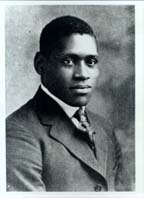
Paul Robeson


"Like every true artist, I have longed to see my talent contributing in an unmistakably clear manner to the cause of humanity."

ARTIST HERO: PAUL ROBESON

by TONY

1998 marked the centennial of Paul Robeson's birth. On April 9, 1898, an eighth child was born to Maria Luisa Bustill, the Quaker abolitionist, and William Drew, the former slave who had escaped to the north, gone to college, and become a minister. Paul was brought up to value education as much as his parents did.

Paul Robeson attended Rutgers University (he was the third black student in that school's history) in New Jersey, where he was an All-American football player and excelled in other sports as well. When he graduated, he was valedictorian of his class. He enrolled in Princeton Law School and became a lawyer, but due to the racism of that time, he had trouble finding employment.

It was this inability to move forward as a lawyer which compelled Robeson to change his life's course. Thus, he began the acting and singing career by which so many people came to love and admire him.

Robeson had a natural talent for performing and an enormously deep voice. When he appeared in the Broadway musical, Showboat, he sang a song that will always be remembered by the sound of that voice. "Ol' Man River" is now considered classic Paul Robeson. He also played the title role in three different productions of Othello, both in America and England, and in movies such as Sanders of the River, King Solomon's Mines, and The Proud Valley. He was greatly admired as an entertainer.

Robeson was deeply political. He believed in justice for all people. Even before his fame was at its peak, he traveled the world performing in benefits and speaking out for worker's rights, racial equality and peace. He fought for racial justice in America, but he also devoted his time, energy and money to groups outside the American black community. For instance, he spoke out against the Nazi's persecution of the Jews (among others) in Europe during the 1930s and 40s. Along with many other Americans, he participated in the Spanish Civil war against the fascist dictator, Francisco Franco.

Of all his pronounced ideologies, perhaps the most controversial was his support of communism. Despite the growing fear of communism in the United States, Robeson remained steadfast to the idea of worker's rights and even to the Soviet Union, which was at that time still attempting to establish a working communist society. It was not uncommon for people suspected of sympathizing with the Soviets to be brought before a governmental panel called the House Committee on Un-American Activities. Many artists and actors were brought before this committee. This committee declared that Robeson's outspoken support of communism was unpatriotic and accused him, for instance, of trying to set up a Soviet state in the American South. The committee was powerful: It managed to take away Robeson's passport, and to coerce other black leaders into testifying against Robeson, but no one could prove any of the ridiculous accusations.

Robeson eventually recovered his passport and was able to tour and perform again for awhile. When he became ill, he left the stage and managed to live a private life for a short time.

Although he faded from public view, his work and dedication to political causes remained active. He died on January 23, 1976, at age 77, in Philadelphia. The courage of his convictions and his strength before adversity make Paul Robeson a hero to people around the world.


From left to right: Theatre Artist Avery Brooks, Princeton University President Shirley Tilghman, Vice President of Diversity Development for the Postal Service Murry Weatherall, Paul Robeson, Jr., Rep. Rush Holt, D-N.J., Princeton University Provost Amy Gutmann and NJ Secretary of State Regena Thomas applaud as a stamp honoring entertainer Paul Robeson is unveiled in Princeton, N.J., Tuesday, Jan. 20, 2004. The stamp is the newest addition to the Black Heritage Stamp Collection. (AP Photo/Tim Larsen)

Paul Robeson continues to inspire people and his memory lives on. On January 20, 2004 a postal stamp honoring Paul Robeson was unveiled in Princeton, New Jersey. The stamp is part of the Black Heritage Stamp Collection.
Written by TONY


RELATED LINKS

The Literature and Culture of the American 1950s
Find out more about the political climate of the fifties. A detailed reading list.

Paul Robeson's Heroes

Paul Robeson Online From the Princeton Public Library

EXTRA INFORMATION


Listen to Paul Robeson's music online (3,128 K)

Much of the information for this story came from Martin Duberman's book Paul Robeson: A Biography.


RECOMMENDED READING

Here I Stand
by Paul Robeson, Sterling Stuckley (Intro)
Paul Robeson: A Biography
by Martin Duberman

Paul Robeson: The Life and Times of a Free Black Man
by Virginia Hamilton

Saturday, September 13, 2008

Chess Originated In Africa

In Ancient Egypt, games were part of religious life.  Their most popular game was Senat in which counters, or markers, were moved around a game board. Winning the game came by one player removing all of his/her pieces before the opponent did (Hawass,Tutankhamun, p235).  A wall painting on the tomb of the Egyptian queen Nefretari, wife of Ramses II (1304-1237 BC), shows her playing Senat. It symbolizes the struggle between good and evil as well as stands magically for rebirth and resurrection. The African games known as Mancala or Wari are among the oldest games, dating back at least to 5000 BC.  In these games, beans, seeds, and other small objects were moved around a playing board with hollowed out cups.  A player tried to capture as many objects as possible.  Both Senat and Mancala games and four other types were discovered when the tomb of Tutankhamen -- an Egyptian king who reigned from 1348-1339 BC -- was discovered.  An Egyptian board game of primitive "checkers" from 1000 BC is in the British Museum.  Another type -- called Nine Men's Morris, Mill, Morelles, or Morels -- has been found carved in the roofing slabs of an Egyptian temple and dating between 1400 and 1300 BC.  The object of the game, of which there are many versions, is for each player to try to capture an opponent's piece and to prevent the opponent from moving any pieces. Note how closely this resembles Chess as we know it today.

But Western literature admits that the origin of Chess is uncertain. Whenever such a statement is made, experience has taught me that the uncertainty most likely indicates it originated in Africa. Many Western scholars believe chess started in Pakistan as an offspring of a Hindu game under the Sanskrit name "Chaturanga" about 500 AD. Others say it is from India or China. Then the game spread to Persia where it was given the name "Shah" (which means "king") and "Shah mat" ('the king is dead'). The Arabs learned the game when they conquered Persia in the 600's and they introduced it into Europe by way of Spain, Sicily, and Constantinople. The pieces were named for roles in the courts of kings during the Middle Ages-king, queen, knight, and bishop. Chess' strategy and play are modeled on how wars were fought in the Middle Ages. By the 16th century chess moves had assumed their modern form.

Chess is a board game consisting of a miniature battlefield whereby the opponents engage in organized attacks and defense, each conducted with the definite objective of protecting ones king from being trapped or "checkmated" (i.e. where the king is unable to escape capture). Every new game is a different battle and the players are the generals who plan the battle. Chess is one of the oldest of all games of pure mental skill as well as one of the most interesting and mind focusing and challenging of all board games. Every game of chess can be recorded in the form of a code so that after the game is over it can be studied to learn what was done properly and improperly. "After-study" is fundamental to any thinking process that calls for choices, decisions and solutions.

website: www.jablifeskills.com

Saturday, August 30, 2008

The Treasures of Timbuktu

Scholars in the fabled African city, once a great center of learning and trade, are racing to save a still emerging cache of ancient manuscripts
  • By Joshua Hammer
  • Smithsonian magazine, December 2006
White robe fluttering in the desert breeze, Moctar Sidi Yayia al-Wangari leads me down a sandy alley past donkeys, idle men and knapsack-toting children rushing off to school. It is a bright morning, my second in Timbuktu, in the geographic center of Mali, and al-Wangari is taking me to see the project that has consumed him for the past three years. We duck through a Moorish-style archway and enter his home, a two-story stone structure built around a concrete courtyard. With an iron key, he unlocks the door to a storage room. Filigrees of light stream through a filthy window. The air inside is stale, redolent of mildew and earth.
"Regardez," he says.

As my eyes adjust to the semidarkness, I take in the scene: cracked brown walls, rusting bicycles, pots, pans, burlap sacks of rice labeled PRODUCT OF VIETNAM. At my feet lie two dozen wood-and-metal chests blanketed in dust. Al-Wangari flips the lid of one of them, revealing stacks of old volumes bound in mottled leather. I pick up a book and turn the yellowing pages, gazing at elegant Arabic calligraphy and intricate geometric designs, some leafed in gold. Turquoise and red dyes are still visible inside grooved diamonds and polygons that decorate the cover.

Perusing the volumes, I draw back: the brittle leather has begun to break apart in my hands. Centuries-old pages flutter from broken bindings and crumble into scraps. Some volumes are bloated and misshapen by moisture; others are covered by white or yellow mold. I open a manuscript on astrology, with annotations carefully handwritten in minute letters in the margins: the ink on most pages has blurred into illegibility. "This one is rotten," al-Wangari mutters, setting aside a waterlogged 16th-century Koran. "I am afraid that it is destroyed completely."

In the mid-16th century, Mohammed abu Bakr al-Wangari, an Islamic scholar from the town of Djenné, migrated north to Timbuktu, then a city of perhaps 100,000 and a religious, educational and trading center, and founded the University of Sankoré, a loose affiliation of mosques and private homes that provided subsidized instruction to thousands of students. During the next 30 years, al-Wangari amassed handwritten books on subjects ranging from history to poetry to astronomy, from both Timbuktu and other parts of the Islamic world. After the scholar's death in 1594, the books passed to his seven sons, and subsequently dispersed to an ever-widening circle of family members. And there they remained until three years ago, when al-Wangari, 15 generations removed from the original collector, set out to recover his family's treasures. "It's a colossal task," says al-Wangari, 42. Slim and intense, he studied Arabic literature in Fez, Morocco, and later worked as a UNESCO consultant in Dakar, Senegal. "I'm working at this every waking minute, and I'm not even getting paid a franc."

A little later he leads me farther down the alley to a half-finished building, marked by a sign that reads AL-WANGARI LIBRARY RESTORATION PROJECT, where laborers are mortaring concrete-block walls and laying bricks to dry in the sun. We cross a courtyard, enter a gloomy interior and walk past dangling wires, stacks of marble tiles and gaping holes awaiting windows. "This will be the reading room," he tells me, gesturing to a bare cell with a dirt floor. "Over here, the workshop to repair the manuscripts." Then al-Wangari points out the centerpiece of his new creation: a vault reserved for the bones of his ancestor, Mohammed abu Bakr al-Wangari, who lived in the house that once stood on this spot. "He would be happy to know what's happening here," he says.

For centuries, manuscripts such as these remained some of Africa's best-kept secrets. Western explorers who passed through Timbuktu in the early 1800s, some disguised as Muslim pilgrims, made no mention of them. French colonizers carted off a handful to museums and libraries in Paris, but for the most part left the desert empty-handed. Even most Malians have known nothing about the writings, believing that the sole repositories of the region's history and culture were itinerant-musician-entertainers-oral historians known as griots. "We have no written history," I was assured in Bamako, Mali's capital, by Toumani Diabate, one of Mali's most famous musicians, who traces his griot lineage back 53 generations.

Lately, however, the manuscripts have begun to trickle out into the world. Local archaeologists are chasing down volumes buried in desert caves and hidden in underground chambers, and archivists are reassembling lost collections in libraries. South Africa's president, Thabo Mbeki, and Harvard professor Henry Louis Gates Jr. have lent their names and prestige to restoration projects. Foreign academics and book restorers have arrived in Timbuktu, providing expertise, money and materials to rescue the manuscripts before it is too late. Improperly stored for centuries, many of these works have already been ruined. Heat and aridity have made pages brittle, termites have devoured them, dust has caused further damage, and exposure to humidity during the rainy season has made the books vulnerable to mildew, which causes them to rot. "We are in a race against time," says Stephanie Diakité, an American based in Bamako who runs workshops in Timbuktu on book preservation.

The manuscripts paint a portrait of Timbuktu as the Cambridge or Oxford of its day, where from the 1300s to the late 1500s, students came from as far away as the Arabian Peninsula to learn at the feet of masters of law, literature and the sciences. At a time when Europe was emerging from the Middle Ages, African historians were chronicling the rise and fall of Saharan and Sudanese kings, replete with great battles and invasions. Astronomers charted the movement of the stars, physicians provided instructions on nutrition and the therapeutic properties of desert plants, and ethicists debated such issues as polygamy and the smoking of tobacco. Says Tal Tamari, a historian at the National Center for Scientific Research in Paris, who recently visited Timbuktu: "[These discoveries are] going to revolutionize what one thinks about West Africa."
Some scholars believe that the works might even help to bridge the widening gap between the West and the Islamic world. Sixteenth-century Islamic scholars advocate expanding the rights of women, explore methods of conflict resolution and debate how best to incorporate non-Muslims into an Islamic society. One of the later manuscripts discovered, an 1853 epistle by Sheik al-Bakkay al-Kounti, a spiritual leader in Timbuktu, asks the reigning monarch, the Sultan of Masina, to spare the life of German explorer Heinrich Barth. The sultan had ordered Barth's execution because non-Muslims were barred from entering the city, but al-Bakkay argued in an eloquent letter that Islamic law forbade the killing. "He is a human being, and he has not made war against us," al-Bakkay wrote. Barth remained under the protection of al-Bakkay and eventually made it back to Europe unscathed. "The manuscripts show that Islam is a religion of tolerance," says Abdel Kader Haidara, who owns one of the largest private collections of manuscripts in Timbuktu, including the letter from al-Bakkay. Haidara is raising funds to translate some of them into English and French. "We need to change people's minds about Islam," he says. "We need to show them the truth."

The last time I'd visited Timbuktu, in 1995, there were only three ways to get there: a three-day journey upriver by a motorized pirogue, or canoe, from the trading town of Mopti; a chartered plane; or a flight on the notoriously unreliable government airline, Air Mali, mockingly known as Air Maybe. But when I returned last February, at the end of the cool, dry season, to check on the city's cultural revival, I flew from Bamako on a commercial flight operated by a new private airline, Mali Air Express—one of four flights to Timbuktu each week. The Russian-made turboprop, with a South African crew, followed the course of the Niger River, a sinuous strand of silver that wound through a pancake-flat, desolate landscape. After two hours we banked low over flat-roofed, dun-colored buildings a few miles east of the river and touched down at Timbuktu's tarmac airstrip. Outside a tiny terminal, a fleet of four-wheel-drive taxis waited to ferry tourists down a newly constructed asphalt road to town. I climbed into a Toyota Land Cruiser and directed the driver, Baba, a young Tuareg who spoke excellent French and a few words of English, to the Hotel Colombe, one of several hotels that have opened in the past three years to cater to a rapidly expanding tourist trade.

At first glance, little had changed in the decade that I'd been away. The place still felt like the proverbial back of beyond. Under a blazing late winter sun, locals drifted through sandy alleys lined by mud-walled and concrete-block huts, the only shade provided by the thorny branches of acacia trees. The few splashes of color that brightened the otherwise monochromatic landscape came from the fiery red jerseys of a soccer team practicing in a sandy field, the lime green facade of a grocery store and the peacock blue bubus, or traditional robes, of the local Tuareg men. The city petered out into a haphazard collection of domed Tuareg tents and piles of trash that goats were feeding on.

Yet Timbuktu's isolation has become a bit less oppressive. Ikatel, a private cellular phone network, came to town two years ago, as their ubiquitous billboards and phone-card booths testify. I noticed a white-robed imam talking emphatically on his Nokia in front of the Djingareyber Mosque, a massive mud fortress built in the 1320s that rises in the town center. Three Internet cafés have opened. Hammering, sawing and bricklaying are going on all over town, as new libraries prepare to open to the public. The day I arrived, a delegation of imams from Morocco, several researchers from Paris, a team of preservationists from the University of Oslo and a pair of radio reporters from Germany were on hand to look at manuscripts.

Timbuktu is also no longer immune to the ideological contagions that have plagued the wider world. On the southeast edge of town, Baba pointed out a bright yellow concrete mosque, by far the best constructed new building in town, built by Saudi Wahhabis who have tried, without much success, to export their hard-line brand of Islam to the Sahara. Not far from the Wahhabis' haunt, on the terrace of the Hotel Bouctou, I ran across five clean-cut young U.S. Special Forces troops, dispatched to train the Malian Army in counterterrorism. Joint military operations have become common in the Sahel since an Algerian Islamic terrorist cell, the Salafist Group for Preaching and Combat, seized dozens of European hostages on the border between Algeria and Mali three years ago and held them for six months in the Malian desert.
Most historians believe that Timbuktu was founded in the 1100s by a Tuareg woman named Bouctou, who ran a rest stop for camel caravans on a tributary of the Niger River. ("Tin Bouctou" means "the well of Bouctou.") The city reached its peak in the early 16th century, during the reign of King Askia Mohammed, who united West Africa in the Songhai Empire and ruled for 35 prosperous years. The Tariqh al-Sudan, a history of Timbuktu written in the 17th century, described the city in its heyday as "a refuge of scholarly and righteous folk, a haunt of saints and ascetics, and a meeting place for caravans and boats." In 1509, Mohammed al-Wazzan al-Zayati, a 16-year-old student from Fez, arrived by camel with his uncle, a diplomat, and found a bustling commercial crossroads. Timber, gold and slave traders from Ghana, salt sellers from the Sahara, and Arab scholars and merchants from the Levant mingled in bazaars packed with spices, fabrics and foodstuffs, and conducted transactions with cowrie shells and nuggets of gold. "In the middle of the town there is a temple built of masoned stones and limestone mortar...and a large palace where the king stays," al-Zayati wrote in an account published in 1526 under the name Leo Africanus. "There are numerous artisans' workshops, merchants, and weavers of cotton cloths. The cloths of Europe reach Timbuktu, brought by Barbary merchants."

Al-Zayati was astonished by the scholarship that he discovered in Timbuktu. (Despite his encouragement of education, the emperor himself was not known for his open-mindedness. "The king is an inveterate enemy of the Jews," al-Zayati noted. "He does not wish any to live in his town. If he hears it said that a Barbary merchant...does business with them, he confiscates his goods.") Al-Zayati was most impressed by the flourishing trade in books that he observed in Timbuktu's markets. Handwritten in classical Arabic, the books were made of linen-based paper purchased from traders who crossed the desert from Morocco and Algeria. Ink and dyes were extracted from desert plants, and covers were made from the skins of goats and sheep. "Many manuscripts...are sold," he noted. "Such sales are more profitable than any other goods."

Eighty-two years after al-Zayati's visit, the armies of the Moroccan sultan entered the city, killed scholars who urged resistance and carried off the rest to the royal court in Marrakesh. The forced exodus ended the city's days as a center of scholasticism. (Timbuktu soon faded as a commercial center as well, after slave traders and other merchants from Europe landed in West Africa and set up ocean networks to compete with the desert routes.) For the most part, the volumes of history, poetry, medicine, astronomy and other subjects that were bought and sold by the thousands in Timbuktu's bazaars vanished into the desert. And there they remained, hidden in rusting trunks in musty storage rooms, stashed in mountain caves or buried in holes in the Saharan sands to protect them from conquerors and colonizers, most recently the French, who left in 1960.
The campaign to rescue Mali's manuscripts began in 1964, four years after Mali won its independence. That year, UNESCO representatives met in Timbuktu and resolved to create a handful of centers to collect and preserve the region's lost writings. It took another nine years before the government opened the Centre Ahmed Baba, named after a famed Islamic teacher who was carried to exile in Marrakesh in 1591. With funding from the United Nations and several Islamic countries, including Kuwait and Saudi Arabia, the center dispatched staff members into the countryside to forage for lost manuscripts. One collector was Mohammed Haidara, an Islamic scholar and manuscript maker from Bamba, a village midway between Timbuktu and the village of Gao. Haidara helped build a collection of 2,500 volumes. Soon after his death in 1981, the center's director turned to Haidara's son, Abdel Kader, then in his 20s, and asked him to take over his father's job.
Abdel Kader Haidara spent the next decade traveling on foot and by camel throughout Mali, and taking pirogues along the Niger River and its tributaries. "I went looking for manuscripts in all the villages," he told me. A tall, ebullient man with a Falstaffian goatee and tufts of black curly hair framing a shiny, bald pate, Haidara is widely considered the most important figure in Timbuktu's renaissance. "Everybody knew my father. They all said, ‘Ah, you are his son,' but the work was difficult," he said. Many villagers were deeply distrustful of an interloper trying to take away possessions that had been in their families for generations.

"People said, ‘He's dangerous. What does he want with these manuscripts? Maybe he wants to destroy them. Maybe he wants to bring us a new religion.'" Others drove hard bargains. One village chief demanded that Haidara build a mosque for his village in exchange for his collection of ancient books; after construction was finished, he extracted a renovation for the local madrasa (Islamic religious school) and a new house as well. Some chiefs wanted cash, others settled for livestock. But Haidara negotiated hard—he had grown up around ancient manuscripts and had developed a keen sense of each book's worth. "I gave out a lot of cows," he said.

In 1993, Haidara decided to leave the center and venture out on his own. "I had a lot of my own manuscripts, but my family said it was not permitted to sell them. So I told the Ahmed Baba director, ‘I want to create a private library for them,' and he said, ‘fine.'" For three years, Haidara searched for financing with no success. Then, in 1997, Henry Louis Gates Jr. stopped in Timbuktu while making a television series about Africa. Haidara showed his manuscripts to the Harvard scholar, who had known little about black Africa's written history. "Gates was moved," Haidara says. "He cried, and he said, ‘I'm going to try to help you.'" With Gates' endorsement, Haidara got a grant from the Andrew Mellon Foundation, which allowed him to continue searching for family books and to construct a library to house them. The Bibliothèque Mamma Haidara opened in Timbuktu in 2000; today the collection contains 9,000 volumes.
In 1996 a foundation that Haidara established, Savama-DCI, to encourage others with access to family collections to follow in his footsteps, received a $600,000 grant from the Ford Foundation to construct two new libraries in Timbuktu, the Bibliothèque al-Wangari and the Bibliothèque Allimam Ben Essayouti. The funds will also allow Haidara to renovate his own library and to purchase computers to digitize the works, hire experts to restore damaged books and give instruction to local archivists. Haidara has become the driving force behind manuscript preservation in the Sahara. "We want people to be able to touch and read these manuscripts," he told me. "We want to make them accessible. But first, they must be protected."

The work is gaining momentum. After meeting with Haidara, I visited the Centre Ahmed Baba, a handsome complex of stone buildings with Moorish archways set around a sand courtyard planted with date palms and desert acacias. Director Mohamed Gallah Dicko escorted me into the atelier. Fourteen workers were making storage boxes and carefully wrapping crumbling manuscript pages in transparent Japanese paper called kitikata. "This will protect them for at least 100 years," he said. A total of 6,538 manuscripts at the center have been "dedusted," wrapped in acid-free paper and placed in boxes, Gallah Dicko said; there are another 19,000 to go. The workers have flown to workshops in Cape Town and Pretoria paid for by South Africa's National Archive, part of a program that the South African government initiated after President Mbeki visited Timbuktu in 2002. In an airless room across the courtyard, a dozen archivists huddle over Epson and Canon scanners, creating digital images of the works, page by page. The manuscript collection is growing so fast that the staff can't keep up. "We're expanding our search to the northwest and the northeast," Gallah Dicko tells me. "There are hundreds of thousands of manuscripts still out there."

Yet placing the books in Timbuktu's libraries under the care of experts doesn't guarantee their protection. Seven years ago, heavy rains caused the Niger to overflow its banks. The worst flood in decades swept through Timbuktu, destroying 200 houses and many valuable works. Only rapid salvaging prevented the ruin of 7,025 manuscripts at the Spanish-funded Bibliothèque Fondo Kati, whose treasures include a priceless illuminated Koran made in Ceuta, Andalusia, in 1198. "We put bags of sand around the house, and we saved it from collapse," I was told by the library's creator, Ismael Diadie Haidara (no relation to Abdel Kader Haidara), whose paternal ancestor fled Toledo in 1468 and brought hundreds of manuscripts, including the Ceuta Koran, to Africa. "We could have lost everything."

Two days after our meeting, Abdel Kader Haidara arranges for me to travel to the Tuareg village of Ber, 40 miles east of Timbuktu. It is one of a handful of remote Saharan settlements where Islamic scholars and others, under Haidara's tutelage, have begun building their own manuscript collections. The sun is just rising when we depart Timbuktu, and a chill wind whips through the open windows of our battered Land Cruiser. Baba steers the vehicle over an undulating sand track, passing encampments of nomads who have pitched tents on the city's outskirts to sell jewelry and offer camel rides to Western tourists. Then we're in the heart of the Sahara, fishtailing past dunes and scraggly acacias.

Fida ag Mohammed, the collection's curator, fiddles with a set of prayer beads in the rear seat. A gaunt man in his late 40s or early 50s with wispy sideburns that blow outward in the breeze, Mohammed was initially reluctant to take me, a stranger, to Ber. But Haidara reassured him that I was a journalist, not a spy, and he finally consented. "There are evil people out there who want to steal from us our traditions, our history," he explains as Baba swerves to avoid a speeding pickup truck packed with blue-robed, white-scarved Tuaregs. "We have to be careful."

After two hours we reach Ber, a shadeless collection of mud-brick huts and tents scattered across a saddle between two low desert ridges. There is a veterinary clinic, a health center and a primary school, but few other signs of permanence. Mohammed leads us to his two-room house, where we sit on mats on the dirt floor. He disappears into his kitchen and returns with a pot filled with something dark and smelly: minced gazelle, Baba whispers. Nervously, I taste a few spoonfuls of the meat, finding it gamy and gristly, and decline the warm camel milk that Mohammed offers as a digestif.

Ber once had 15,000 manuscripts dating as far back as the 15th century, the men tell me. Most of these were in the possession of village marabouts, or "knowledge men," often the only individuals who know how to read and write. But in the early 1990s, after a period of droughts and neglect by the government, the Tuaregs launched a violent rebellion. Tuareg villages were attacked, looted and sometimes burned by government troops and mercenaries from other desert tribes. (Ber was spared.) Before the Tuaregs and the government concluded a peace deal in 1996, Ber's inhabitants dispersed all but a few hundred manuscripts to settlements deep in the Sahara, or buried them in the sand. It was a modern-day version of a story that has played out in Mali for centuries, a story of war, depredation and loss. "I'm starting to locate the manuscripts again," Mohammed tells me. "But it takes time."

We cross a sandy field and enter a tin-roofed shack, Mohammed's "Centre de Recherche." Mohammed opens a trunk at my feet and begins to take out dozens of volumes, the remains of Ber's original collection, along with a few he has recovered. He touches them reverently, delicately. "Dust is the enemy of these manuscripts," he murmurs, shaking his head. "Dust eats away at them and destroys them over time." I pick up a miniature Koran from the 15th century, thumb through it and stare in amazement at an illustration of the Great Mosque of Medina. It's the only drawing, besides geometrical patterns, that I've seen in four days of looking at manuscripts: a minutely rendered, pen-and-ink depiction by an anonymous artist of Saudi Arabia's stone-walled fortress, two pencil-thin minarets rising over the central golden dome, date palm trees at the fringes of the mosque and desert mountains in the distance. "You are one of the first outsiders to see this," he tells me.

After an hour inspecting the works, Mohammed brings out a guest register, a thin, grade-school composition book, and asks me to sign it. A total of six visitors have registered since 2002, including a former U.S. ambassador to Mali. "The next time you come to Ber, I'll take you into the desert for a week," Mohammed tells me before we part. "I'll show you where they buried the books, deep in the ground, so that nobody can find them." They are still out there, thousands of them, guarded by fearful villagers, disintegrating slowly in the heat and dust. But thanks to Mohammed, Haidara, al-Wangari and others like them, the desert has at last begun to surrender its secrets.

Writer Joshua Hammer lives in Cape Town, South Africa. Photographer Alyssa Banta is based in Fort Worth, Texas.

Source: http://www.smithsonianmag.com/history-archaeology/timbuktu.html

Thursday, February 28, 2008

Who really invented the light bulb?


Fascinating facts about Lewis Howard Latimer inventor of an improved process for manufacturing light bulb carbon filaments in 1881.


Louis Latimer received a patent for an improved process for manufacturing the carbon filaments in light bulbs. These improvements allowed for a reduction in time to produce and an increase in quality. During his life time he had worked with and for Alexander Bell, Hiram Maxim and Thomas Edison. Latimer was the only black member of an exclusive social group, the Edison Pioneers. THE STORY

Criteria; First practical.
Birth: September 4, 1848 in Chelsea, Massachusetts
Death: December 11, 1928 in New York, New York
Nationality: American

Invention: electric lighting improvements in 1881

Function: noun / electric light bulb carbon filament
Definition: An electric lamp in which a filament is heated to incandescence by an electric current. Today's incandescent light bulbs use filaments made of tungsten rather than carbon,
Patent: 252,386 (US) issued January 17, 1882

Milestones:
1848 Lewis Latimer was born in Chelsea, Massachusetts, on September 4, and reared in Boston
1864 joins Navy as a cabin boy on the USS Massasoit
1865 joins Boston, Massachusetts based Crosby and Gould, patent solicitors, as office boy
1879 moves to Bridgeport, Connecticut to work as a draftsman
1880 joins United States Electric Lighting Co. as a draftsman working for Hiram Stevens Maxim
1880 230,309 Hiram Maxim 7/20 for Process of Manufacturing Carbon Conductors Latimer witnessed
1880 230,310 Hiram Maxim 7/20 for Electrical Lamp
1881 237,198 Hiram Maxim 2/1 for Electric Lamp (assigned to U.S.E.L.Co.) Latimer witnessed
1881 247,097 Lewis Latimer and Joseph V. Nichols 9/13 for Electric Lamp
1882 252,386 Lewis Latimer 1/17 for Process of Manufacturing Carbons (assigned to U.S.E.L.Co.)
1982 255,212 Lewis Latimer 3/21 for Globe Supporter for Electric Lamps (assigned to U.S.E.L.Co.)
1882 left U.S.E.L.Co to work for several companies in the electrical industry
1885 Latimer found stable employment with the Edison Electric Light Company of New York
1892 Edison Electric Light Company merged with Thomson-Houston to become General Electric
1896 Latimer joined the Board of Patent Control, a joint arrangement between GE and Westinghouse
1910 968,787 William S. Norton 8/30 for Lamp-Fixture (assigned 50% to Lewis Latimer)
1911 began work in the private consulting firm headed by Edwin Hammer and Elmer Schwarz.
1918 Lewis becomes a charter member of a rather exclusive social group: the Edison Pioneers
1922 Latimer retired when failing eyesight caused an end to his career as a draftsman
1928 Lewis Latimer died on December 11, in New York
CAPs: Latimer, Lewis Latimer, Lewis Howard Latimer, Joseph V. Nichols, Alexander Bell, Hiram Maxim, Thomas Edison, Edison Pioneers,
SIPs: carbon filament, light bulb, light bulb making machine, inventor, biography, profile, history, inventor of, history of, who invented, invention of, fascinating facts.

STORY:VED FROM THE GREAT IDEA FINDER. www.ideafinder.com
Lewis Howard Latimer, a pioneer in the development of the electric light bulb, was the only Black member of Thomas A. Edison's research team of noted scientists. While Edison invented the incandescent bulb, it was Latimer, a member of the Edison Pioneers, who developed and patented the process for manufacturing the carbon filaments.

Lewis Latimer was born in Chelsea, Massachusetts, on September 4, 1848, and reared in Boston. Latimer's parents, as runaway slaves in the 1830s, had been assisted by whites as well as blacks. Their case had galvanized the Boston abolitionist community to its first major political activity. Latimer and his brothers had enlisted in the military and served in the Civil War. At sixteen Latimer joined the Union navy as a cabin boy on the USS Massasoit. After an honorable discharge in 1865 Latimer returned to Boston.
In his early career in Boston, Latimer was surrounded by technological communities that subscribed to the American ideal that any poor boy could make his fame and fortune through invention and innovation. The Union victory in the Civil War seemed to open the way for African Americans to participate fully in the American dream, and Latimer set his course accordingly.

Skills he had developed in mechanical drawing landed him a position with Crosby and Gould, patent solicitors. While with the company he advance to a chief draftsman and soon began working on his own inventions.While working at the Boston firm, Latimer met Alexander Graham Bell who hired him to draw the plans for a new invention, the telephone. Latimer's detailed descriptions of the geographic proximity of his office to the place where Bell was teaching, and of meeting with Bell add credibility to his claim, although no supporting evidence has been found in either the Bell family papers or the patent applications themselves.

His first patent (US 147,363), approved on February 10, 1874, was for a "water closet for railway cars."
Reading the application, a modern observer would probably agree that Latimer's "closed-bottom hopper" would have been preferable to the "open-bottom hopper" in use at the time. Given the superiority of the new design, and Latimer's own ambitions, it would have been exceedingly strange if Latimer and his colleague had indeed made no effort to market their new device. However, there is no record of any such attempt, and Latimer does not mention it in his autobiographical reminiscences.

After leaving Boston in 1879, Latimer arrived in Bridgeport, Connecticut shortly after his thirty-first birthday. He immediately set about making himself useful in the technical community of this busy seaport. In 1880 a combination of circumstances led him into the young electrical utility industry as an employee of Hiram Stevens Maxim, then chief engineer at the United States Electric Lighting Company. Within a week Lewis was installed in Mr. Maxim's office busily following his vocation of mechanical draughtsman, and acquainting himself with every branch of electric incandescent light construction and operation.

When the company moved to Brooklyn in 1880, Latimer moved with it and continued to diversify his achievements. In addition to his desk work and shop work, he went out into the field assisting in arc and incandescent installations of Maxim equipment in New York, Philadelphia, and Montreal. In his logbook, he later recalled:

The following year Latimer and fellow inventor Joseph V. Nichols received a patent for their invention of the first incandescent light bulb with carbon filament. Prior to this breakthrough, filaments had been made from paper.

Of the numerous inventions Latimer made during his employment with U.S. Electric, three were patented: a new support for arc lights, an improvement to Maxim's method of manufacturing filaments for incandescent bulbs, and a new way to attach the carbonized filament to the platinum wires that brought electricity into the bulb from the base. In addition, Latimer's unpatented inventions improved designs for virtually all the other equipment and steps involved in the lampmaking process: the oven that baked the filaments; the preparation of phosphoric anhydride (a chemical used for drying the inert gas that filled the bulb and prolonged the filament life); glassblowing equipment to produce bulbs; and a new socket and switch.

His last assignment for U.S. Electric Lighting was in London, to advise the English on setting up a lamp factory. He arrived New Year's Day of January 1882. By this time, his mentor Maxim was only minimally associated with the electric business.

While in London Latimer began drawings for improvement in elevators. Although the elevator improvement was never patented, Latimer continued to work on it. As late as 1898, Latimer was actively bringing his elevator work to the attention of the Westinghouse, General Electric, and Otis Elevator companies. None of these companies were inclined to pursue the matter. The elevator stands, however, as symbol and evidence of Latimer's continuing pursuit of the American dream of upward mobility via invention.

Although Maxim did meet at least once with Latimer in London, his time and interest were increasingly absorbed in developing the machine gun which brought him his greatest fame. Latimer returned to New York later in 1882, but Maxim stayed in London for many years.

When Latimer returned to the United States late in 1882, the U.S. Electric Light Company had undergone several corporate changes. Maxim was no longer associated with the company, and Latimer found he had no place in the new organization. There is considerable conflicting evidence regarding the dates and firms of Latimer's employment for the next few years. The names of the Weston Company, Olmstead Electric Co., Imperial Electric Light Co., Mather Electric Co., and Acme Electric Light Co. all appear in various biographical and autobiographical accounts prepared more than a decade later. Drawings prepared by Latimer for C. G. Perkins at the Imperial Electric Light Co. during 1884 and 1885 are in the Smithsonian's collection.

About 1885, Latimer found stable employment with the Edison Electric Light Company of New York (parent company of all the Edison electric utility companies) and related or successor firms. He achieved a respected professional position on the basis of his patent expertise, his encyclopedic knowledge of lamp design and manufacturing, his drafting skills, and his creative intelligence.

He entered the Engineering Department of the Edison Electric Light Company and about 1889 was transferred to the Legal Department. He became Edison's patent investigator and expert witness in cases against persons trying to benefit from Edison's inventions without legal permission.

Edison encouraged Latimer to write the book, Incandescent Electric Lighting: A Practical Description of the Edison System. Published in 1890, it was extremely popular as it explained how an incandescent lamp produces light in an easy-to-understand manner.

When the Edison General Electric Company merged with Thomson-Houston in 1892, Latimer continued to serve in the Legal Department of the newly formed General Electric Company. (After a bitter struggle, Edison's name was dropped, and Edison himself had no more involvement with the company beyond defending his patents.) About 1896, Latimer joined the Board of Patent Control, a joint arrangement between General Electric and the Westinghouse Company,

On several occasions Latimer testified regarding his observations while working for Edison's competitors. Since Latimer had worked with or been employed by most of the men who challenged Edison's patents, his testimony as to what was going on in their shops was valuable to the Edison cause. One of the biographical sketches, apparently prepared as a letter of reference, states that while in the Legal Department of "the Edison Company . . . he made drawings for Court exhibits, had charge of the library, inspected infringing plants in various parts of the country, and testified as to facts in a number of cases, without materially encouraging the opposing counsel. He also did considerable searching for which his previous experience, and a moderate knowledge of French and German qualified him, rendering efficient service along these lines in the historical filament case and others of this period, involving basic patents.

While working for the Edison and General Electric companies, and thereafter, Latimer continued to invent at a much reduced rate (his last patent was granted in 1905 for a "Book Support"). About 1911, Latimer began work in the private consulting firm headed by Edwin Hammer and Elmer Schwarz.

In 1918, Latimer became a founding member of a rather exclusive social group: the Edison Pioneers. These men were business or technical affiliates, either of Edison's many companies, or of Edison himself. They had all played some part in the development of the electric utility industry; the organizational documents speak vaguely of carrying on the ideals and goals of Thomas Edison, but the primary purpose of the group was probably a mixture of social and professional networking.

In 1922 Latimer retired when failing eyesight caused an end to his career as a draftsman.
He continued to invent and teach his drafting skills until his death in 1928.

In addition to the Edison Pioneers, Latimer treasured his membership in the Grand Army of the Republic, a symbol of his service in the Civil War. He became Adjutant of the George Huntsman post of the GAR in Flushing, New York. Latimer was also a founding member of the Flushing Unitarian Church. While these were integrated, predominantly European American organizations, Latimer was also active on behalf of African Americans both locally and nationally.

In his personal life, Latimer again worked within nineteenth-century American ideals. He maintained an advanced amateur's gentlemanly pursuit of music, art, and literature, and he promoted these cultural interests in his family. Latimer's literary efforts included poetry, prose, and plays. Throughout his life, Latimer pursued his objectives with quiet dignity. The testimony of his career, his colleagues, and his family affirms his high level of success.

Latimer's other patented inventions include such diverse items as the first water closet (i.e., toilet) for railroad cars (Patent No. 147,363 issued February 10, 1874), a forerunner of the air conditioner (Patent No.334,078 issued January 12, 1886), a locking rack for hats, coats, umbrellas, etc. ( Patent No. 557,076 issued March 24, 1896) and a book support (Patent No. 781,890 issued February 7, 1905).

Although today's light bulbs use filaments of tungsten, which lasts even longer than carbon, Latimer will always be remembered for making possible the widespread use of electric light.

Sunday, February 24, 2008

Bill Pickett


Famous Cowboys . . .

Bill Pickett holding a cow by biting its lip. This technique was invented by Bill Pickett and is known as bulldogging.

William (Will, Bill) Pickett was a legendary cowboy from Taylor, Texas of black and Indian descent. He was born December 5, 1870, at the Jenks-Branch community on the Travis County line. He died April 2, 1932, near Ponca City, Oklahoma.

From 1905 to 1931, the Miller brothers' 101 Ranch Wild West Show was one of the great shows in the tradition begun by William F. "Buffalo Bill" Cody in 1883. The 101 Ranch Show introduced bulldogging (steer wrestling), an exciting rodeo event invented by Bill Pickett, one of the show's stars.
Riding his horse, Spradley, Pickett came alongside a Longhorn steer, dropped to the steer's head, twisted its head toward the sky, and bit its upper lip to get full control. Cowdogs of the Bulldog breed were known to bite the lips of cattle to subdue them. That's how Pickett's technique got the name "bulldogging." As the event became more popular among rodeo cowboys, the lip biting became increasingly less popular until it disappeared from steer wrestling altogether. Bill Pickett, however, became an immortal rodeo cowboy, and his fame has grown since his death.

He died in 1932 as a result of injuries received from working horses at the 101 Ranch. His grave is on what is left of the 101 Ranch property near Ponca City, Oklahoma. Pickett was inducted into the National Rodeo Hall of Fame in 1972 for his contribution to the sport.

Bill Pickett was the second of thirteen children born to Thomas Jefferson and Mary Virginia Elizabeth (Gilbert) Pickett, both of whom were former slaves. He began his career as a cowboy after completing the fifth grade. Bill soon began giving exhibitions of his roping, riding and bulldogging skills, passing a hat for donations.

By 1888, his family had moved to Taylor, Texas, and Bill performed in the town's first fair that year. He and his brothers started a horse-breaking business in Taylor, and Bill was a member of the national guard and a deacon of the Baptist church. In December 1890, Bill married Maggie Turner.

Known by the nicknames "The Dusky Demon" and "The Bull-Dogger," Pickett gave exhibitions in Texas and throughout the West. His performance in 1904 at the Cheyenne Frontier Days (America's best-known rodeo) was considered extraordinary and spectacular. He signed on with the 101 Ranch show in 1905, becoming a full-time ranch employee in 1907. The next year, he moved his wife and children to Oklahoma.

He later performed in the U.S., Canada, Mexico, South America, and England, and became the first black cowboy movie star. Had he not been banned from competing with white rodeo contestants, Pickett might have become one of the greatest record-setters in his sport. He was often identified as an Indian, or some other ethnic background other than black, to be allowed to compete.

Bill Pickett died April 2, 1932, after being kicked in the head by a horse. Famed humorist Will Rogers announced the funeral of his friend on his radio show. In 1989, years after being honored by the National Rodeo Hall of Fame, Pickett was inducted into the Prorodeo Hall of Fame and Museum of the American Cowboy at Colorado Springs, Colorado. A 1994 U.S. postage stamp meant to honor Pickett accidentally showed one of his brothers.

Source: http://blackcowboys.com/