
Saturday, December 29, 2018


Monday, December 18, 2017
Ex-McDonald’s CEO Don Thompson Launches Venture Capital Group

McDonald’s former top executive Don Thompson has begun a second act in his career, this time as venture capitalist. Crain’s Chicago Business reports that Thompson has launched Cleveland Avenue, an investment group and accelerator, which focuses on building new food, beverage, and restaurant concepts.
By profession, Thompson, 53, is an electrical engineer. He joined McDonald’s in 1990 after working for a military aircraft manufacturer that is now part of Northrop Grumman, and quickly climbed the corporate ladder at the golden arches.
Thompson had an illustrious, 25-year career at McDonald’s, which included serving for nearly three years as CEO of the restaurant chain. Approximately a month after announcing his retirement, McDonald’s agreed to continue to work with Thompson as a consultant, paying him $3 million.
Cleveland Avenue quietly opened an office last fall in a three-story building. The firm is reportedly named after the Chicago street where Thompson grew up. According to Crain’s Chicago Business, the company announced the opening of its first restaurant concept, a non-alcoholic beverage bar called Drink.
Developed in partnership with the clothing retailer, Drink serves a rotating list of 20 non-alcoholic beverages made by startups and entrepreneurs, ranging from organic slushies to fresh fruit sodas on tap. The bar is located inside the American Eagle Outfitters flagship store in Chicago’s Times Square.
Crain’s Chicago Business reports that Cleveland Avenues has also invested in a Washington, D.C., fast-casual restaurant called HalfSmoke, along with other undisclosed investments in the food and beverage industry.
Last year, Thompson joined the board of directors of vegan, meat-alternative company Beyond Meat. He is also on the board of directors for the Chicago-based financial services provider Northern Trust, making him the third black board member at the company.
Likewise, The Cleveland Avenue Foundation for Education, a nonprofit charity led by Thompson’s wife Liz, sponsors efforts and make grants to organizations offering career support, education, and mentoring to urban students and young professionals of color. This is significant because nowhere is the diversity issue more evident than in the venture capital sphere, which is dominated by white men who fund very few startups founded by women and minorities: African American men receive 2% of the VC funding other startups get, while black women get a fraction of that.
Thompson has also been listed on Black Enterprise’s 100 Most Powerful Executives in Corporate America list. At the time of his departure from McDonald’s, Editor-in-Chief of Black Enterprise magazine, Derek Dingle, appeared on Roland Martin to discuss Thompson’s legacy:
“Thompson leaves a legacy of the value of diversity at the top in fueling innovation and inclusion. He has created a pipeline of African American and minority managers—50% of McDonald’s managers are minorities and women—that will ascend to the top of corporate America. That’s the primary reason McDonald’s has consistently made our 40 Best Companies for Diversity.”
Source: http://www.blackenterprise.com/small-business/mcdonalds-don-thompson-launches-venture-capital-group/
Wednesday, November 15, 2017
Mogul in the Making: Charles D. King’s entertainment career is turning out just the way he scripted it

After all, King held degrees from Vanderbilt and Howard University Law School. His résumé was bursting with experience at marquee companies, including AOL and MTV, and he’d built an enviable list of contacts going back to his days growing up in Atlanta. Plus, he’d turned down several other offers just to take this job.
“I remember him moving out there, and I was like, ‘Mailroom? You’ve got a law degree! What are you doing working in a mailroom?’” recalls Michael Lee, BE’92, one of King’s closest friends from Vanderbilt. Even King admits he was initially skeptical at the prospect.
But the strange path to becoming a high-powered talent agent at the famed William Morris Agency (now called William Morris Endeavor) typically starts in the mailroom.
So King willingly accepted the post and everything that came with it: 90- to 100-hour work weeks, low pay and no guarantees. “I knew it was where I was supposed to be,” King says. “The mailroom is where you really cut your teeth, and it’s a gold mine of information, relationships and exposure, which laid the foundation for so many things I’ve been able to do up to this point.”
The plan worked. By 2010, King had become the first African American partner (and before that, the first African American to be promoted from the mailroom to a film/television agent) in the firm’s 119-year history. He went on to work with some of the biggest names in the entertainment industry, including Oprah Winfrey, Tyler Perry, Janelle Monáe and Lin-Manuel Miranda.
Exactly as he’d hoped, King’s agency experience helped him achieve his larger goal: to lead a media company focused on developing content for multicultural audiences. In 2015, King left William Morris and started MACRO, which received financial backing from a number of industry leaders, as well as from Emerson Collective, the socially focused investment group run by Laurene Powell Jobs, widow of Apple co-founder Steve Jobs.
The company’s first major project was the movie Fences, directed by Denzel Washington and nominated for four Oscars last year. Viola Davis won Best Supporting Actress for her role in the film. “For that to actually be our first studio film was an amazing result,” says King, who served as one of the movie’s executive producers.
MACRO’s web comedy Gente-fied features an all-Latino cast and counts actress America Ferrera among its executive producers. MACRO financed seven episodes of the bilingual series, which follows seven characters as they deal with the effects of change in the Los Angeles neighborhood of Boyle Heights. (Marvin Lemus created and directed the series and co-wrote it with Linda Yvette Chavez.) The company also has two more feature films coming out in November: Mudbound, the story of two men who struggle with racism after returning home to rural Mississippi following World War II, and Roman Israel, Esq., a crime drama starring Washington and Colin Farrell.
“We always had a big-picture, global vision for the company,” King says. “What we’ve been experiencing, pleasantly, is that many of the things we envisioned would happen with the company are happening sooner than we thought they would. The opportunities are coming to us more quickly than we originally contemplated.”
Those who’ve known King since his Vanderbilt days aren’t the least bit surprised by his success. “He always talked about going to Hollywood or New York and working in some form or fashion of entertainment, something behind the scenes, working with talent, controlling the story and the messaging,” recalls Brett Hayes, BS’91, a close friend and fellow Kappa Alpha Psi member who’s now an executive at Nike. “He was really, really focused in that regard.”
Even in the William Morris mailroom, King displayed an uncanny knack for building relationships across the agency. He also operated on the “act as if …” principle, acquiring an Armani suit like the ones full-fledged agents wore and immersing himself in every aspect of the industry. “I was definitely the trainee who was either going to get promoted quickly or fired—one or the other,” King says, adding that he “wore the hell out of that suit.”
It didn’t hurt that he also tapped past connections to sign new talent, including rapper Missy Elliott.
“I brought in four or five clients way before I became an agent,” says King, who had to prove himself all over again when, in 1999, there was a leadership change at William Morris. “They were firing people they didn’t think were a culture fit,” he explains.
Fortunately for King, Dave Wirtschafter, who moved from International Creative Management with Jim Wiatt to run William Morris, understood his vision. “I had an eye to sign musicians and multi-hyphenates [actor–director, for example] and was going to build a multisector business,” says King. “I explained how pop culture is driven by the multicultural marketplace, and Wirtschafter got exactly what I was talking about.” Around the same time, clients like Spike Lee and Kenneth “Babyface” Edmonds were asking why the agency didn’t have more diversity.
After those conversations King became the first person under the new management to receive an internal promotion, helping pave his path to further success at the firm.
When William Morris merged with Endeavor in 2009, King saw it as the wake-up call he needed to remind himself of his ultimate goal—one he had spelled out in a commemorative book produced for his law school class at Howard. “They asked everybody, ‘What are you going to be doing in 10 years?’” King says. “And in mine I said, ‘In 10 years I am going to be at the helm of a diversified entertainment and media company.’”
In 2011 he wrote his first business plan and started positioning himself to launch MACRO by expanding his network beyond media and entertainment. “I began to cultivate and build my relationships in the financial sector, the tech arena, and in the political world,” explains King. “One, just for business and being able to raise capital to actually go and do what we’re doing; and two, to have relationships in these other sectors and look at the intersection of what is happening with technology, new platforms, the whole innovation sector, and how that’s impacting the entertainment industry right now.”
The other key aspect King wanted the company to focus on was bringing more multicultural talent, particularly African American and Latino, into the entertainment mainstream. “One of my goals while I am still in the industry is to dispel this notion that movies that have people of color in them won’t work,” King said in a recent interview with The Hollywood Reporter, citing the example of the film 12 Years a Slave bringing in more money overseas than in the U.S.
As a freshman at Vanderbilt in 1987, King was one of 64 African American students in his class, less than half of 1 percent of that fall’s first-year class. (This year the number of incoming first-year students who are African American is around 200, representing more than 12 percent of the class.) He formed a tight circle of friends, some of whom he first met at Black Student Weekend, an event hosted each year for accepted students to visit campus. He also grew close to Ray Winbush, the first director of Vanderbilt’s Bishop Joseph Johnson Black Cultural Center, and got to know students at historically black Fisk and Tennessee State universities.
“One of my goals while I am still in the industry is to dispel this notion that movies that have people of color in them won’t work.”
“I definitely look back fondly on my four years at Vanderbilt,” he says, adding that the university and Nashville have “evolved significantly” since his time in school. “The segment of the population that was from diverse backgrounds was fairly small. So that really brought those students together.”
Today, King casts the racial challenges he faced at school, as well as a first job after graduation at a paper company in Connecticut, as good preparation for his current role. “By the time I got to Hollywood, it was literally a piece of cake compared to those two,” he says, laughing.
Lee, one of the friends King originally met at Black Student Weekend who’s now an executive at the videogame company Electronic Arts, says King understates what he’s accomplished. “Charles won’t say this, but I’ll say it: You take his talent and acumen and put it in a white shell, and he would have gone farther and achieved more, faster. He is very modest, very humble. If he won’t brag about himself, I will.”
He is also known for developing lasting relationships wherever he goes. When King worked for AOL during law school, he met Charlie Fink, who developed and produced Beauty and the Beast, The Lion King, and Aladdin during his time at Disney. Fink encouraged King to move to Los Angeles and gave him the names and numbers of several people to contact when he got there. The two never crossed paths again until four years ago when King reached out to Fink through LinkedIn.
“He said something like, ‘You did me a real solid 20 years ago. I’d like to reconnect with you, and if there is anything I can ever do for you, please let me know,’” says Fink. “I am 57 years old. I have helped dozens, if not hundreds, of people over the years, and only one of them has reached out to me across the decades. That was Charles King. That tells you something.”
Elizabeth Cook Jenkins, BS’99, is a freelance writer living in Los Angeles. At Vanderbilt she majored in both human and organizational development and English.
For many students, dreams of working in Hollywood have become a reality thanks to the partnership of alumni and the Vanderbilt Career Center.
Each summer the Vandy-in-Hollywood internship program brings 14 to 17 students to Los Angeles for internships in the entertainment industry, via a network of Vanderbilt alumni working in the industry themselves. The group
supports each other’s career development through networking events year-round and partners with other alumni networks to coordinate classes, seminars, mixers and panels.
In an industry where relationships are key, Vandy-in-Hollywood provides crucial opportunities for students to network.
“Relationships are not just valuable—they are currency,” says longtime television writer and producer Chad Gervich, BA’96, co-founder of Vandy-in-Hollywood. “When you are hiring people to work on a creative team, the résumé is less important. What really matters is that you find people who you click with on a personal, social and emotional basis.”
Vanderbilt’s Career Center educates and coaches undergraduate students, connecting them to numerous internships in the entertainment industry. Most, if not all, of those opportunities come through alumni working at companies like the APA Agency, Imagine Television, Smoke House Pictures, DMG Entertainment, Downtown Film Festival L.A., K.Jam Media and Paramount. Once on board, those same alumni nurture the students through the program.
Like all internships, the hands-on experience provides an invaluable advantage to students who later pursue careers in entertainment. However, the greatest benefit is the numerous industry contacts made throughout the summer.
The weekly Summer Speakers Series, held at the office of television and film producer Rich Hull, BA’92, co-founder of Vandy-in-Hollywood, features alumni from across the entertainment spectrum who share career insights in an informal setting.
“Students learn about those professions and how each person navigated their path from Nashville to Hollywood,” Gervich says. “But they also follow up with those speakers for lunch or coffee. They are planting what could be the very early seeds of a lasting relationship.”
Vandy-in-Hollywood was a transformational experience for Stacy Greenberg, BA’10. Her first internship with Gervich led to another with television executive Hayley Dickson, BS’05, and that opportunity led to her first paid job at Imagine Television. In seven years she advanced from an office production assistant to vice president of television. She is now president of Danny Strong Productions.
She credits those internships for her career. “Vandy-in-Hollywood started it all,” Greenberg says. “My initial alumni connections led to more contacts that helped me grow my career without ever having to go on a job interview since the summer I graduated.”
Greenberg remains active with Vandy-in-Hollywood by attending the annual Summer Bash, speaking at the Summer Speaker Series, and often providing more than one internship for Vanderbilt students each summer.
“I always find them to be not only incredibly smart and hardworking, but also likable,” says Greenberg. “I believe there is something about the rigorous academic and social atmosphere at Vanderbilt that prepares students for a
job in Hollywood.”
Source: https://news.vanderbilt.edu/vanderbiltmagazine/mogul-in-the-making-charles-d-kings-entertainment-career-is-turning-out-just-the-way-he-scripted-it/
Wednesday, October 4, 2017
10-Year Old Black CEO Gets Distribution for Her Popular Invention in Once Upon a Child Stores Across the Country

Nationwide — Elementary entrepreneur Gabrielle Goodwin is now selling her hair accessory invention GaBBY Bows in 50 Once Upon a Child stores in 16 states across the US. With the help of her mom Rozalynn, the 10 year-old CEO solved the age-old problem of disappearing girls’ hair barrettes by inventing The Double-Face Double-Snap Barrette by GaBBY.
Gabrielle was just five years old when she started daily insisting she and her Mom create a barrette that would stay in her hair. They started the company when Gabrielle was seven years old. In just three years of operations, GaBBY Bows have saved families time, money and frustration in all 50 states and eight countries through online sales at www.gabbybows.com.
A straight-A student, Gabrielle is the self-proclaimed President and CEO, handling inventory, serving as the lead saleswoman at trade shows, speaking to community groups and schools, personally writing thank you cards to customers who order online, and helping with sales taxes. She also hosts GaBBY Play Dates to teach girls in children’s shelters about entrepreneurship.
In 2015, Gabrielle was named the youngest ever South Carolina Young Entrepreneur of the Year. The following year, she and her mom were named a 2016 SCORE and Sam’s Club American Small Business Champion, and awarded as the 2016 SCORE Foundation Outstanding Diverse Business of the Year. A children’s book about Gabrielle and GaBBY Bows, “Gabby Invents the Perfect Hair Bow” will be published by Entrepreneur Kid this summer.
“It feels really good to walk in a store and see your own product on the shelves! I am grateful to have a LOT of supporters and be expanding.” says Gabrielle Goodwin.
You can support Gabrielle by locating the Once Upon a Child store near you at www.gabbybows.com.
PRESS CONTACT:
Rozalynn Goodwin
(803) 239-8470
Sunday, September 17, 2017
Meet the Alabama A&M Alum Who’s Disrupting the $300B Fitness Industry
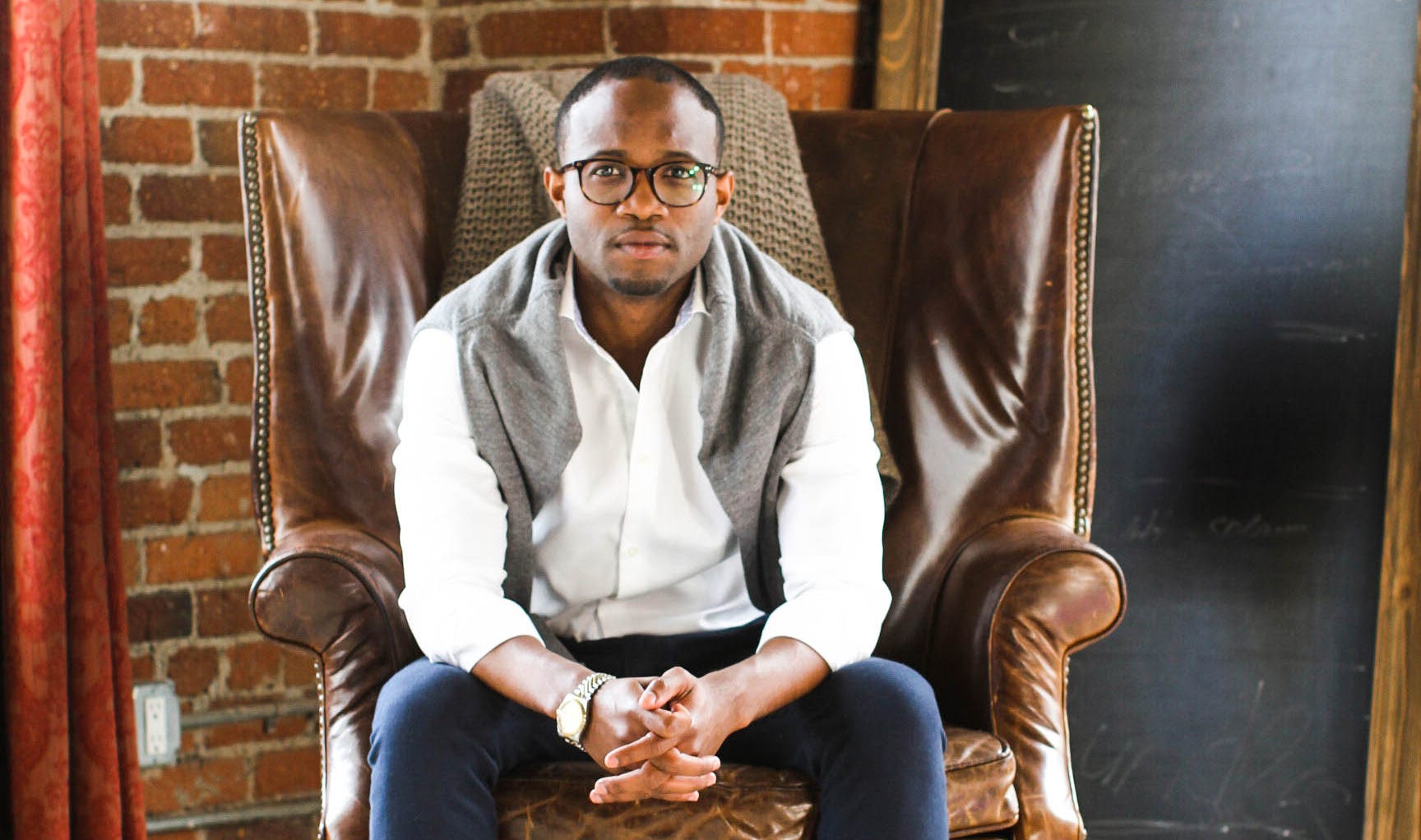
It was later in Barcelona where the idea really matured. After dropping out from business school, Cortney took an opportunity to run a sports startup. At the startup, he had the opportunity to work with brands like Nike and ASICS and gained valuable experience in obtaining partnerships. He later relied on this same experience to land partners for TrainersVault.
For the initial phase of TrainersVault, Cortney was able to raise money from friends and family. In addition, an angel investor from China was looking for investment opportunities and gave Cortney and his partners the funds they needed to fully focus on the building out the business. Their relationship with the angel investor led to them joining China Accelerator and gave them connections into the Asian market.
Stateside, raising funds proved to be more difficult. Investors often wanted to work with people within their networks who fit a “certain profile.” “It’s very clear if you’re a minority that no one is going to give large sums of money over to you unless you’ve been previously vetted by Y Combinator (YC) or 500 startups” said Cortney. “It shouldn’t be that way.”
Though TrainersVault did make it into 500 startups, they declined to join the accelerator and instead took another opportunity outside of the country. “We turned down 500 respectfully. I think it’s a great program, and who knows where we would be right now with 500…we ended up taking a more unconventional way to find funding”
This unconventional approach led Cortney to secure YC’s Michael Seibel as an advisor for TrainersVault. While in Europe, Cortney learned Michael was in Rome. “We really were aggressive and met him and his wife for dinner. I just let him know we were serious and he gave us advice on getting into YC.” Though they didn’t get into YC, Michael liked what he saw so much that he offered to advise and help out anyway he could. “For me that was a win because I got a genuine YC partner without being in YC.”
TrainersVault came back to the United States and landed in San Jose, California. “The first year [back in the United States], I was really on my grind.” said Cortney. “Learning the lingo, the investment process, and the entire ecosystem of startups and tech culture here.” One of TrainersVault’s advisors offered housing to Cortney in his garage in exchange for equity. It was in that garage where Cortney lived and built the product for over a year. “A lot of people don’t even know that. That was a true Silicon Valley moment.”
The Silicon Valley garage Cortney called home
On weekends, Cortney often took a bus to Los Angeles to meet with trainers. Eventually Cortney decided to relocate the business to LA, seeing a better opportunity there to be connected to trainers. “I felt like we would get more bang for our buck and really be able to build a brand in LA. The people that were going to drive my business from an operations standpoint were there.”
TrainersVault is a business built around its trainers. The business spent three years working with trainers, making them a part of the process, and building a business model around them. Through TrainersVault, trainers can easily sell classes, and individuals (clients) can use the platform to connect and train with their favorite trainers. “It really came down to one basic thing” said Cortney. “We found a problem that could be monetized.”
Still in beta, TrainersVault has about a quarter of a million clients using the platform. These clients were brought to the platform by the 100 trainers in the beta program. Currently, there are about 4,000 trainers are on the waiting list.
To build their client base, TrainersVault partnered with influential trainers who had untapped potential and a lot of Instagram followers. Before launch, they worked with trainer Lita Lewis and a single Instagram post from her about an upcoming class garnered 1,000 likes. “The day we launched the site, she [Lita Lewis] had 3 classes available on the site and we did $3,000 of bookings immediately.” said Cortney. “With that, we were able to prove an immediate revenue model.”
TrainersVault comes out of beta in July. “We’re really excited about it” said Courtney. “Trainers all around the world will be able to use it. When we think about our early traction, we’ve helped generate over $1 million dollars for our trainers in our beta program. So the growth potential of our business excites us as we prepare to publicly open up the platform to the thousands of trainers on our waiting list. We really feel like we’re building a utility for trainers, no matter where they are in the world.”
Apart from TrainersVault, Cortney has advice for other founders. He believes they should take care of their mental health first and foremost. “A lot of people don’t talk about that. There’s a laundry list of everything you need to do. Raise capital, open a bank account, get an accountant. You have to do all that stuff, but the first thing you have to do is be mentally prepared to go down this path. If you’re going to be successful, you have to be prepared to fail over and over again. And recognize that in those moments, there is a little light at the end of the tunnel that will keep you going. Don’t let the complexity of the end goal keep you from starting.”
You can connect with personal trainers at Trainersvault. Get in touch with Cortney [at] Trainersvault.com or visit him on Instagram @TvCort.
Source: https://medium.com/hbcu-to-startup/meet-the-alabama-a-m-alum-whos-disrupting-the-300b-fitness-industry-e4fe5805f4da
Monday, July 17, 2017
Nicki Minaj Quietly Kept Sending Funds To An Indian Village, Today It's Fully Developed
Rapper Nicki Minaj has surprised us by putting up a sweet Instagram post. The ‘Anaconda’ singer has been contributing funds to an Indian village since last few years. It’s due to her that a village in India (she did not reveal the name of the village) has a computer center, a tailoring institute, a reading program and two water wells!
Minaj known for her giving nature had cleared student loans via Twitter, where she tweeted students to tweet back to her.
"We complain about the most ridiculous little things when some (people) don't even have clean water. Blessings to India. Our work is far from done," Minaj captioned the Instagram video.
Minaj said she would be dropping more details about her charity work in the "near future", in case fans want to get involved.
"I'm so proud of our sisters in India. God is so good. Their desire was to have water wells and places where they can worship, places where they can learn technology, computers, reading, etc. We're just getting started. These women are us and we are them," she captioned another photo.
Now that’s quite generous Nicki, we’re proud of you.
Source: http://www.indiatimes.com/culture/who-we-are/nicki-minaj-quietly-kept-sending-funds-to-an-indian-village-today-it-s-fully-developed-322121.html
Minaj known for her giving nature had cleared student loans via Twitter, where she tweeted students to tweet back to her.
"We complain about the most ridiculous little things when some (people) don't even have clean water. Blessings to India. Our work is far from done," Minaj captioned the Instagram video.
Minaj said she would be dropping more details about her charity work in the "near future", in case fans want to get involved.
"I'm so proud of our sisters in India. God is so good. Their desire was to have water wells and places where they can worship, places where they can learn technology, computers, reading, etc. We're just getting started. These women are us and we are them," she captioned another photo.
Now that’s quite generous Nicki, we’re proud of you.
Source: http://www.indiatimes.com/culture/who-we-are/nicki-minaj-quietly-kept-sending-funds-to-an-indian-village-today-it-s-fully-developed-322121.html
Thursday, June 1, 2017
Black Pioneers of Science and Invention
A readable, perceptive account of the lives of fourteen gifted innovators who have played important roles in scientific and industrial progress. The achievements of Benjamin Banneker, Granville T. Woods, George Washington Carver, and others have made jobs easier, saved countless lives, and in many cases, altered the course of history.
Subscribe to:
Posts (Atom)