At APF in the 1970s, as the second-known African-American video game engineer, he helped create an industry.
Ed Smith at the Winter CES show in 1981 with the Imagination Machine II personal computer
Thirty-seven years ago, New York-based APF Electronics, Inc. released The Imagination Machine, a hybrid video game console and personal computer designed to make a consumer's first experience with computing as painless and inexpensive as possible.
APF's playful computer (and its game console, the MP1000) never rivaled the impact of products from Apple or Atari, but they remain historically important because of the man who cocreated them: Ed Smith, one of the first African-American electronics engineers in the video game industry. During a time when black Americans struggled for social justice, Manhattan-based APF hired Smith to design the core element of its future electronics business.
What it took to get there, for both APF and Smith, is a story worth recounting—and one that, until now, has never been told in full.
Edward Lee Smith was born in Brooklyn, New York, in 1954. He grew up in Brownsville, an impoverished neighborhood within the borough. His parents moved there from Mississippi a few years prior, and they weren't alone. Between about 1910 and 1970, millions of black families like the Smiths fled north in a Great Migration, as historians now call it, to escape the terrors of the American South during the Jim Crow era.
What his parents found when they got to New York wasn't much more promising than the South: Government policies and widespread racism kept black residents concentrated in small areas of low opportunity and high poverty. Places like Brownsville were the result. The neighborhood had once been primarily occupied by Jews, but later became known as a black ghetto, replete with scenes of crime and misfortune that unfolded every day. It was in this environment that Ed Smith came of age, the third eldest of six brothers and sisters, in a public housing development called Nobel Drew Ali Plaza. His mother was a domestic, and his father, an Army veteran, drove trucks for a living.
Early on, Smith's father told the younger Smith not to expect any greater aspirations for himself. "Get your chauffeur’s license so you can learn how to drive a truck," Smith recalls him saying, "because that’s all you’re ever going to do." And yet such expectations could not suppress Ed Smith's intense curiosity about how things worked. He began taking apart everything he could, and he soon taught himself to repair basic electrical gadgets like toasters and irons. Later, he moved on to radio receivers and TV sets. Smith's electronics skills came in handy as he began doing odd jobs around the neighborhood to help make ends meet for his family. At times, he largely provided for himself.
Through exposure to books and TV, Smith learned about the larger world outside of Brownsville. He devoured epic science fiction works and titles by black intellectuals such as Ralph Ellison's Invisible Man and the works of W.E.B. Du Bois. As his knowledge of the world grew, Smith began to feel like Brownsville was his personal cage, holding him back from greater opportunities. He recalls the many times he sat at his window, watching the traffic on the busy four-lane street outside. "My only wish was to be sitting in one of those cars, driving down Eastern Parkway," he says. "Anywhere, any direction, I didn't care. I just didn't want to be there."
It was a tough life, but he tried his best to steer his own fate. At age 13, Smith recalls waking up to a commotion, his sisters and brothers crying. In another room, he found his mother on the floor, his father pummeling her with fierce blows. Smith tried to pull his dad off, but the elder Smith knocked him unconscious. When the teen came to, he grabbed a frying pan from the kitchen and knocked his father out. "I dragged him out of the house and locked the door," recalls Smith. "That was the last time my father ever came into our home."
In January 1968, two brothers named Albert and Philip Friedman, both veterans of the consumer electronics industry and Asian import specialists, founded a technology company named after their initials: APF Electronics, Inc. The new firm opened an office on Madison Avenue in Manhattan and got to work quickly, making deals to bring in the latest transistorized calculators and stereos from Japan.
Albert Friedman, the company's first president, then in his 60s, had previously worked for Olympic Radio, then later served as president of Delmonico International—the first company to import Sony products to the United States. His brother Philip grew up in prewar Japan, steeped in Asian culture, and had for decades been an essential liaison to U.S. firms that sought to do business with the Far East.
The pair hired other Delmonico veterans to fill out APF's initial team, including Seymour "Sy" Lipper, who took on a marketing role, and Irving Boilen, an electronics engineer that would serve as the head of their new engineering department.
On the broader American stage, 1968 marked a tumultuous low point in a decade that saw rapid social and technological change. While the Vietnam War weighed heavily on the nation's collective conscience, it was a domestic event that set the chaotic tone for the rest of the year: On April 4, an assassin shot and killed Martin Luther King, Jr., as he stood on his motel balcony in Memphis.
The murder of America's most famous proponent of black rights triggered riots in many communities around the country, including Brownsville. The day after King was killed, 14-year-old Ed Smith sat on a street corner, watching in disgust. "I remember all of the looting going on around me," he recalls. "People were taking bricks and throwing them into white people's cars. It was mass rioting." The experience solidified his resolve: He was going to find a path out of the projects.
Smith's friends were skeptical of his passionate interest in electronics. "When they heard what I was doing, they would say, 'You would never understand that, a black guy can't do this kind of thing. It's not your world. They will laugh you out of the room,'" he says. The negative remarks only served as a challenge to Smith, who sought to prove them wrong.
During his last year of high school, Smith met his future wife, Sheila, and unexpectedly found himself becoming a father at age 18. The desire to provide for his family intensified Smith's drive, and after graduation, he started working full time doing electrical odd jobs like wiring security systems.
In 1972, Smith moved to Coney Island and landed a position at Brooklyn-based Marbelite, one of the nation's largest manufacturers of traffic signals. The job gave Smith his first taste of digital electronics technology, which would drive consumer electronics of the 1970s, '80s, and beyond.
Behind every traffic signal is a device called a traffic controller—a timer that keeps track of when to turn on and off certain lights. Prior to the 1970s, most controllers relied on electromechanical parts, but the boom in solid-state electronics saw the controllers become transistorized in the early 1970s. In 1971, Intel had introduced the first commercial single-chip microprocessor, launching a new era in electronics. Just as other industries scrambled to incorporate the new technology into their products, it wasn't long before Marbelite wanted to use the power of a microprocessor to control traffic signals.
To that end, Marbelite paid for Smith, who was then working as a technician, to attend local vocational classes on microprocessor-based circuit design. He learned to program the brand-new Fairchild F8 microprocessor (coincidentally the same chip used in the Fairchild Channel F, the first cartridge-based video game system in 1976). The classes brought big dividends to Smith, who soon leveraged the knowledge to get a taste of life in other parts of the Big Apple.
By 1972, APF Electronics had established itself as a leading manufacturer of desktop electronic calculators. In fact, the firm was doing so well that it contracted Sy Lipper's brother, Martin "Marty" Lipper, as a specialist to take the company public that November. Looking back, Marty (who joined APF full time as its CFO in 1973) emphasizes the role of calculators in the company's early success. "We built 70% of all the calculators ever sold at Sears in those days," he recalls. "The same goes for Montgomery Ward."
Calculators would carry APF's business forward until the next great revolution in consumer electronics came along: video games. Just as APF was going public in 1972, a young California company called Atari made waves nationwide with Pong, an arcade video game sensation that soon spawned dozens of shameless rip-off games and launched a wider arcade video game industry. Ironically, Pong itself was a shameless (but improved) rip-off of the first home video game system, the Magnavox Odyssey, which launched just a few months earlier.
In December 1975, Atari released the home console version of Pong through Sears under its Tele-Games label, and it proved wildly successful. Like it had done in the arcades, Pong as a home product inspired dozens of knock-offs, most of which were built using a custom "Pong-on-a-chip" integrated circuit created by General Instruments called the AY-3-8500. The mass production and general availability of this chip, and several follow-ups, made the engineering of dedicated "ball-and-paddle" consoles almost trivial affairs, with more work going into their plastic cases than into the electronics within.
In 1976, APF became one of dozens of firms that jumped headfirst into the home video game market, releasing its first Pong-like decidated console, the TV Fun. It was a sleek, compact, plastic cabinet with faux woodgrain and silver trim and two built-in rotary knobs that contained four built-in variations of the simple ball-and-paddle game. While the TV Fun utilized the same Pong-on-a-chip circuit that many other manufacturers used in their own clone consoles, APF's model quickly became one of the best selling on the market, moving 400,000 units within its first year—a stunning figure at the time.
Over the next two years, APF followed the first TV Fun with several improved models that added more games and a light gun, although sales dropped with each successive unit as the market became increasingly saturated with Pong-like consoles.
APF also found, as other companies did, that it became prohibitively risky to keep releasing new dedicated consoles—which often needed their own distinctive cases, circuitry, and marketing campaigns—to accommodate new types of video games. The solution to this problem first entered the market in 1976 with the Channel F, which was codesigned by an African-American engineer, Jerry Lawson. The Channel F approach allowed the sale of one universal console player device and many smaller, less expensive game cartridges that would add lasting appeal to the system.
An interchangeable, programmable approach to video games required the games to be written as software and run through a microprocessor—in other words, it meant designing a computerized video game system. From APF's point of view, creating such a console would require specialized expertise that few engineers at the company had developed. That led to the search for a new hire who could help design a new console that would lead APF into the next generation. Thanks to Marbelite, they would soon find their man.
Ed Smith loved his job at Marbelite; it introduced him not only to new concepts in electronics, but also to a wider world. While attending his microprocessor classes, he visited Manhattan and took special notice of Wall Street brokers that projected a fancy, clean-cut look. "I definitely wanted to be that kind of person," he recalls. "Somebody who would be able to dress for success."
With that aim in mind, Smith signed up with an employment agency, and soon he landed a job interview with APF Electronics in midtown Manhattan. There he met Kenneth Boilen, the son of Irving Boilen and one of APF's chief engineers. After a brief greeting, Boilen introduced him to another engineer named Craig who sat Smith down at a table with a schematic and said, simply, "Build that," then left the room.
"The man was an engineer, and he knew his business."
Smith found the task fairly simple; he completed the construction just after lunch. An hour later, Craig returned, surprised to see the task complete. "You're done?" he asked Smith in amazement, to which Smith replied that he had been finished for some time. Soon after, Craig reported to his superiors: "This guy knows what he's doing."
Just like that, Smith landed his dream job in buttoned-down Manhattan.
According to Marty Lipper, Smith's race never played a part during the hiring process at APF. "The man was an engineer, and he knew his business," he recalls. "When we interviewed him, he was a decent guy, and that's all I cared about." Still, it's a reflection of APF's culture that it chose, in the mid-1970s, to hire a black man who grew up in one of the most impoverished neighborhoods of New York City to design the linchpin of its future electronics business.
When pressed, Lipper emphasizes the diversity of the company's workforce. He recounts an episode when he got a call from the Department of Labor, informing APF that it was being sued for being anti-Semitic. "I started laughing on the phone," he recalls. "And the one from the labor department says, 'Mr. Lipper, this is not a funny situation.'" Lipper went on to explain that APF's entire upper management team was Jewish. "I told them, 'We have 150 employees. Twenty-five percent or 30% have to be black. We have about 50 Chinese. We've got Middle Easterners, you name it. We're the League of Nations.’"
Both Marty Lipper, a Korean War vet, and his older brother Sy—the firm's president when Smith was hired—describe living lives steeped in diversity. Sy Lipper, who is now 90, grew up during the Great Depression in a poor Jewish ghetto in the Bronx. Later, he served in the European theater during World War II alongside a diverse cast of characters from all over the U.S., some of whose deep poverty meant that their government-issued combat boots were the first pair of shoes they ever wore. He also witnessed liberated Nazi concentration camps firsthand, and he says these experiences gave him a deep appreciation for the opportunities available to him in his home country—and of those denied to others. "I got to see what was going on elsewhere in the world, how people were living," recalls Sy. "I saw that what [my family] had was so much better, even though we had nothing."
Nine years his brother's junior, Marty Lipper recalls attending the first integrated high school in New York City, Morris High School, where he took classes with future Secretary of State Colin Powell, whom he knew well.
In the minds of APF's management, there was never a question of whether or not to hire a black man. Smith was fully qualified for the job. That's how he became not only APF's first microprocessor specialist, but also (after Fairchild’s Jerry Lawson) the second known black engineer in the history of video games.
At APF, Ed Smith "learned to translate binary code pretty fast," he remembers. "I learned the motto of any good engineer, which is "plug it in and let's see if it blows up." After getting established, he took the opportunity to go back to school part-time, studying computer science and marketing at Pace University. Three days out of the week, he would leave Brooklyn, go to work in midtown, leave for Pace in lower Manhattan, then come back home at night.
Around 1977, an engineering crew at APF, led by Kenneth Boilen, began work on the firm's first cartridge-based video game system. Ed Smith took the lead on designing the prototype for the console, drawing from a wide range of inspirations like the Apple I and TRS-80, but ultimately coming up with a unique design based on the Motorola 6800 microprocessor—an unusual CPU choice in the industry at the time, which was handed to him by his boss.
With contributions from APF's design team and engineers in Hong Kong, Smith developed the console's electronic design through numerous iterations over the course of six months. Meanwhile, the company's marketing department christened the new product the MP1000 (MP for "microprocessor").
What APF came up with was a small, black plastic video game unit with silver buttons and woodgrain trim. The MP1000's base doubled as a stand for two hard-wired hand controllers, each with a joystick, a large fire button, and a 12-button numeric keypad. The system generated blocky color graphics and contained one built-in game, Rocket Patrol.
Most importantly, the MP1000 also played games sold separately on removable cartridges, with each cartridge including multiple game variations that were selectable from an on-screen menu. After design was complete, Smith recalls his job as switching to play-tester for a time. He learned to complete every game on every difficultly level, and it became a mind-numbing chore before long.
The MP1000 launched commercially in mid-1978. It sold well initially, but received mixed reviews from the press. On the positive side, with the home video game industry being as new as it was at the time, there was still a general sense of wonder among the public that games could be played on a TV set at all, and thus the bar for game quality was relatively low. As such, not much public criticism was levied on the quality of the MP1000's individual games.
Meanwhile, Atari retained the industry's sales lead with its cartridge-based console, the VCS (later known as the Atari 2600) thanks to home ports of its hit arcade games. Through its coin-op division, Atari mastered the design of visceral, action-based gameplay that attracted players and kept them coming back for more, raising the bar on perceptions of home video game quality dramatically during the last few years of the 1970s. Notably, in the press, Atari's games stood out as individual cultural works worthy of review and attention separate from the VCS console itself.
In contrast, APF fared poorly in regard to game quality and innovation. At a time when Atari's games often featured tanks, jets, race cars, dragons, and haunted houses, APF's MP1000 offered low-energy games like Bowling, Backgammon, Hangman, and Tic-Tac-Toe. The few action games the MP1000 had often involved no more coordination than timing when to push the fire button to shoot a single spaceship flying slowly across the top of the screen.
Most of APF's games had been programmed by one man, a British expat named Harry Cox. According to the Lippers, APF could hardly spare the capital required to hire additional programmers. (The question of third-party game software, a business pioneered later by Activision, did not enter their minds.)
Sy Lipper describes a huge culture clash between WW II-era upper management, who expected rigid nine-to-five schedules and clockwork production, and the new generation of laid-back baby boomers who they hired to write the software. Game development is an inherently artistic and creative process, and that proved difficult for many 1970s consumer electronics companies to grasp. Among the first batch of game console companies, Atari alone embraced the creative artistry of game design, and that fact above all others allowed the firm to dominate the industry.
Upon the launch of the MP1000, Ed Smith felt deep personal satisfaction from the completion of the project—the first commercial consumer product he had ever worked on. Thanks to nimble work by APF's sales team, the console was available through large merchandisers like Sears and Montgomery Ward.
One day, Smith visited a local Sears department store like a proud father, excited to see his progeny on the shelves. The trip quickly turned bittersweet as he beamed his pride to a salesman. "I said to the sales guy, 'I'm one of the guys that designed this,'" and he goes, 'Yeah, right.'"
Back in the lab, Smith was always conscious of how skin color limited opportunities for African-American kids in the projects, most of whom would never get a chance to play home video games because their parents couldn't (or wouldn't) buy a game console themselves. He saw an opportunity to help.
"Every other day I would take a console and give it to someone in the projects."
After the launch, APF began to stockpile spare and returned MP1000 consoles for demonstration and testing purposes. Roughly 300 consoles sat unused in the back of a closet at APF headquarters, ultimately destined for scrap. "Every other day I would take a console back home to the neighborhood and give it to someone in the projects that I lived in," recalls Smith, who lived in Flatbush. "So, when I was done, there were probably a good 50 people that I knew in the projects playing the MP1000." Smith, who considered his unsanctioned experiment not only a charitable exercise but part of play-testing, became impressed with the reaction he witnessed.
"They didn't know what to expect," says Smith, "But once they got it in front of them, it was all intuitive. They loved it. It was a chance to interact with someone else in the apartment versus going outside and doing something crazy. So a lot of times, people would play the video games for hours in the day, like they do today, and not be on the street."
Around the time the MP1000 was in its planning stages, APF's head of engineering, Irving Boilen, spearheaded the firm's first personal computer project, the PeCos One (short for "Personal Computer One"). According to Sy Lipper, it was Boilen who chose to base the machine around an obscure defense contractor programming language called JOSS rather than BASIC, the industry standard. That one decision ensured the quick market death of the awkward computer upon its launch in 1978.
The failure of the PeCos One would not keep APF from trying again, however. The Apple II, launched in 1977, had proven there was a strong market for easy-to-use personal computers for consumers, and APF wanted in on it. Others did too. During the development of the MP1000, APF's management heard news of Mattel's upcoming Intellivision console, which the toy giant planned to later transform into a full-fledged personal computer using a separate keyboard. Hoping to get a jump on the competition, APF decided to pursue that path as well, using Smith's microprocessor-powered MP1000 as the core of a larger computer system.
The Imagination Machine debuted to the press at the 1979 Summer Consumer Electronics Show in Chicago with the clever name thought up by Howard Boilen (brother of Kenneth) and another APF employee named Gary Sharp. APF's marketing materials emphasized the Imagination Machine's potential as a creative tool for music, art, language, education, and programming.
What the firm showed off at CES was a large off-white computer base unit with an integrated full-sized, full-stroke keyboard and a built-in cassette tape drive for data storage. The base unit and console would be mated via a J-shaped connector that plugged into the MP1000's cartridge port. With the two units combined, the Imagination Machine relied on the Motorola 6800 CPU in the MP1000 and added an additional 8K of RAM, making for 9K of memory in total.
The Imagination Machine, as a $599 personal computer, received very wide press coverage in magazines and newspapers across the U.S. at a time when a 16K Apple II Plus retailed for $1,195. Its playful logo, combined with its emphasis on ease-of-use and creativity, were attractive targets for journalists writing roundups of the first-ever wave of lower-cost, family-oriented "home computers" that arrived from manufacturers like Atari, Texas Instruments, and Commodore during the last few years of the 1970s.
To target the Imagination Machine at a home audience, APF decided to rely on traditional retail channels as it had with its calculators and video game products. But unlike the MP1000 alone, the Imagination Machine was a fully programmable microcomputer, which was inherently trickier to operate—and much harder to sell to a suite of retail executives who often possessed no technical background whatsoever.
As shown in Popular Science, the MP1000 console plugged into the Imagination Machine base unit
To bridge this gap, Ed Smith's boss, Kenneth Boilen, approached Smith one day with an offer that would completely change his career trajectory. "We’re going to change your role to a technical specialist," Smith recalls them saying. "And we want you to go to Sears and talk about the Imagination Machine."
Smith embraced the opportunity now laid out before him: "I threw on my suit and [grabbed] my briefcase, and I’m off to Chicago." During a large lunchtime sales call, Smith found himself in Sears Tower, then the tallest building in the world, pitching APF's new computer to Sears executives. "The sales person is there and he’s hearing my pitch, and I’m talking about RAM and ROM and all of the inputs and outputs."
Smith breezed through the presentation, and at the end, the former resident of Brooklyn's poorest neighborhood, whose father had told him that he could expect no greater career than truck driver, stopped at a window and paused in a moment of triumph mixed with astonishment. Looking past his own reflection, he says, he saw the Chicago skyline and thought, "How far I have come."
The Sears meeting was one of the highlights of his career, Smith says, but it was only the beginning of a new era for him. Back at the office a couple weeks later, an APF sales rep approached Smith at his engineering drafting table and slapped him on the back. "Ed, you did so great," he said. "You just made me ten grand this month." Smith's jaw dropped. At the time, he earned about $20,000 a year.
"I got up from my drafting table, and I walked over to Howard Boilen, who was the VP of sales, and I said, 'Howard, if I’m going to pitch this, don’t you think I should sell it?'" Boilen, pleased with Smith's performance at the Sears meeting, agreed, and Smith soon switched from engineering to sales. "I started selling the machines that I helped to build," says Smith.
Throughout 1980, Smith traveled the country showing off the Imagination Machine to executives at department stores and computer retail chains, with a string of optimistic successes. However, big-name retail support for the Imagination Machine could not make up for shortcomings in the computer's design.
Today, Smith recalls that APF’s marketing department insisted on including a tape recorder with the system. The engineering team resisted, but marketing won out. APF's cassette-bound machine launched over a year after Apple had rocked the personal computer world with its low-cost Disk II drive, making slower, less reliable cassette drives commercially unattractive. And yet there it was, permanently built into each unit.
1980 passed with very modest sales of the MP1000 and the Imagination Machine, and in January 1981, Smith traveled to CES for the last time as an APF employee to demonstrate the Imagination Machine II, a remodeled unit with more memory and integrated MP1000 circuitry that looked nearly identical to the original except for a smooth surface on its top where the core console used to sit. Strangely, it retained the built-in cassette drive, but alongside the $399 base unit, APF pitched a complex "System III" constellation of peripherals and disk drive add-ons that upped the price of the machine to a far less appealing $1,195.
"This personal computer nonsense, there's no future for them."
Such incremental, expensive improvements did not improve sales, and in the face of heavy competition from Apple, Atari, Commodore, and Texas Instruments, APF's PC failed to gain significant market share. Still, the company’s management sought to keep going and try again. In fact, the Lipper brothers insist that sales of all its products were good enough to sustain the company into the future. "Nothing we did was a disappointment," says Marty Lipper with perhaps a hint of rosy glasses. "Everything we did worked out either good or excellent. We were making money, there was no problem."
The core reason for APF's downfall, according to Sy and Marty Lipper, centered on the skepticism of the two New York banks that held APF's lines of credit—the loans that APF relied on to fund production runs. Marty Lipper recalls the scene: "The banks said to me, 'You have three businesses, and we don't think there's any future in TV games because that's a fad. And this personal computer nonsense, there's no future for them. The public doesn't want or need them. But if you stay in the calculator business, we're not going to call the loans. We're happy with that business.'"
Sy and Marty Lipper refused to cave in to the banks' demands, knowing that calculators, which had become a low-priced commodity at that point, did not represent the future of the consumer electronics industry. "The banks could not understand the personal computer," says Sy Lipper. "Because as far as they were concerned, it was a toy, and the computer itself was in the hands of IBM."
Smith poses with The Imagination Machine (and some Atari gear) in 1982
In 1980, the market capitalization of Apple, one of the most successful personal computer companies up to that point, was still minuscule compared to IBM. It wasn't until August 1981 that IBM would release its Personal Computer and legitimize the market in the eyes of the banks. By then, it was too late for APF.
The Lippers warned their staff of an impending shutdown, giving them time to find new jobs, and making sure to pay the employees what they were due. "Ken Boilen, one of the best bosses and best friends I’ve ever had, was always honest and straightforward with me," says Smith. "He came to me and he said, 'You know, the company is not going to make it. We’re not doing well with this thing, and I don't want you to get stuck here and be on unemployment and not take care of your family. You should go look for something else.'"
During a final tense meeting that Sy and Marty Lipper had with its credit lenders, bank officials threatened one last time: Leave the video game business or immediately repay your $7 million debt in full. Marty stood up, pulled the company's office keys from his pocket and set them on the table. He urged his brother to do the same, then said, "Here it is. The company is now yours."
APF Electronics effectively ceased operations in 1981 and never declared bankruptcy, although it took some years for the banks to fully wind it down.
"BEING ONE OF THE FIRST TO DO ANYTHING IS AMAZING"
When Ed Smith moved on from APF, he also left the video game field. "Frankly, had I the forethought to know the industry would become what it is today, I would have stayed the path," he says.
Ed Smith today
Still, his experience at APF stuck with him. "I learned to develop myself from an introverted bench guy to an extroverted corporate speaker," he explains. "I learned to take alternate paths when one seems to be clogged. Mostly, I learned to trust my abilities and to never think I was any less capable than anyone else."
After APF, Smith spent four years managing an Apple dealership in upstate New York. Then he worked at a computer dealer in Albany and helped expand a computer chain called The Computer Factory to a new location in Philadelphia. Another fresh start came when he signed on with PC networking pioneer Novell during its formative period.
At that point, like Smith, all of his brothers and sisters had established careers for themselves and escaped life in the projects. But over a decade after Smith had moved out, his mother still lived in public housing, among high crime and badly maintained facilities.
One day in the mid-1980s, he drove from New Jersey to Brownsville in a U-Haul moving truck. Neighborhood regulars looked on with skepticism as he stepped out and entered his mother's apartment. A few minutes later, he returned with armfuls of his mother's possessions and began loading the truck.
"Where are you taking her?" the neighbors asked with incredulity. "I'm taking her out of here," he replied. As the rolling U-Haul door closed shut and he stepped into the cab, Smith heard someone say, "Whoa, he's actually doing it." He moved his mother to a apartment not far from where he lived in New Jersey, and two years later, he bought her a condo, freeing his family from the projects at last.
Today, Smith is still a successful tech salesman, although he is nearing retirement. He has been married to his high school sweetheart for 40 years and his kids are now grown with their own families.
A few decades removed from his work at APF, Smith has a new appreciation for what it meant. "Funny, when you are head-down doing the work, the last thing you think about is being an African-American," he says. "You're just another engineer doing his job. Once you have a chance to digest what you're able to accomplish, time passes by because you are head-down on the next thing."
In retrospect, he adds, "I can say with certainty that being one of the first to do anything is amazing. To be a man of color and a leader in the video game industry will be my legacy, and one that I am very proud of."
Source: https://www.fastcompany.com/3063298/breaking-the-status-quo/ed-smith-and-the-imagination-machine-the-untold-story-of-a-black-vid
Showing posts with label Technology. Show all posts
Showing posts with label Technology. Show all posts
Monday, February 6, 2017


Wednesday, February 3, 2016
This Black Entrepreneur’s Tech Start-Up Could Disrupt the Entire Wireless Industry
 Tens of thousands of music fans flocked to Philadelphia this Labor Day weekend for Budweiser’s patriotic “Made In America” festival, where a star studded line-up of musicians, from Beyoncé to De La Soul, took center stage. The explosion of live music spilling on to the Benjamin Franklin parkway, a mixture of iconic voices, electric beats and a roaring crowd, made for an unforgettable outdoor concert experience– but it was the sounds the audience could not hear, a flurry of tones too low for the human ear to detect, that set this year’s festival apart.
“As you approached the festival you received a welcome message. If you were near certain stages, you received reminders for certain events. If you were waiting too long in a certain area you got a free coupon for Budweiser,” says Rodney Williams, co-founder and CEO of LISNR, a mobile communications app that uses inaudible sound waves to send notifications to mobile devices. All of Budweiser’s targeted notifications during the festival, from pop-up coupons to Uber rides, were powered by his communications service .
Imagine shopping and receiving a coupon via text while standing in front of a particular product, or while at a sporting event, receiving a play-by-play of the action you missed while away from your seat. When LISNR’s “smart tones” are emitted in retail spaces, during live events and television broadcasts, the ultrasonic signals trigger mobile devices, which then deliver relevant, hyper-targeted messages based on the users location and activity. Brands like Budweiser, Live Nation, AT&T and the Dallas Cowboys are using LISNR’s revolutionary “smart tone” technology to create one-of-a-kind, interactive fan experiences.
But the real revolution exists within communications technology, an industry that LISNR is poised to disrupt, potentially dethroning Bluetooth as the superior mechanism for wireless transmission.
“Everyone is familiar with Bluetooth, and Bluetooth is light that you can’t see. LISNR is audio that you can’t hear,” Williams explains.
Both Bluetooth, and LISNR, transmit data across devices, but LISNR does so faster, synchronized within 1/10 of a second, and without the need for any additional hardware. Recognizing this potential shift in wireless, from light to sound, CNBC recently ranked LISNR number twelve on its annual Disruptor 50 list.
“We were above Spotify,” Williams notes, citing CNBC’s recognition as his start-up’s greatest milestone to date. They were also listed above Snapchat.
Adding to his list of accomplishments, Williams also received an invitation to speak at the White House for the first annual Demo Day in August of 2015. President Obama hosted the event to showcase the role of entrepreneurship in the U.S. economy. Williams also won the “Gold Lion” at the International Festival of Creativity in Cannes.
Williams’ former role in brand management at Procter & Gamble provided him with unique insights about the challenges that brands face connecting with consumers.
“The holy grail of marketing is to create a technology that can touch consumers where they are,” he says.
Though Williams has always been “obsessed with technology”, his professional background is largely in branding. Williams earned an MBA and a masters in marketing, both by the age of 24. Still, his knack for ideas was evident even at P&G, where he says he was the first marketer to co-write a patent.
“I probably would have been on my thirtieth patent right now, if I was there,” he remarks.
But instead, Williams left P&G to create LISNR in 2012, with four other co-founders. In three years, the startup has raised over $4 million in venture capital funding, a tremendous feat. Less than 1 percent of venture capital backed start-ups are headed by African-American founders.
LISNR is headquartered in downtown Cincinnati, Ohio, an area undergoing an extensive economic revitalization, due in part to the presence of high-octane start-ups like LISNR. It’s not a traditional location for a tech company but it has its perks.
“We have some advantages for the type of talent we can attract out of the Midwest and the cost we’re paying for that talent,” he says.
While his start-up serves as local economic engine, Ohio is a world away from Silicon Valley. That means the company is a world away from top-tier investors with the power and purse strings to turn LISNR into a global brand.
“It’s difficult to get in front of those investors,”he admits. “I’ve had investors tell me if you were to talk to [top-tier investors] you would be in a different place. The reality is it’s difficult.”
Williams is frank about the hurdles in his path, but he remains steadfast in his determination to propel LISNR to the forefront of mobile innovation.
“Anytime I raised any amount of money, I had to talk to 40 investors before I reached the three or four that invested,” he reflects. “I think if you really believes in the idea you should be prepared to talk to 100.”
His advice for budding entrepreneurs is simple.
“Move fast,” he says, “learn and grow.”
To keep up with Rodney Williams and LISNR, follow the start-up on Twitter and Instagram @LISNR.
Source: http://atlantablackstar.com/2015/09/25/black-entrepreneurs-tech-start-disrupt-entire-wireless-industry/
Friday, May 1, 2015
9-Year-Old Nigerian Becomes World’s Youngest Microsoft Certified Professional

Jomiloju, a primary 6 pupil of Role Model School, owned by DayStar Christian Centre, Oregun, Ikeja Lagos, broke the record created in 2012 by 10-year-old JSS1 student, Seyi-Ojo Anjolaoluwa, who was adjudged the youngest Nigerian and one of the youngest people in the world to have become a Microsoft certified professional.
Jomiloju took the July 2013 examination while in primary 5, after passing all the preparatory stages leading to the final examinations following intense teachings in school and trainings he received from United Global Resources Ltd, an accredited ICT training firm.
Odion Oyakhire, the center manager in charge of the school noted that his firm, “encourages pupils to learn ICT and get certified.”
Oyakhire explained that his firm coordinates the certification examinations for several schools and was proud to associate with Jomiloju and Role Model School on this feat. He said that the certification examination is an online, real-time test.
Before setting this new record in Nigeria for the certification examination, Jomiloju led his school to glory in June 2013, when they won an ICT quiz competition with 15 participating school in Lagos. The competition was put together by United Global Resources.
The examination report showed Jomiloju scored 769 points, 69 points higher than the required 700 to be recognized as a Microsoft Office Specialist.
http://atlantablackstar.com/2013/10/15/9-year-old-boy-becomes-nigerias-youngest-microsoft-certified-professional/
Tuesday, July 15, 2014
FAMU Alumnus John W Thompson Named Chairman of Microsoft

Thompson, a 1971 graduate of the School of Business and Industry (SBI), first joined Microsoft's board of directors in February 2012, serving as a lead independent director, a role he will continue in tandem with the appointment.
“Florida A&M University celebrates this achievement with John as he continues to excel in the world of business,” said FAMU Interim President Larry Robinson. “This is an excellent example of how the education our students receive at FAMU will propel them from the classroom to the boardroom and beyond.”
Thompson was inducted into the FAMU SBI Hall of Fame in 2011.
“John’s selection as chairman of Microsoft, one of the world’s most accomplished software companies, is a testament to the preparation that students receive at FAMU,” said Shawnta Friday-Stroud, dean of SBI. “He has been a major supporter of SBI through both his time and resources. We are extremely proud.”
In addition to chairman of the Microsoft board, Thompson is the chief executive officer of privately held Virtual Instruments. He is the former chairman and CEO of Symantec where he served for 10 years. Previously, he held a number of leadership positions at IBM, including sales, marketing, software development and general manager of IBM Americas.
“One of my key contributions, I hope, will be to engage with shareholders and keep focus on how together we can bring great innovation to the marketplace and drive strong long term shareholder value,” said Thompson in a video statement from Microsoft.
Thompson received his bachelor's degree in business administration from FAMU. He earned a master's degree in management from the Sloan Fellows program of the MIT Sloan School of Management.
According to Microsoft, Gates will assume a new role on the Board as founder and technology advisor. Thompson was named chairman of the Board and Satya Nadella was named chief executive officer, taking over for Steve Ballmer.
Watch FAMU SBI Dean Shawnta Friday-Stroud discuss Thompson's appointment on WTXL Sunrise:
http://www.wtxl.com/news/local/update-famu-graduate-named-chairman-of-microsoft-corporation/article_9f2fce20-8dc0-11e3-8175-001a4bcf6878.html
Source: http://www.famu.edu/index.cfm?a=headlines&p=display&news=2947
Friday, May 30, 2014
Black tech innovators blazing a trail in South Florida
By Felecia Hatcher
 Brian Brackeen, Founder / CEO, Kairos
 Tandaleya Wilder, Founder, She Got Game Global
 Tamar Lucien, Co-founder, CanUStart2day.com
 Andre Kay, Founder, SociallyBuzz
 Imani Hinton, CEO/Founder, GreenAsYouWannaBe
Source: http://miamiherald.typepad.com/the-starting-gate/2014/02/in-honor-of-black-history-month-9-black-tech-innovators-blazing-a-trail.html
As many cities look to duplicate the model of Silicon Valley, it’s important that we don’t also duplicate the diversity issues especially as it relates to African Americans and women. Because South Florida has a large population of Caribbean and African Americans, I wanted to celebrate Black History Month by highlighting 10 emerging African American startup founders who are helping to not just reshape the ecosystem in Miami but also promote diversity and access.
DiversiTech is a social enterprise dedicated to fostering the growth of underrepresented communities (ethnic minorities, women, youth, LGBTQ) in technology, with an emphasis on entrepreneurship. It leverages relationships with national industry leaders to connect our network with the resources necessary for startup success. http://www.iamdtech.com/
Jurnid is a journalism platform, where freelance journalists and digital newsrooms collaborate on publishing stories. Journalism students use Jurnid to create portfolios and connect with professionals for mentorship and growing their personal brands. Readers follow or subscribe directly to their favorite journalists, students and newsrooms all in one place. Stories on Jurnid are delivered to users’ mobile and tablet devices in a simple interface that is easy to read and engage with. https://www.jurnid.com
Splyst is a platform and social interest network for discovering, organizing and sharing interests that revolutionizes the way information finds people. The big data company smartly analyzes user’s interests/context to deliver personalized information to them. http://www.splyst.com
Kairos is a B2B facial recognition company based in Miami. Its flagship product, Kairos TimeClock helps companies identify their employees who are clocking in for the day, with just their faces. In 2013, Kairos was the first facial recognition company to release an API providing retailers the opportunity to customize shopping-experiences. www.Kairos.IO
MustAttend.co is an online marketplace to find discounted business events and a platform where event organizers can both manage (ticketing and registration software) and market their events. Subscribers have the opportunity to get discounts ranging from 15-70 percent. MustAttend focuses primarily on business events including conferences, conventions, networking meetings, charitable functions, and professional/continuing education forums. www.MustAttend.co
Urban.Us funds and helps startups that help cities. The company is building a global network of enablers that help connect startups to resources and cities. Its tools help startups learn more about how to best work with cities and helps cities learn how to enable startups. www.Urban.us
She Got Game Global is a digital media empowerment startup. The aim is to advance "girl power," in developing and third world nations such as Haiti, Venezuela, and Saudi Arabia, by offering young women living in these areas of the world an open, more visible platform to share their personal stories through the use of internet radio, video, photos, and even personal blogs. The topics will vary and include music, sports, health, entrepreneurship, political empowerment, gender-based inequities, culinary and tech. http://www.shegotgame.com/
CanUStart2day.com is a Saas platform that does all the candidate vetting work for restaurant and hospitality managers. Candidates complete a one time profile and create a 1 minute 30 second video pitch to showcase their expertise and charm. Their system immediately and continuously works to match employers and to the right candidates making it a search free process for everyone. It's accessible through mobile devices.www.CanUStart2day.com
SociallyBuzz is a social media and reputation management mobile app created to help restaurant and retail owners easily manage Yelp, Google Places, Facebook and Urbanspoon in one place, anytime, anywhere. The app allows users to protect relationship with customers, manage social networks and online reputation on the go. It is a powerful, intelligent and easy-to-use.http://www.sociallybuzz.com/app
GreenAsYouWannaBe is a self-managing marketplace for people who sell goods that are sustainable (eco-friendly) and/or created on the principles of social entrepreneurship. GreenAsYouWannaBe is a hub for consumers who are looking for environmentally friendly products, looking to support social entrepreneurs, and looking for products that have a special uniqueness. Currently in Beta. www.GreenAsYouWannaBe.org
Felecia Hatcher is co-founder of Feverish Ice Cream and Code Fever.
Source: http://miamiherald.typepad.com/the-starting-gate/2014/02/in-honor-of-black-history-month-9-black-tech-innovators-blazing-a-trail.html
Tuesday, September 17, 2013
Team Techno Greeks Enters FLL Robotics Competition
Please help Team Techno Greeks enter the FIRST Lego League (FLL) Robotics Competition.
Please Help Team Techno Greeks Enter the First LEGO League Robotics Competition
Team Techno Greeks is a new robotics team which meets in Atlanta, Georgia. We are under the guidance of Grow Up N Tech, a community organization that helps expose socially and economically challenged students to discover and develop a passion for science, technology, engineering and math. We are learning how to build LEGO Robotics in preparation to compete in our inaugural FIRST LEGO League competition. We are learning through hands-on monthly team meetings with the help of our director and mentor, Ronald Jones, the founder of Grow Up N Tech.
We are a community team; we are not sponsored by a school system and must raise funds to be able to pay our entry fees, LEGO robots parts and software, travel and other team related costs. Our director is a volunteer and will not receive any funds gained through this fundraising effort. All funds will be used for training and competition. This will enable Team Techno Greeks to expose our members to careers such as engineering, robotics, programming and other technological fields.
Source: http://www.kickstarter.com/projects/1828361638/team-techno-greeks-enters-fll-robotics-competition
Tuesday, July 2, 2013
Vote for Black Girls Code

BlackGirlsCode is in the race for $50k from Windows.
AzureDevs are changing the world through code.
We do this every day - it’s our living and our passion. Let's join forces to empower the next generation of devs to do the same. How do we get started? Your votes will fuel:
$100,000 worth of donations
to some great technology education nonprofits
We'll donate $50,000 to the organization with the most votes, $20,000 to the second highest, and $10,000 to each of the three runners up. Beyond helping some great technology education nonprofits, as an AzureDev, you'll gain access to exclusive content and technology leaders from Microsoft and the community throughout the year.
So join the community and vote for your favorite nonprofit from the list below.
Wednesday, June 5, 2013
C.R. Patterson & Sons Company
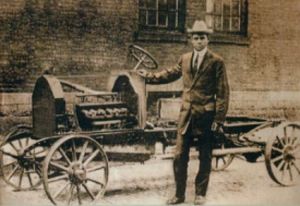
At some point after his arrival in Ohio, Patterson went to work as a blacksmith for the carriage building business, Dines and Simpson. In 1865 he married Josephine Utz, and had five children from 1866 to 1879. In 1873, Patterson went into partnership with J.P. Lowe, another Greenfield-based carriage manufacturer. Over the next twenty years, Patterson and Lowe developed a highly successful carriage-building business.
In 1893 Patterson bought out J.P. Lowe’s share of the business and reorganized it as C.R. Patterson & Sons Company. The company built 28 types of horse-drawn vehicles and employed approximately 10-15 individuals. While the company managed to successfully market its equine-powered carriages and buggies, the dawn of the automobile was rapidly approaching.
Charles Patterson died in 1910, leaving the successful carriage business to his son Frederick who in turn initiated the conversion of the company from a carriage business into an automobile manufacturer. The first Patterson-Greenfield car debuted in 1915 and was sold for $850. With a four-cylinder Continental engine, the car was comparable to the contemporary Ford Model T. The Patterson-Greenfield car may, in fact, have been more sophisticated than Ford’s car, but C.R. Patterson & Sons never matched Ford’s manufacturing capability.
Estimates of Patterson-Greenfield car production vary, but it is almost certain that no more than 150 vehicles were built. The company soon switched to production of truck, bus, and other utility vehicle bodies which were installed atop chassis made by major auto manufacturers such as Ford and General Motors. Its school bus bodies in particular became popular as Midwestern school districts began to convert from horse-drawn to internal-combustion-fired transportation by 1920.
Around 1920, the company reorganized as the Greenfield Bus Body Company but after ten years of steady, if unspectacular growth, the Great Depression sent the company into a downward spiral. Frederick Patterson died in 1932, and the company began to disintegrate in the late 1930s. Around 1938, the company moved to Gallipolis, Ohio, changing its name again to the Gallia Body Company in an attempt to restart its prior success. The attempt failed and the company permanently closed its doors in 1939. Like many other small auto manufacturers, the company was unable to compete with Ford, General Motors, Chrysler, and other large automobile manufacturers.
No Patterson-Greenfield automobiles are known to have survived to the present, but some C.R. Patterson & Sons carriages and buggies are extant.
Thursday, March 28, 2013
SAVING AMERICA’S BLACK BOYS LAUNCHES AT SXSWEDU
South by Southwest (SXSW) is a massive conference where collaboration is king, and big ideas emerge. It is the innovation and technology platform where Twitter and Foursquare were launched. Starting in early March, more than 3,000 reporters from around the globe will descend upon Austin, Texas, America’s fastest growing city and one of the nation’s major hubs of tech innovation. Many journalists are hoping to find and report on the next big idea. They won’t have long to wait.
More than 2,000 miles from Austin, something big is already happening in Portland, Oregon that will debut on a national stage at SXSWedu. It’s called “Inclusive Competitiveness.”
The shifting demographics of the U.S. require metric tools and lexicon that offer insight and understanding into how well metropolitan regions perform economically across a diverse landscape of residents. Inclusive Competitiveness measures the economic performance of diverse populations in innovation ecosystems and clusters, emerging technology sectors and other areas critical to U.S. economic competitiveness.
Inclusive Competitiveness is the brainchild of Johnathan Holifield, a co-founder of The America21 Project (America21) and Vice President of Inclusive Competitiveness at Nortech, a tech-based economic development powerhouse covering 21 counties in Northeast Ohio. Holifield, who was recently highlighted in Forbes, will sit on a panel I organized for opening day at SXSWedu titled, “Saving America’s Black Boys.”
Grammy award-winning music producer, Jermaine Dupri, will join Holifield on the SXSWedu panel along with Chad Womack, Ph.D., National Director of STEM Education for the United Negro College Fund (UNCF), and Jim Staton, a successful North Carolina businessman whose parents were sharecroppers.
Saving America’s Black Boys Through Inclusive Competitiveness
The next day, on March 5 at the George Washington Carver Museum, in partnership with Tammara McDonald, founder and president of Game Changerz, Inc. and vice president Diatra James, along with Jim Staton Jr. of Top Flight LLC, I will launch a national campaign at the Saving America’s Black Boys (SABB) Solutions Summit.
The SABB Solutions Summit is a historic gathering of more than 100 national, regional and local leaders, celebrity influencers and pro athletes who seek to develop innovative solutions that bridge the education divide and bolster economic competitiveness in local regions across America through the framework of inclusion.
The SABB Solutions Summit is the launch pad for a national campaign and series of Solutions Summits across the nation designed to catalyze an unprecedented 21st century national economic movement built upon the principles of inclusive competitiveness. Holifield will keynote the Austin SABB Solutions Summit.
Black Innovation Group (BIG)
The proposed outcome of the Austin SABB Solutions Summit will be the initial phase of developing a permanent “Black Innovation Group” (BIG) comprised of local leaders representing various parts of Austin’s innovation ecosystem — from the pipeline of STEM education to the productivity of high-growth entrepreneurship and access to capital. These leaders will devise generational economic strategies, plans and programs based upon a framework I call, “Pipeline2Productivity,” targeting America’s Black boys — one of the most disconnected demographic sectors of our society. The BIG will ultimately build an opportunity pipeline that connects to the local innovation ecosystem and the five-year goals established by the region’s Comprehensive Economic Development Strategies (CEDS) plan.
Pipeline2Productivity and Urban Innovation
The current test phase of this new Pipeline2Productivity framework is Portland, Oregon, where the nonprofit, Ideal Portland, is partnering with the Portland Development Commission, the city’s economic development agency, and the Office of Mayor Charlie Hales to conduct the work of research, collaboration and convening the nation’s first inclusive Urban Innovation Roundtable (UIR) to develop an inclusive entrepreneurship action plan for the region.
While the SABB Campaign is more narrowly focused on the work of investing in the education and entrepreneurial ingenuity of America’s Black boys, Portland is investing in a broader inclusive innovation landscape through development of the UIR.
I first introduced the idea for development of a UIR on Nov. 4, 2011 during a gathering of black leaders hosted by Sharon Jones, Dean of the Shiley Engineering Department at the University of Portland. The concept is based upon the core economic philosophy of Holifield’s inclusive competitiveness. Essentially, investing in cultivating and nurturing local talent across all racial groups will result in: an increase in qualified workers for an increasingly tech-based workforce and more tech startup entrepreneurs creating jobs and strengthening the economic competitiveness of the local innovation economy.
Investing in Black Innovators
The latter point is key: Nearly all net new jobs, since 1980, are the result of startups (according to the Kauffman Foundation). Yet, while Black entrepreneurs grew 60 percent from 2002-2007 to a historic high level of 1.9 million Black-owned businesses, 1.8 million were sole proprietors with zero employees. And total revenue from all Black-owned businesses amounted to less than 1 percent of GDP.
Then, the economy collapsed.
Today, if the creative entrepreneurial spirit of Black boys is to be cultivated and nurtured for significant future contribution to the job creation arena, it will require deliberate long-term investment. The SABB Campaign seeks to inform leaders, influencers and stakeholders of the opportunities inherent in cultivating an entrepreneurial infrastructure and resource pipeline that invests in the creativity of America’s Black boys, and inculcates a culture of innovation in Black communities.
Portland: Center of Tech Inclusion Universe
Last year, Oregon Business magazine ran a cover story on me and The America21 Project, a nonprofit I co-founded with Holifield and Womack. The prescient cover read: “The Next Tech Revolution.” That revolution begins with STEM education, which is key to an inclusive economic transformation. SXSWedu is the introduction of Inclusive Competitiveness on a national stage. Portland is the petri dish where it is currently being developed.
Portland is also the focus of the Activate Local Communities Across America Initiative (ALC), born out of a series of Tech Inclusion Roundtables (TIR) with the White House Office of Science and Technology Policy (OSTP), led by President Obama’s Chief Technology Officer Todd Park. A convening of the first TIR took place last summer, initiated by Mitch Kapor, founder of Lotus Development Corporation, Kapor Capital and co-founder of the Level Playing Field Institute (with his wife, Freada Kapor Klein).
Microsoft Research partnered with America21 during the TIR to establish a framework for deploying the ALC Initiative. Portland is one of three pilot cities whose mayors committed to the process (along with Chicago and Cambridge, Mass). Portland will activate its local communities by convening a TIR and catalyze the process of forming a permanent UIR through collaboration with America21 and Ideal Portland.
Oregon Governor John Kitzhaber recognizes the key to Oregon’s economic future is inclusion. At the Small Business Innovation Research (SBIR) Conference in Portland last November, Kitzhaber held a private “ScaleUp” rally at the headquarters of famed marketers, Wieden + Kennedy, for national and local leaders to gather and start the discussion of breaking down walls of competitive silos and working together to provide needed resources on national, state and regional levels. These resources can be targeted to scale up local economies by making investments in inclusion processes, policies and people that serve to strengthen the economic competitiveness of the overall region.
Portland Development Commission
No inclusive innovation framework or economic transformation can be developed without strong support from local institutional powers. The Portland Development Commission (PDC) has supported the idea of establishing an inclusive economic ecosystem since the day I promoted the concept in a keynote address to 1,000 attendees at The Skanner MLK Breakfast Celebration more than a year ago.
PDC Executive Director Patrick Quinton is also supporting the SABB Solutions Summit in Austin as a sponsor and bringing a delegation of Black tech entrepreneurs from Portland, including Portland’s Chief Technology Officer Ben Berry, and Ideal Portland founder Dwayne Johnson, to offer insight into their experiences in Portland’s developing inclusive innovation ecosystem.
PDC will also promote the recently launched StartupPDX Challenge as an opportunity for entrepreneurs from underserved populations to access the city’s startup ecosystem. Challenge winners will receive free rent for a year, a $10,000 grant, and in-kind services from the region’s top professional firms and accelerators.
Inclusive Competitiveness: America’s Next BIG Idea
Starting March 4, the nation will turn its attention to SXSWedu which kicks off the series of conferences that comprise the total SXSW experience, where more than 65,000 attended last year. SXSWedu, with Bill Gates delivering the keynote address, targets the fastest growing innovation landscape, education.
There’s no doubt that shifting racial demographics across America have turned the nation’s attention to the challenge of closing education and economic gaps, and adequately preparing historically targeted and disconnected sectors of society to participate and be competitive in a 21st century knowledge-based, tech-driven global innovation economy. The ideas introduced at SXSWedu promise to be innovative, with many focused on strengthening the landscape of America’s global economic competitiveness through the prism of education.
The biggest idea set to launch at SXSWedu is one that already has traction from the White House to the Silicon Forest: Inclusive Competitiveness.
More than 2,000 miles from Austin, something big is already happening in Portland, Oregon that will debut on a national stage at SXSWedu. It’s called “Inclusive Competitiveness.”
The shifting demographics of the U.S. require metric tools and lexicon that offer insight and understanding into how well metropolitan regions perform economically across a diverse landscape of residents. Inclusive Competitiveness measures the economic performance of diverse populations in innovation ecosystems and clusters, emerging technology sectors and other areas critical to U.S. economic competitiveness.
Inclusive Competitiveness is the brainchild of Johnathan Holifield, a co-founder of The America21 Project (America21) and Vice President of Inclusive Competitiveness at Nortech, a tech-based economic development powerhouse covering 21 counties in Northeast Ohio. Holifield, who was recently highlighted in Forbes, will sit on a panel I organized for opening day at SXSWedu titled, “Saving America’s Black Boys.”
Grammy award-winning music producer, Jermaine Dupri, will join Holifield on the SXSWedu panel along with Chad Womack, Ph.D., National Director of STEM Education for the United Negro College Fund (UNCF), and Jim Staton, a successful North Carolina businessman whose parents were sharecroppers.
Saving America’s Black Boys Through Inclusive Competitiveness
The next day, on March 5 at the George Washington Carver Museum, in partnership with Tammara McDonald, founder and president of Game Changerz, Inc. and vice president Diatra James, along with Jim Staton Jr. of Top Flight LLC, I will launch a national campaign at the Saving America’s Black Boys (SABB) Solutions Summit.
The SABB Solutions Summit is a historic gathering of more than 100 national, regional and local leaders, celebrity influencers and pro athletes who seek to develop innovative solutions that bridge the education divide and bolster economic competitiveness in local regions across America through the framework of inclusion.
The SABB Solutions Summit is the launch pad for a national campaign and series of Solutions Summits across the nation designed to catalyze an unprecedented 21st century national economic movement built upon the principles of inclusive competitiveness. Holifield will keynote the Austin SABB Solutions Summit.
Black Innovation Group (BIG)
The proposed outcome of the Austin SABB Solutions Summit will be the initial phase of developing a permanent “Black Innovation Group” (BIG) comprised of local leaders representing various parts of Austin’s innovation ecosystem — from the pipeline of STEM education to the productivity of high-growth entrepreneurship and access to capital. These leaders will devise generational economic strategies, plans and programs based upon a framework I call, “Pipeline2Productivity,” targeting America’s Black boys — one of the most disconnected demographic sectors of our society. The BIG will ultimately build an opportunity pipeline that connects to the local innovation ecosystem and the five-year goals established by the region’s Comprehensive Economic Development Strategies (CEDS) plan.
Pipeline2Productivity and Urban Innovation
The current test phase of this new Pipeline2Productivity framework is Portland, Oregon, where the nonprofit, Ideal Portland, is partnering with the Portland Development Commission, the city’s economic development agency, and the Office of Mayor Charlie Hales to conduct the work of research, collaboration and convening the nation’s first inclusive Urban Innovation Roundtable (UIR) to develop an inclusive entrepreneurship action plan for the region.
While the SABB Campaign is more narrowly focused on the work of investing in the education and entrepreneurial ingenuity of America’s Black boys, Portland is investing in a broader inclusive innovation landscape through development of the UIR.
I first introduced the idea for development of a UIR on Nov. 4, 2011 during a gathering of black leaders hosted by Sharon Jones, Dean of the Shiley Engineering Department at the University of Portland. The concept is based upon the core economic philosophy of Holifield’s inclusive competitiveness. Essentially, investing in cultivating and nurturing local talent across all racial groups will result in: an increase in qualified workers for an increasingly tech-based workforce and more tech startup entrepreneurs creating jobs and strengthening the economic competitiveness of the local innovation economy.
Investing in Black Innovators
The latter point is key: Nearly all net new jobs, since 1980, are the result of startups (according to the Kauffman Foundation). Yet, while Black entrepreneurs grew 60 percent from 2002-2007 to a historic high level of 1.9 million Black-owned businesses, 1.8 million were sole proprietors with zero employees. And total revenue from all Black-owned businesses amounted to less than 1 percent of GDP.
Then, the economy collapsed.
Today, if the creative entrepreneurial spirit of Black boys is to be cultivated and nurtured for significant future contribution to the job creation arena, it will require deliberate long-term investment. The SABB Campaign seeks to inform leaders, influencers and stakeholders of the opportunities inherent in cultivating an entrepreneurial infrastructure and resource pipeline that invests in the creativity of America’s Black boys, and inculcates a culture of innovation in Black communities.
Portland: Center of Tech Inclusion Universe
Last year, Oregon Business magazine ran a cover story on me and The America21 Project, a nonprofit I co-founded with Holifield and Womack. The prescient cover read: “The Next Tech Revolution.” That revolution begins with STEM education, which is key to an inclusive economic transformation. SXSWedu is the introduction of Inclusive Competitiveness on a national stage. Portland is the petri dish where it is currently being developed.
Portland is also the focus of the Activate Local Communities Across America Initiative (ALC), born out of a series of Tech Inclusion Roundtables (TIR) with the White House Office of Science and Technology Policy (OSTP), led by President Obama’s Chief Technology Officer Todd Park. A convening of the first TIR took place last summer, initiated by Mitch Kapor, founder of Lotus Development Corporation, Kapor Capital and co-founder of the Level Playing Field Institute (with his wife, Freada Kapor Klein).
Microsoft Research partnered with America21 during the TIR to establish a framework for deploying the ALC Initiative. Portland is one of three pilot cities whose mayors committed to the process (along with Chicago and Cambridge, Mass). Portland will activate its local communities by convening a TIR and catalyze the process of forming a permanent UIR through collaboration with America21 and Ideal Portland.
Oregon Governor John Kitzhaber recognizes the key to Oregon’s economic future is inclusion. At the Small Business Innovation Research (SBIR) Conference in Portland last November, Kitzhaber held a private “ScaleUp” rally at the headquarters of famed marketers, Wieden + Kennedy, for national and local leaders to gather and start the discussion of breaking down walls of competitive silos and working together to provide needed resources on national, state and regional levels. These resources can be targeted to scale up local economies by making investments in inclusion processes, policies and people that serve to strengthen the economic competitiveness of the overall region.
Portland Development Commission
No inclusive innovation framework or economic transformation can be developed without strong support from local institutional powers. The Portland Development Commission (PDC) has supported the idea of establishing an inclusive economic ecosystem since the day I promoted the concept in a keynote address to 1,000 attendees at The Skanner MLK Breakfast Celebration more than a year ago.
PDC Executive Director Patrick Quinton is also supporting the SABB Solutions Summit in Austin as a sponsor and bringing a delegation of Black tech entrepreneurs from Portland, including Portland’s Chief Technology Officer Ben Berry, and Ideal Portland founder Dwayne Johnson, to offer insight into their experiences in Portland’s developing inclusive innovation ecosystem.
PDC will also promote the recently launched StartupPDX Challenge as an opportunity for entrepreneurs from underserved populations to access the city’s startup ecosystem. Challenge winners will receive free rent for a year, a $10,000 grant, and in-kind services from the region’s top professional firms and accelerators.
Inclusive Competitiveness: America’s Next BIG Idea
Starting March 4, the nation will turn its attention to SXSWedu which kicks off the series of conferences that comprise the total SXSW experience, where more than 65,000 attended last year. SXSWedu, with Bill Gates delivering the keynote address, targets the fastest growing innovation landscape, education.
There’s no doubt that shifting racial demographics across America have turned the nation’s attention to the challenge of closing education and economic gaps, and adequately preparing historically targeted and disconnected sectors of society to participate and be competitive in a 21st century knowledge-based, tech-driven global innovation economy. The ideas introduced at SXSWedu promise to be innovative, with many focused on strengthening the landscape of America’s global economic competitiveness through the prism of education.
The biggest idea set to launch at SXSWedu is one that already has traction from the White House to the Silicon Forest: Inclusive Competitiveness.
Monday, March 25, 2013
BLACK GIRLS CODE: Teaching a New Generation of Innovators
Until such time that schools provide essential skills to all students, certain individuals and organizations are stepping in to fill the void -- and possibly to make headway from the fringes to influence the infrastructure of the school systems. We met a few of these changemakers recently at the Big Ideas Fest in Half Moon Bay who are bringing these essential tools to students.
Moving from being consumers of media to creators is the goal of Black Girls Code, an organization devoted to teaching girls of color in-demand skills when they're thinking about what they want to be when they grow up, says founder Kimberly Bryant.
Read more here: http://www.blackgirlscode.com
Footage from "Black Girls Code" Directed by Buffy Almendares, Angelisa Candler, Jacob Hirsohn, Owen Smith-Clark, and Takai Ginwright. This video was produced by Bay Area Video Coalition's The Factory, an after school media arts program.
Monday, March 18, 2013
Social Enterprise #BlackGirlsHack Announces Name Change

Premier African American hackathon series changes name to reflect expanding reach
Washington, DC February 15, 2012 – #BlackGirlsHack (#BGH), is pleased to announce its new name: Blerdology. This change is a part of a larger rebranding effort to emphasize its on going outreach to a wider audience of emerging innovators, entrepreneurs and tech professionals as well as the diversification of its programming and events.
What is Blerdology? Well, it’s the Science of Black Nerds. The social enterprise is focused on the enhancement and celebration of the back tech community and will act as black tech’s portal to all things blerdy. Blerdology seeks to promote initiatives that fuel ambitions, facilitate collaboration and make blerd life just a little bit more awesome.
“As a proud blerd I am thrilled to expand our mission and explore the multiple ways that Blerdology can build and grow the blerd movement,” says Blerdology CEO Kat Calvin. “From hackathons to educational webisodes, t-shirts declaring our blerdness and even the occasional Uhura love fest, Blerdology is going to rock the tech community and take the blerd movement to another level.”
Blerdology/BlackGirlsHack is widely known as the pioneer in the cultivation of minority focused hackathons. Their first event, #BlackHack at the Hype, brought together hundreds of the top minority tech professionals in Atlanta, GA to show off their coding skills in a friendly competition. As a catalyst for growth and support in local tech communities, the #BlackHack series is an interactive outlet for personal and professional development for tech enthusiasts. Attendees are exposed to a wealth of industry insights and business consulting and have the opportunity to get their resumes in the hands of top tech corporations. Building projects on site for little to no costs, #BlackHacks are a novel way for budding entrepreneurs to get their projects off the ground and an interactive outlet for Blerdology to benefit progressive neighborhood charities.
The #BGH rebrand is accompanied by new website, Blerdology.co, which features an assortment of blerd news, features, events and merchandise as well as the next installment of #BlackHacks. Blerdology will be hacking film and music projects with sponsors Blacks in Technology and Electronic Arts March 9-10 in Austin, TX during SXSWi followed by #BlackHack Newark April 6-7 in partnership with Rutgers University Business School.
To learn more about Blerdology please visit www.Blerdology.co
RSVP to attend #BlackHack Hollywood at BlackHackSXSW2013.eventbrite.com
Join the Blerdology Movement on:
Twitter: http://Twitter.com/blerdology
Facebook: http://facebook.com/blerdology
Pinterest: http://pinterest.com/blerdology
For media inquiries or sponsorship requests contact: Amanda Spann, Chief Marketing Officer of Blerdology at (904)476-8003 or at pr@blerdology.co.
Thursday, March 7, 2013
Beating the Odds: Two African-American Men Launch Thriving School for Coding

Mark McGee and Neal Sales-Griffin co-founded Starter League, a thriving coding school that teaches people how to build websites and apps. According to McGee, the school acquired more than $1M-$2M in revenue last year. In the past two years, more than 500 people from 30 states and 15 countries have traveled to Chicago to take classes at a school started by McGee and Sales-Griffin. McGee and Sales-Griffin are part of the fewer than 1 percent of tech start-ups founded by African-Americans.
When McGee was asked whether he realizes the significance of an African-American playing a key role in the tech start-up world, he said: “Honestly, no, because I’m just too busy focusing on going forward. We really feel that if you give someone the opportunity and inspire them and show that there are people who look like them that are doing this, then they can do this too.” McGee and Sales-Griffin’s services have expanded beyond their building and will be offered in 16 Chicago Public Schools (CPS). Next summer, Starter League will teach coding to 16 teachers in CPS, who will then offer classes to their students. Coding classes at the Starter League school cost $8,000 for a three-month course.
For the last year, McGee and Sales-Griffin have been monitoring students at Chicago Tech Academy, a charter school that teaches students about coding and other technology. “They’re not making music videos, they’re not playing sports,” said Matt Hancock, executive director of Chicago Tech Academy. “We’ve got many African-American role models in those fields. But to see it happen in technology is really important for our young people, who I hope will follow in their foot steps.”
Source: http://www.techyville.com/2013/03/news/beating-the-odds-two-african-american-men-launch-thriving-school-for-coding/
Saturday, February 23, 2013
Zora Ball, First Grader, Becomes Youngest Person To Develop Mobile Game App (PHOTO)
The app was unveiled at the University of Pennsylvania's Bootstrap Expo last month, the Philadelphia Tribune reports.
Ball developed the game using programming language Bootstrap, which is usually taught to students between the ages of 12 and 16, to help them learn concepts of algebra via video game development.
According to Mashable, Ball also successfully reconfigured the app when asked to do so at the Expo, silencing anyone who may have thought that her older brother -- a STEM scholar of the year -- helped her program the game.
Staff at Harambee Institute of Science and Technology, where Ball attends first grade and an after-school program, anticipate she'll do great things.
"I am proud of all my students," Tariq Al-Nasir, who heads the STEMnasium Learning Academy, told the Courier. "Their dedication to this program is phenomenal, and they come to class every Saturday, including holiday breaks."
Last year, the Huffington Post wrote about Kelvin Doe, a 13-year-old from Sierra Leone who created batteries and generators using materials he picked up around the house. Three years later, he became the youngest person to be invited to MIT's Visiting Practitioner's Program.
Source: http://www.huffingtonpost.com/2013/02/04/zora-ball_n_2586140.html?comm_crv
Friday, February 1, 2013
TOP GRADUATE: UNIVERSITY OF MICHIGAN CELEBRATES THE FIRST AFRICAN-AMERICAN WOMAN TO EARN PH.D. IN COMPUTER SCIENCE

Kyla McMullen isn’t merely graduating from the University at Michigan. She is actually the first African-American woman Ph.D. graduate in computer science at the university.
But McMullen isn’t fully celebrating. According to McMullen, the experience is “bittersweet” because of the low number of women and minorities pursuing advanced degrees in computer science. In fact, out of the more than 1,400 Americans who received Ph.D.s in computer science from 2010 to 2011, less than a quarter were female, and a mere 1.2 percent – 16 people – were African-American, according to the latest Computing Research Association Taulbee Survey.
Intrigued by computer science as a young girl, McMullen was selected to participate in The University of Maryland, Baltimore County´s (UMBC) Meyerhoff Scholarship Program. After that, she thrived at The University of Michigan, where she was president of The Society of Minority Engineers and Scientists and the vice president of the Movement of Underrepresented Sisters in Engineering and Science.
McMullen should have many doors open for her. As we reported recently STEM majors are greatly deserved on the job market, And there are few women in these fields. And according to a 2012 report by the President’s Council of Advisors on Science and Technology, “the demand will far outstrip the supply for these coveted graduates;” reports The Washington Post.
Read more at
Wednesday, January 30, 2013
Mario Armstrong – Digital Lifestyle Expert
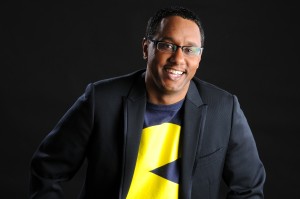
- Emmy award winner 2011 “Best TV Show Host”
- Radio &TV Technology Talk show host, Journalist and Tech Reporter,
- Small Business Tech Advocate
- Youth Tech Motivator!
- Heard & Seen on: TODAY show, HLN, CNN, NPR, WYPR & SiriusXM
- Founder, TechTechBoom & Co-Founder, Urban Video Game Academy for Youth
Mario Armstrong–much like the technology he loves–has always been an amalgamation of many different things: radio, TV & online media personality, motivational speaker, public servant and social entrepreneur. At his heart, Armstrong wants to better people’s lives by educating them to leverage technology to enhance their personal and professional lives. Armstrong translates technology for the public and businesses, for tech enthusiasts and non-tech audiences, through his radio shows, TV segments, public speaking, print and online programs.
Mario covers the stories, headlines, business, issues, gadgets and news makers of the day. He entertains and educates audiences as to how technology impacts our society and businesses. He appears regularly on radio and TV; Mario is the Digital and Technology Commentator for HLN, CNN and NBC’s TODAY show. In addition, he has appeared on the Rachel Ray Show, Nate Berkus show, MPT, PBS and C-Span. In print, Mario recently started a quarterly column in Black Enterprise Magazine. On radio, Mario hosts the technology talk show on SiriusXM Satellite Radio and is a technology contributor for NPR’s Morning Edition and Tell Me More programs.
Before his media career, Armstrong worked in the tech industry for 12+ years and was the first Chief Technology Officer in Baltimore City government for then Mayor, Martin O’Malley. Armstrong also served as the IT Director for the State of Maryland’s Tourism Department. In addition, Armstrong was one of six chosen in the United States to be a part of a Technology Delegation to meet with tech entrepreneurs in Seoul Korea to discuss new international business partnerships between the United States and South Korea.
Additionally, Mario is considered a social entrepreneur as he is super passionate about influencing, engaging and educating youth to pursue STEM (Science, Technology, Engineering, Math) academics, careers and entrepreneurship. Mario worked directly with teenagers to develop and design an online youth tech social network called TechTechBoom.com. This company will morph kids from passive users of cell phones and laptops into the next generation of digital scientists, innovators and activists by increasing their interest and knowledge in STEM. Armstrong is also a co-founder of the Urban Video Game Academy–an educational non-profit program that uses the allure, interactivity and development process of video games to increase students’ interest and academic achievement in STEM. The program has been featured in USA Today, on CNN & in Newsweek magazine. His voice is featured in a fun and educational video game entitled, “SpaceStation Sim,” developed by Vision Video games for NASA.
Mario has been recognized as:
Emmy award winner for “Best TV show Host” – 2011
“Daily Record VIP List” Successful before 40
“The Root 100” recognized in the top 100 people alongside actor Nick Cannon, Pro-Athlete Lebron James, Musician and Producer Wyclef John and Singer John Legend
“Top 40 under 40” Emerging Leaders – Baltimore Business Journal
“Modern-Day Technology Leader” – Career Communications Group
“Best Technology Guru” City Paper, Best of Baltimore
“Best Cable TV Host”- Beacon Award Winner
One of Baltimore’s “Top 25 Young Rising Stars” – Baltimore Times
“Service Above Self Award” – Rotary Club of Maryland
“Technology Advocate of the Year” – Urban League
Hope for Today, Visions for Tomorrow award – Legislative Black Caucus of Maryland
Source: http://www.marioarmstrong.com
Friday, November 30, 2012
A URINE POWERED GENERATOR

Four Nigerian schoolgirls aged 14 to 15, created an urine-powered generator that can turn a liter of urine into nearly six hours of electricity. The simple generator separates urine into nitrogen, hydrogen and water. The process turns the plentiful waste product into power. The $64 prototype could help Nigeria's 160 million citizens without access to electricity.
Source: http://makerfaireafrica.com/2012/11/06/a-urine-powered-generator/
Source 2: http://mashable.com/2012/11/30/inspirational-kids-2012/#10392111-14-and-15YearOlds-DuroAina-Adebola-Akindele-Abiola-Faleke-Oluwatoyin-and-Bello-Eniola
Subscribe to:
Posts (Atom)