Tuesday, June 30, 2009

16 of Michael Jackson's Greatest Non-Musical Achievements

The Michael Jackson Burn Center


On January 27, 1984, Jackson suffered second degree burns on his scalp while filming a Pepsi commercial at the Shrine Auditorium in Los Angeles. A pyrotechnics accident set his hair on fire in front of the auditorium full of fans who were there for a simulated concert. Jackson sued PepsiCo and settled out of court for $1.5 million. The settlement was donated to the Brotman Medical Center in Culver City, California, where Jackson received treatment for his burns. Using the money donated by Jackson, Brotman was able to get the best available technology for treating burn victims. The burn ward at the hospital was later named the "Michael Jackson Burn Center" to honor Jackson and his generous contribution.


Received Award from President Reagan


Michael Jackson was invited to the White House on May 14, 1984, where he received an award for his support of drug and alcohol abuse charities, presented by President Ronald Reagan.


Donated Profits of Victory Tour to Charity


The 1984 Victory Tour, headlined by the Jacksons, introduced more than two million fans to Jackson's solo material. Following the tour, Jackson donated his $5 million share from the tour's profits to charity.


We Are the World, We Are the Children


Michael Jackson and Lionel Richie wrote the charity single "We Are the World" in 1985. Both artists were among the 39 musicians who recorded the song. The single was released around the world to and proceeds went to help the needy in Africa and the U.S. Almost 20 million copies of "We Are the World" were sold, making it one of the best-selling singles of all time. The project raised millions for famine relief.

Treated Underprivileged Children to Free Shows


During the Bad World Tour, Michael Jackson played to sold out crowds and smashed Guinness World records when 504,000 fans packed Wembley Stadium for each of the seven sold out shows and the tour grossed $125 million. During all of this, Jackson invited underprivileged children to the shows and donated to hospitals, orphanages and other charities.


100 Percent to Charity


Jackson donated 100 percent of the profits from him single "Man in the Mirror" to charity.


Donations to the United Negro College Fund


From 1985 to 1990, Jackson donated $500,000 to the United Negro College Fund.


Honored by President George H. W. Bush


President George H. W. Bush commended Jackson for his achievements and presented him with the White House's special "Artist of the Decade" award in recognition of his musical influence during the 1980s.


Heal The World Foundation


Jackson founded the "Heal the World Foundation" in 1992. The charity organization brought underprivileged children to Jackson's Neverland ranch to ride theme park rides the singer had built on the property. Heal the World also gave millions of dollars to help children around the world who were threatened by war and illnesses.


Dangerous Profits Go to Charity


Jackson started the Dangerous World Tour on June 27, 1992 and completed it on November 11, 1993, after entertaining 3.5 million people at 67 concerts. All of the profits from the concerts were donated to the Heal the World Foundation.


Publicly Pleaded for More HIV/AIDS Research


When Ryan White, a hemophiliac teen from Indiana was kicked out of school in 1985 because he contracted HIV from a contaminated blood treatment, Jackson became one of his advocates. After White's death in 1990, Jackson pleaded with the Clinton Administration at Bill Clinton's Inaugural Gala for more funding for HIV/AIDS charities and research.


Teamed with Luciano Pavarotti for Charity


Jackson and Pavarottii teamed up for a benefit concert in Modena, Italy in June 1999. The concert was focused on support of the non-profit organization Warchild. The artists raised a million dollars for the refugees of Kosovo and also donated money to help the children of Guatemala.


Michael Jackson and Friends Benefit Concerts


Also in June 1999, Jackson organized a series of benefit concerts in Germany and Korea. He recruited Slash, The Scorpions, Boyz II Men, Luther Vandross, Mariah Carey, A. R. Rahman, Prabhu Deva Sundaram, Shobana Chandrakumar, Andrea Bocelli and Luciano Pavarotti for the Michael Jackson and Friends concerts. The proceeds were donated to the "Nelson Mandela Children's Fund", the Red Cross and UNESCO.


Guinness Record for Support of Charities


Jackson was listed in the 2000 book of Guinness World Records for his support more charities than any other entertainer or personality. Jackson supported 39 charities through cash donations and sponsorships.


Moonwalk


Jackson released his first autobiography, Moon Walk, in 1988. The book took four years to write and detailed alleged abuse Jackson suffered as a child and his plastic surgeries. The book topped the New York Times best seller's list.


Support After 9/11


After the 9/11 attacks, Jackson helped organize the United We Stand: What More Can I Give benefit concert at RFK Stadium in Washington, D.C., which aired on October 21, 2001. Dozens of major artists performed at the concert and Jackson sang "What More Can I Give" as the finale.

Source: http://brainz.org/16-michael-jacksons-greatest-non-musical-achievements/

Friday, June 26, 2009

J - Board (Real Estate Game): Invented by African American


Joel Harden’s Mogul® was developed as a learning aid for real estate, yet the rules and gameplay are simple enough to be grasped by children who are old enough to understand the concept of a percentage. It is the perfect learning tool for any one interested in learning real estate basics while remaining simple & fun enough for any family gamenight.

Mogul is the first real estate board game that accurately recreates real world scenarios germane to personal financial management, real estate investment, speculation and management. The game teaches most basic real estate terms and factors, and more importantly how multiple factors combine to create market conditions i.e.: Opportunities or hardships. Mogul is the first board game to encompass and teach how a credit rating will affect your business endeavors.

Joel Harden’s Mogul® teaches the following terms & concepts during the course of gameplay:

• Mortgages
• Closing Costs
• Credit
• Deeds
• Interest Rates
• Zoning
• Institutional Investments
• Property Taxes
• Speculation
• Assemblages
• Prenuptial Agreements
• Due Diligence
• Money Management

J-Board

Wednesday, June 24, 2009

Dr. Farrah Gray - Reallionaire


A look at Dr. Farrah Gray...Celebrity Entrepreneurial Icon, Philanthropist and Business Mogul.

Tuesday, June 23, 2009

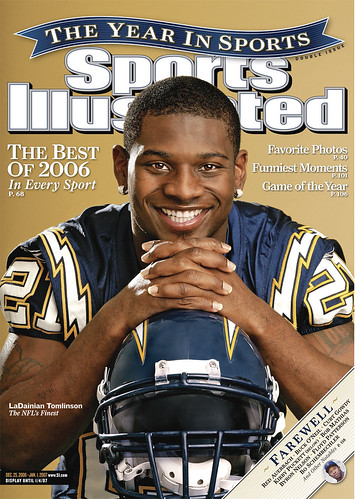
LT Foundation


Tomlinson’s Touching Lives Foundation, Inc.
(the “Foundation”) engage in a number of programs designed to promote educational, social and cultural awareness, positive self-esteem to enhance the lives of children, families and communities whom are less fortunate. The Foundation engage in the following activities to further its charitable purposes:

(1) The Foundation facilitates educational and recreational trips for school-age children in an effort to promote and augment their education and exposure.
_ L.T.’s 21 CLUB- Provides opportunity for 30 kids per game from San Diego youth organizations and non-profits to participate in the “L.T.’s 21 Club” giving them the opportunity to attend a San Diego Chargers home game and meet with LaDainian Tomlinson after the game. Each child who participates in “L.T.’s 21 Club” has field side seats, receives a t-shirt and is given a coupon for a free hotdog and beverage during the game. “L.T.’s 21 CLUB” is designed to promote positive self-esteem, academic and social achievement, literacy and genuine goodwill. Interacting and highlighting a positive role model/athlete instills confidence in children and encourages them dreams do come true if you work hard and continue to dream. Children are selected through various not-for- profit organizations, missions vary with children causes: treatment for terminally ill, low income, foster care, homeless, gang prevention, group home residence and children living with cancer. Each organization select kids who have performed well and/or have never had an opportunity of this kind. Main highlight is exposure and interaction.

(2) The Foundation distributes Thanksgiving dinners to indigent individuals. It also distributes Christmas gifts to children who are seriously ill.
_ Giving Thanks with L.T. – Distributes 1,400 Thanksgiving Dinners to needy families from San Diego County the Tuesday before Thanksgiving. Each dinner include a 16lb. turkey, vegetables, canned food items, stuffing and a beverage. Various, pre-selected, organizations form lines out front of Wal-Mart awaiting their Thanksgiving dinners. In addition, 21 kids are selected to enjoy a mini-shopping spree at Wal-Mart. Families are pre-selected through not-for-profit organizations serving individuals whom are less fortunate. The pre-selected organizations missions vary from helping families that are homeless, government assistance, home care aid, church assistance, single parent homes, etc. In total there are 20 organizations that select families to participate in the program. The 21 kids are selected from middle school on citizenship and level of need (income).

_ L.T.’s Touching Lives Holiday Program - distributes over 1,500 toys and videos to kids at Children’s Hospital and Health Center during the Christmas Holiday. L.T. and Friends make rounds throughout the hospital handing out toys to patients(children) being treated in various centers of the hospital. Distribution of toys to Children’s Hospital helps make a difference in their lives and helps with the recovery of children whom are patients. Children’s is a total healing environment dedicated to restoring, sustaining and enhancing the developmental potential of children. The purpose of “L.T.s Touching Lives Holiday Program” is to touch the life of a child who may be suffering during the Christmas Holiday with a smile. Selection process: every child is given a toy upon arrival.

(3) The Foundation administer and fund a scholarship program for graduating high school students planning to attend four-year universities, community colleges or vocational training centers after graduation. The candidates for such scholarships submit an essay on topics; relating to positive influences on the community, and/or what does it take to become successful. The candidates are required to submit an unofficial copy of their high school academic records, a copy of their SAT or ACT scores, the essay and at least one letter of recommendation from a teacher, counselor or community leader.

_ L.T. School is Cool Scholarship– Is to assist worthy students with their educational and occupational endeavors. The monetary value of each scholarship will be $1,000. Applicants must submit the attached formal application. In addition to the application form, the following items are required:

1. At least one (1) letter of recommendation from the student’s principal, teacher(s), coach (if applicable), counselor or a community leader;
2.
Unofficial high school transcript, including current grade point average (GPA);
3. resume of honors, activities, community service, hobbies and work experience;
4. a typewritten essay addressing the required essay topic.
Completed applications must be postmarked on or before the due date to be considered for the following academic year.

A committee consisting of educators, civic leaders and community members will evaluate the scholarship applications and additional information according to the following criteria:
1. academic and/or community achievement
2.
financial need
3.
letter of recommendation
4. uniqueness of essay
5.
extracurricular activities, achievements, volunteerism and work experience

(4) The Foundation facilitates a football camp that provides an invaluable opportunity for kids to work one-on-one with some of professional and college football’s greatest players and coaches. In addition to outstanding sports instruction, Camp L.T. clearly emphasizes the importance of academic excellence.

Camp L.T.” – The LaDainian Tomlinson Football Camp (“Camp L.T.”) is open to middle and high school level students. Campers are separated by grade and ability to receive hands-on experience from a chosen group of NFL stars, college athletes and professional coaches.


  • learn fundamentals, along with inside tips of position play


  • participate in speed work and agility drills


  • study game strategy


  • learn classroom techniques


  • take part in team competition


  • discover what it takes to be a champion


  • learn “Hard Work Pays Off”


Participants must be pre-registered to attend. “Camp L.T.” is conducted in San Diego, CA. in the month of February and Waco, TX. in June.

(5) Although the Foundation has not planned any fundraising programs to date, it intends to raise funds through charity benefits such as dinners and golf tournaments. The Foundation will seek corporate sponsorship.

Image: http://blog.chargers.com/news/

Monday, June 22, 2009

Pressure Cooker: Cooking up a Future


Three seniors at Philadelphia's Frankford High School find an unlikely champion in the kitchen of Wilma Stephenson. A legend in the school system, Mrs. Stephenson's hilariously blunt boot-camp method of teaching Culinary Arts is validated by years of scholarship success. Against the backdrop of the row homes of working-class Philadelphia, she has helped countless students reach the top culinary schools in the country. And under her fierce direction, the usual distractions of high school are swept aside as Erica, Dudley and Fatoumata prepare to achieve beyond what anyone else expects from them.

Preview

Tuesday, June 16, 2009

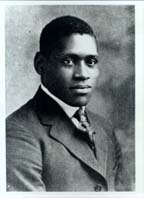
Paul Robeson


"Like every true artist, I have longed to see my talent contributing in an unmistakably clear manner to the cause of humanity."

ARTIST HERO: PAUL ROBESON

by TONY

1998 marked the centennial of Paul Robeson's birth. On April 9, 1898, an eighth child was born to Maria Luisa Bustill, the Quaker abolitionist, and William Drew, the former slave who had escaped to the north, gone to college, and become a minister. Paul was brought up to value education as much as his parents did.

Paul Robeson attended Rutgers University (he was the third black student in that school's history) in New Jersey, where he was an All-American football player and excelled in other sports as well. When he graduated, he was valedictorian of his class. He enrolled in Princeton Law School and became a lawyer, but due to the racism of that time, he had trouble finding employment.

It was this inability to move forward as a lawyer which compelled Robeson to change his life's course. Thus, he began the acting and singing career by which so many people came to love and admire him.

Robeson had a natural talent for performing and an enormously deep voice. When he appeared in the Broadway musical, Showboat, he sang a song that will always be remembered by the sound of that voice. "Ol' Man River" is now considered classic Paul Robeson. He also played the title role in three different productions of Othello, both in America and England, and in movies such as Sanders of the River, King Solomon's Mines, and The Proud Valley. He was greatly admired as an entertainer.

Robeson was deeply political. He believed in justice for all people. Even before his fame was at its peak, he traveled the world performing in benefits and speaking out for worker's rights, racial equality and peace. He fought for racial justice in America, but he also devoted his time, energy and money to groups outside the American black community. For instance, he spoke out against the Nazi's persecution of the Jews (among others) in Europe during the 1930s and 40s. Along with many other Americans, he participated in the Spanish Civil war against the fascist dictator, Francisco Franco.

Of all his pronounced ideologies, perhaps the most controversial was his support of communism. Despite the growing fear of communism in the United States, Robeson remained steadfast to the idea of worker's rights and even to the Soviet Union, which was at that time still attempting to establish a working communist society. It was not uncommon for people suspected of sympathizing with the Soviets to be brought before a governmental panel called the House Committee on Un-American Activities. Many artists and actors were brought before this committee. This committee declared that Robeson's outspoken support of communism was unpatriotic and accused him, for instance, of trying to set up a Soviet state in the American South. The committee was powerful: It managed to take away Robeson's passport, and to coerce other black leaders into testifying against Robeson, but no one could prove any of the ridiculous accusations.

Robeson eventually recovered his passport and was able to tour and perform again for awhile. When he became ill, he left the stage and managed to live a private life for a short time.

Although he faded from public view, his work and dedication to political causes remained active. He died on January 23, 1976, at age 77, in Philadelphia. The courage of his convictions and his strength before adversity make Paul Robeson a hero to people around the world.


From left to right: Theatre Artist Avery Brooks, Princeton University President Shirley Tilghman, Vice President of Diversity Development for the Postal Service Murry Weatherall, Paul Robeson, Jr., Rep. Rush Holt, D-N.J., Princeton University Provost Amy Gutmann and NJ Secretary of State Regena Thomas applaud as a stamp honoring entertainer Paul Robeson is unveiled in Princeton, N.J., Tuesday, Jan. 20, 2004. The stamp is the newest addition to the Black Heritage Stamp Collection. (AP Photo/Tim Larsen)

Paul Robeson continues to inspire people and his memory lives on. On January 20, 2004 a postal stamp honoring Paul Robeson was unveiled in Princeton, New Jersey. The stamp is part of the Black Heritage Stamp Collection.
Written by TONY


RELATED LINKS

The Literature and Culture of the American 1950s
Find out more about the political climate of the fifties. A detailed reading list.

Paul Robeson's Heroes

Paul Robeson Online From the Princeton Public Library

EXTRA INFORMATION


Listen to Paul Robeson's music online (3,128 K)

Much of the information for this story came from Martin Duberman's book Paul Robeson: A Biography.


RECOMMENDED READING

Here I Stand
by Paul Robeson, Sterling Stuckley (Intro)
Paul Robeson: A Biography
by Martin Duberman

Paul Robeson: The Life and Times of a Free Black Man
by Virginia Hamilton

Monday, June 15, 2009

Saving With Limited Funds


Not only is April tax-filing season, but it’s also Financial Literacy Month. Most Americans are clueless about issues such as credit management, taxes, banking, and saving and investing for the future, reports FinancialLiteracyQuiz.com. In addition to not knowing enough about saving and investing, too many people aren’t doing enough to prepare for their financial future.
According to the 10th annual Ariel-Schwab Black Investor Survey, African Americans continue to save far less money than white people and are no more likely to be investors today than they were a decade ago. The 2007 survey of African Americans and white people earning at least $50,000 annually also showed that the median amount of money saved by black people is $48,000 compared with $100,000 for white people. On a monthly basis, median savings is $182 for black people versus $261 for white people.
Also, 40% of consumers live beyond their means, and half are living paycheck to paycheck. If this sounds like you, putting aside extra cash for a rainy day may seem impossible, especially when funds are tight and you’re on a fixed income.
But given the current economic slowdown, it’s an ideal time to take the cost-cutting measures necessary to achieve financial security. "The key to saving money with limited funds is training your mind to know how much money you are working with and making a conscious decision to stay within that framework of available cash," says Gil Michel, president and founder of BlackMoneyMatters.com, a personal finance Website geared to the African American online community. "Unless you change your mindset, the spending habits that you form based on say, a $25,000 salary will be the same even if you were to make $100,000." Michel adds.
An effective savings plan takes discipline to reach specific financial goals. Regardless of your income, here are five steps to help eliminate debt and to start saving:
  1. Create a budget. Neglecting to keep track of your day-to-day finances is a challenge that can lead to unintentional overspending. A budget will show exactly how much money is coming in, how much money is going out, and where it’s going. Set limits on the amount of money you spend each month and make small adjustments in areas where money can be freed–such as café lattes and junk food. Also, Black Enterprise’s Wealth Building Guide offers some ideas on how you can grow your income to save more. (See the "Wealth Building"portion of BlackEnterprise.com for more information.) You want to put aside at least 10% of your after-tax income to use towards an emergency fund, investments and education.
  2. Invest in your company’s 401(k) plan. If you aren’t investing in your company’s employer-sponsored retirement plan, then don’t procrastinate any longer. A 401(k) is an effortless savings tool (it automatically comes out of your paycheck) that can provide significant income for retirement. If your employer even matches a portion of your contributions, it is allowing more money to work for you faster. If you’re not offered this plan at work, contribute to an IRA (Individual Retirement Account) or some other tax-free or tax-deferred vehicle.
  3. Refinance your home. If you had an adjustable rate mortgage, the Federal Reserve’s recent cut in a key interest rate makes it an opportune time to refinance at a fixed rate. It may also be a way to lower your monthly mortgage payment and have access to more cash to invest or pay down debt. Consider all costs associated with going down a percentage point or two in your interest rate to ensure that refinancing balances out with the amount you save on interest. For those who rent and have an extra room, consider bringing in a trusted friend to share the expenses. This is an economical alternative for those who live in big cities where they are paying premiums for rent.
  4. Eliminate credit card debt. The convenience of buying with plastic instead of cash has created an epidemic of excessive credit card debt. A smart solution begins with making cash-only purchases. Call your credit card company and requesting a lower interest rate. If you own more than one credit card, first make additional payments on the card that carries the highest rate and then work your way down to the card that has the lowest rate until all debt is satisfied. Once you pay off that debt, use that monthly amount you would have paid for those bills toward your savings.
  5. Be diligent when paying off balances. Do your homework if you decide to close your accounts because it can have an adverse affect on your credit history and credit score. Credit is beneficial if you spend wisely and pay off the entire balance at the end of the month. Living without debt will help you to save more.
Source: http://www.blackenterprise.com